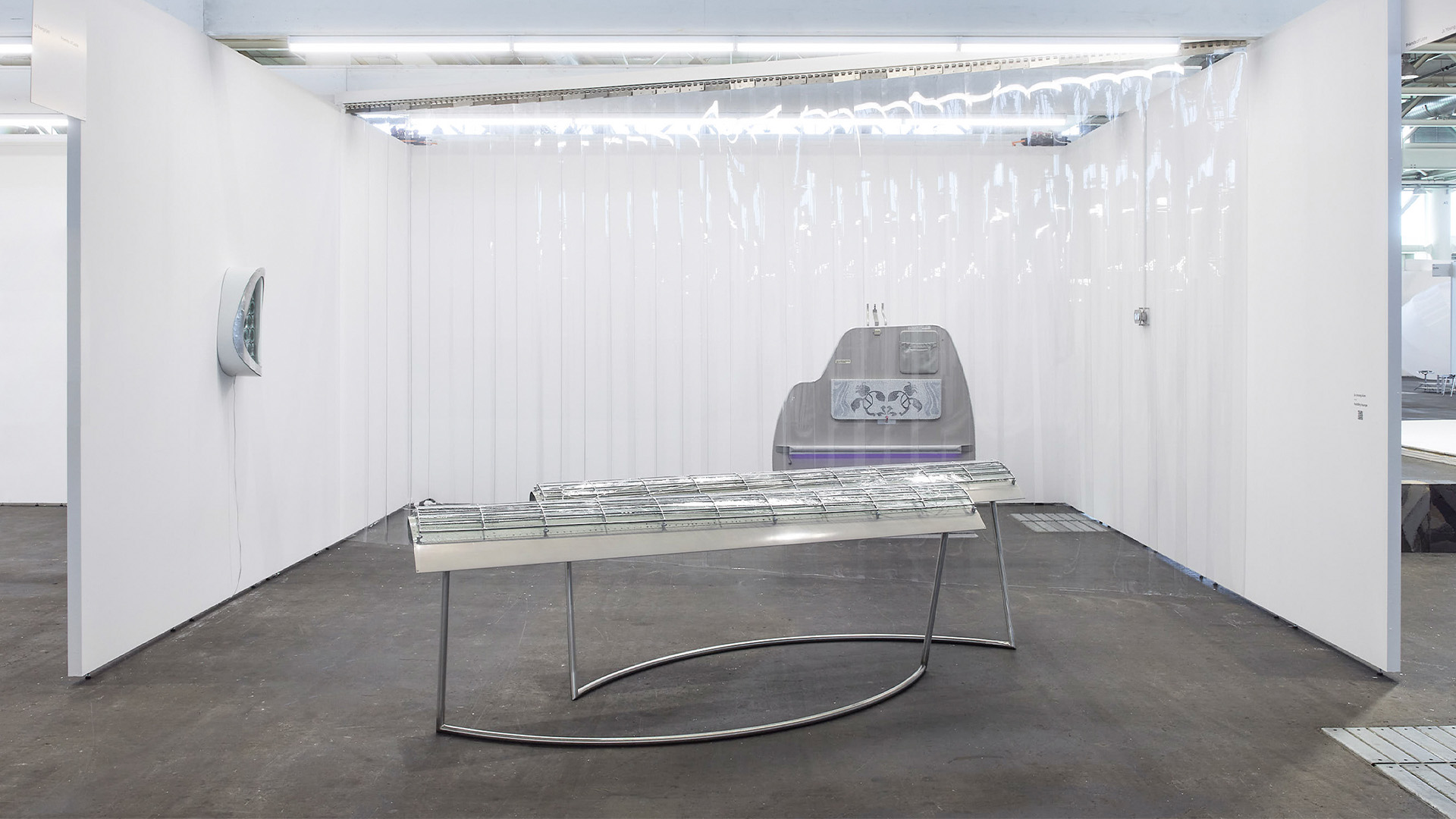
Airports. Some people feel at ease. Others in a rush. Or even lost. It’s a liminal space where no one is home yet. For Korean artist Ju Young Kim, much of her work draws inspiration from this in-between space of arrival and departure. ‘I am interested in moments where orientation begins to loosen.’ Fascinated by the way airports alter emotions, time, and perception, Kim transforms these experiences into sculptural form.
Ambient pioneer Brian Eno was once so uninspired by the Cologne Bonn Airport that it inspired him to create Music For Airports: an ambient soundtrack catered to enhance the general airport experience. It wasn’t just meant as comforting background music, like elevator music, but as music that’s able to inspire and provoke thought. For artist Ju Young Kim, airports likewise serve as a source of inspiration, though not because of their tranquillity alone: ‘These are not simply calm or meditative spaces. The stillness there is never pure, but always charged with an underlying tension between departure and arrival.’
This tension unfolds in different ways, according to Kim: ‘In an airport, you are temporarily detached from the logic of everyday life. You are no longer fully connected to the place you came from, but you have not yet arrived somewhere else either. There is a brief suspension where identity, routine, and orientation become slightly unstable.’ These contradictions are often at the heart of liminal spaces such as airports. Like lifts, train stations, and waiting rooms, the airport functions as an in-between space – between departure and arrival, being and becoming. It is precisely this ambiguous tension, and the way it unsettles ideas of time and being, that drive Kim’s work.

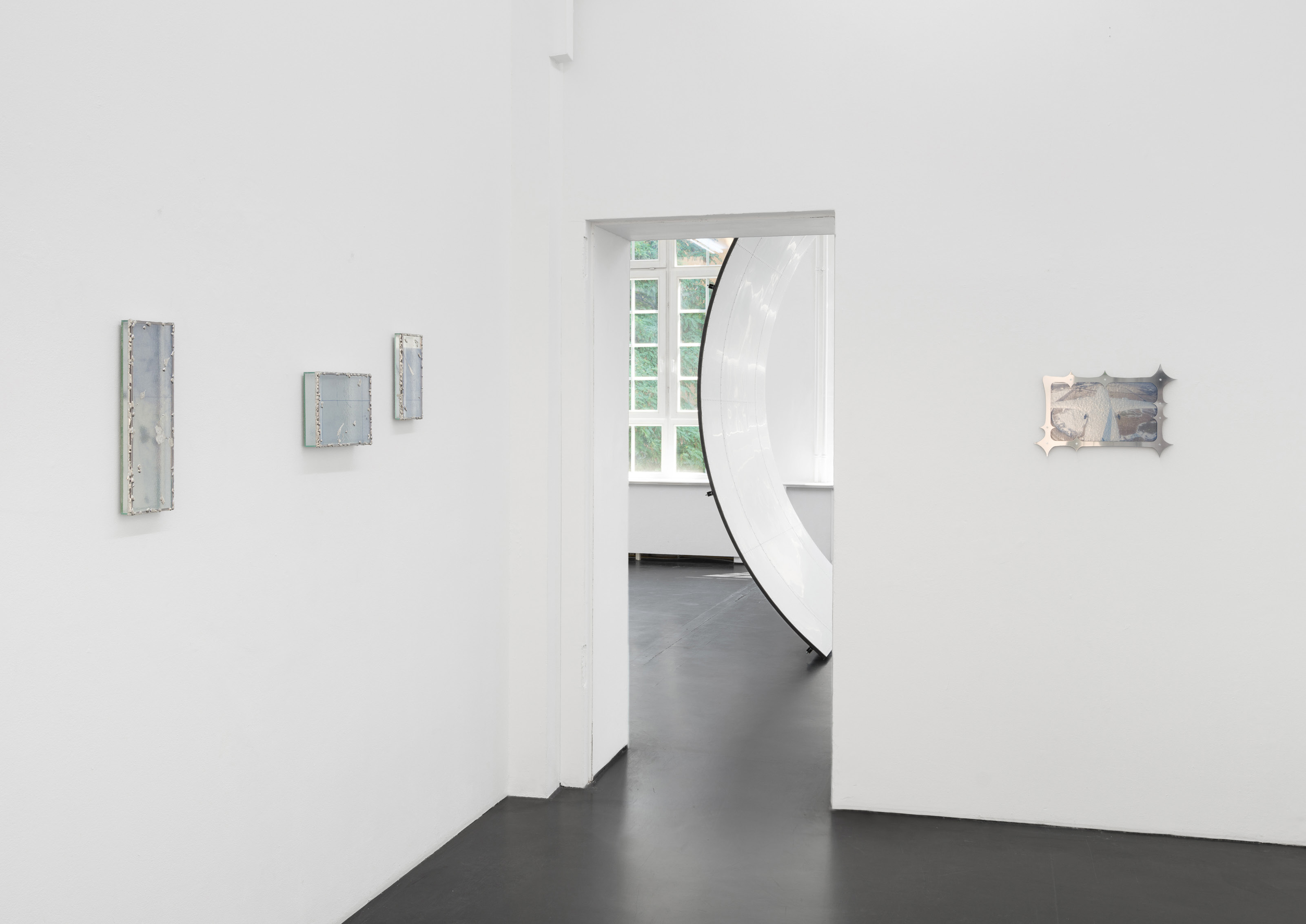
'In an airport, you are temporarily detached from the logic of everyday life'
Industrial memory, hand-made form
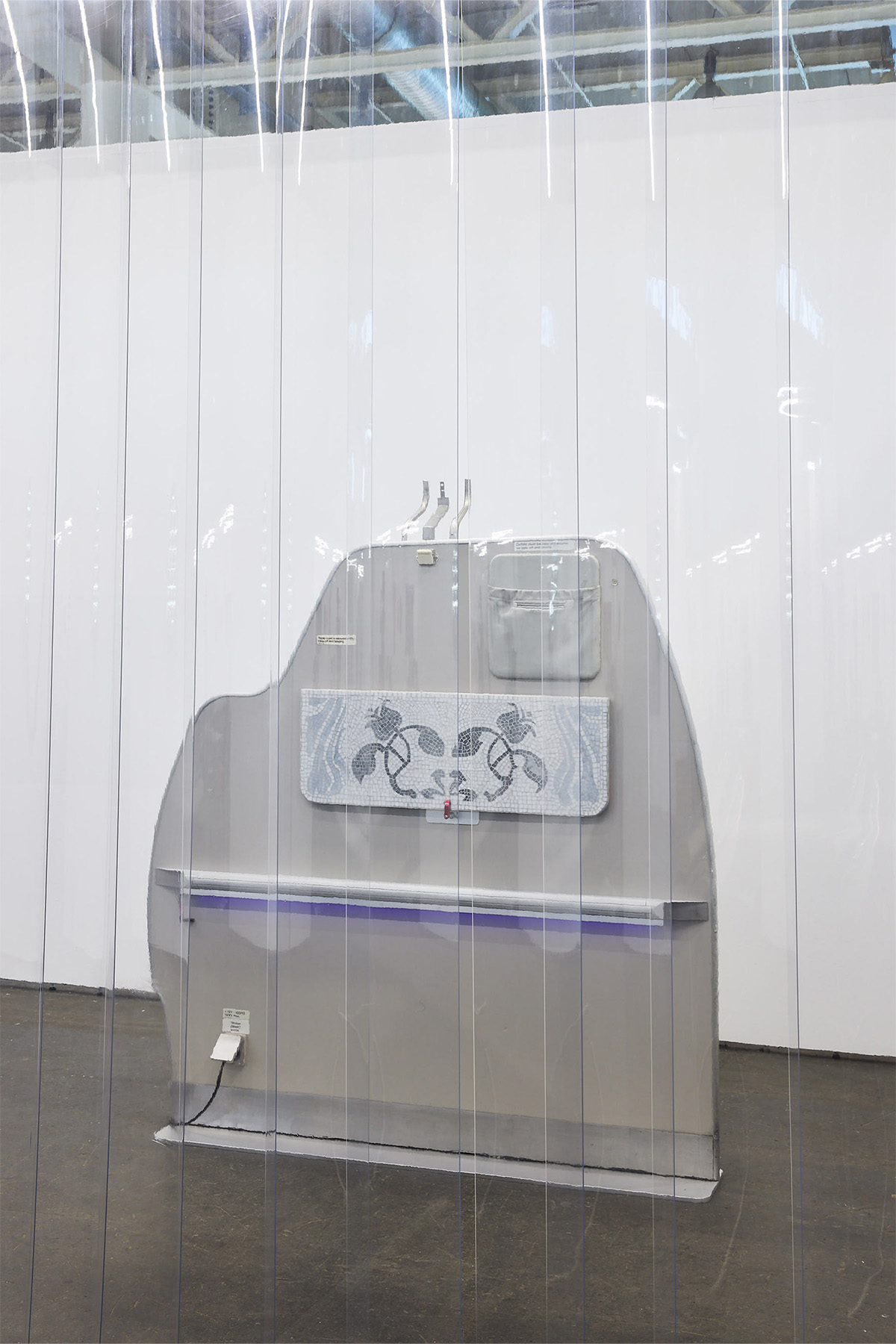
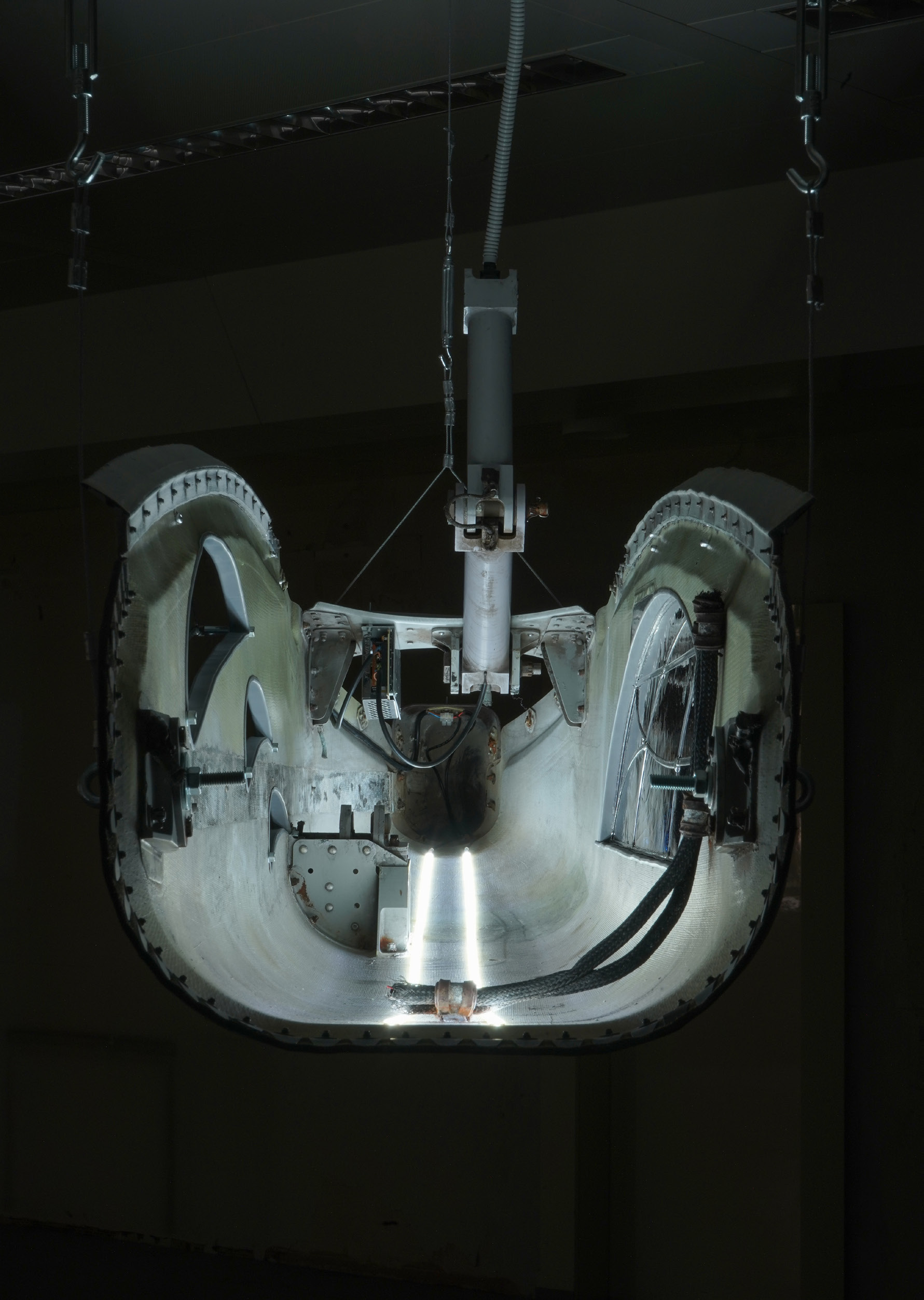
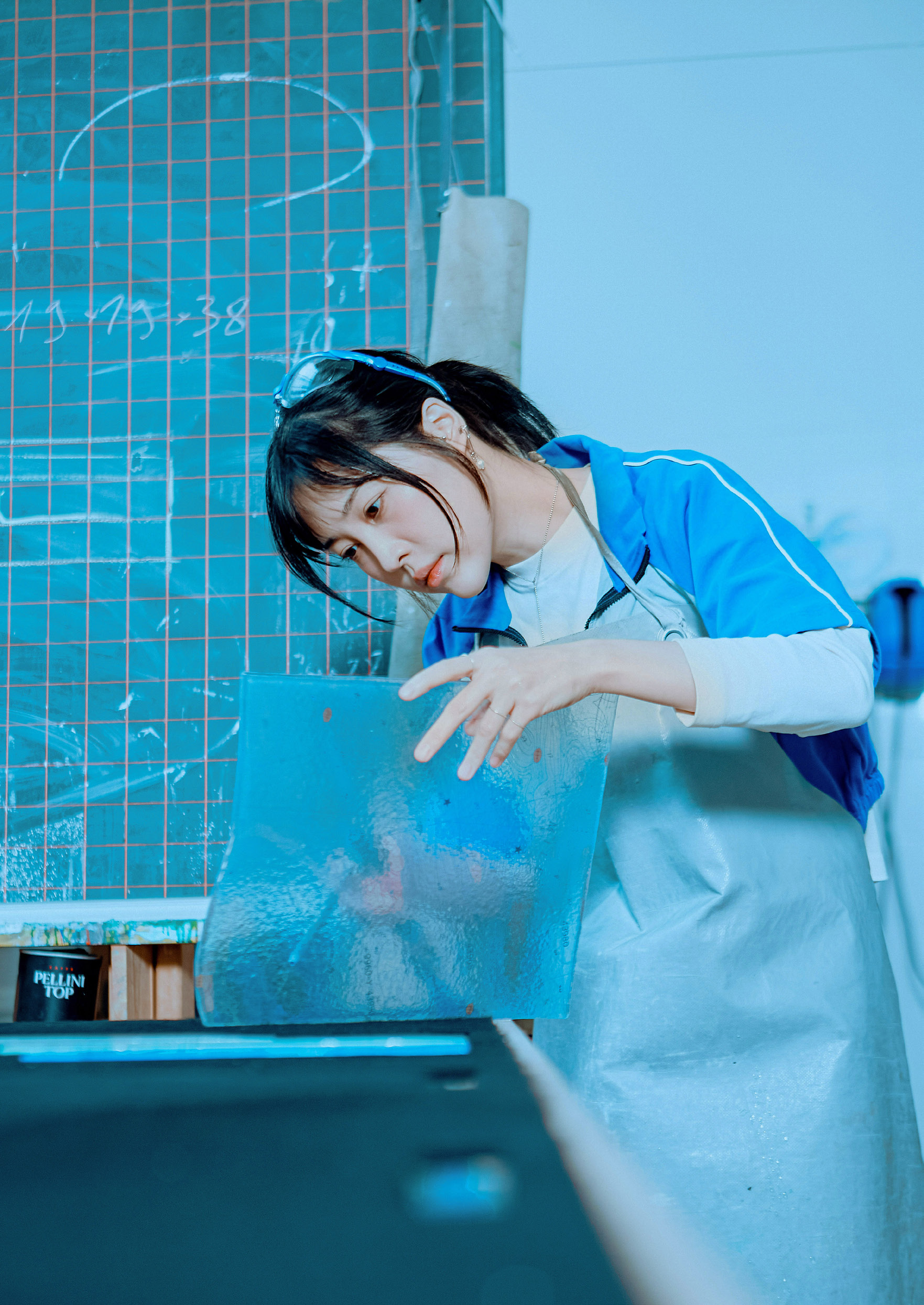
She is particularly known for her AEROPLASTICS series, in which industrial aircraft components are combined with handcrafted materials such as ceramics and stained glass, resulting in sculptures that feel both mysterious and serene. ‘Aircraft materials often feel anonymous, standardised, and optimised, while stained glass and ceramics carry traces of touch, fragility, memory, and craft,’ she notes. I'm Standing on the Edge of the Land (2022) is an assemblage of stained glass and an airplane window attached to a section of the aircraft fuselage. The hand-painted stained glass depicts a mossy staircase descending into a body of water.
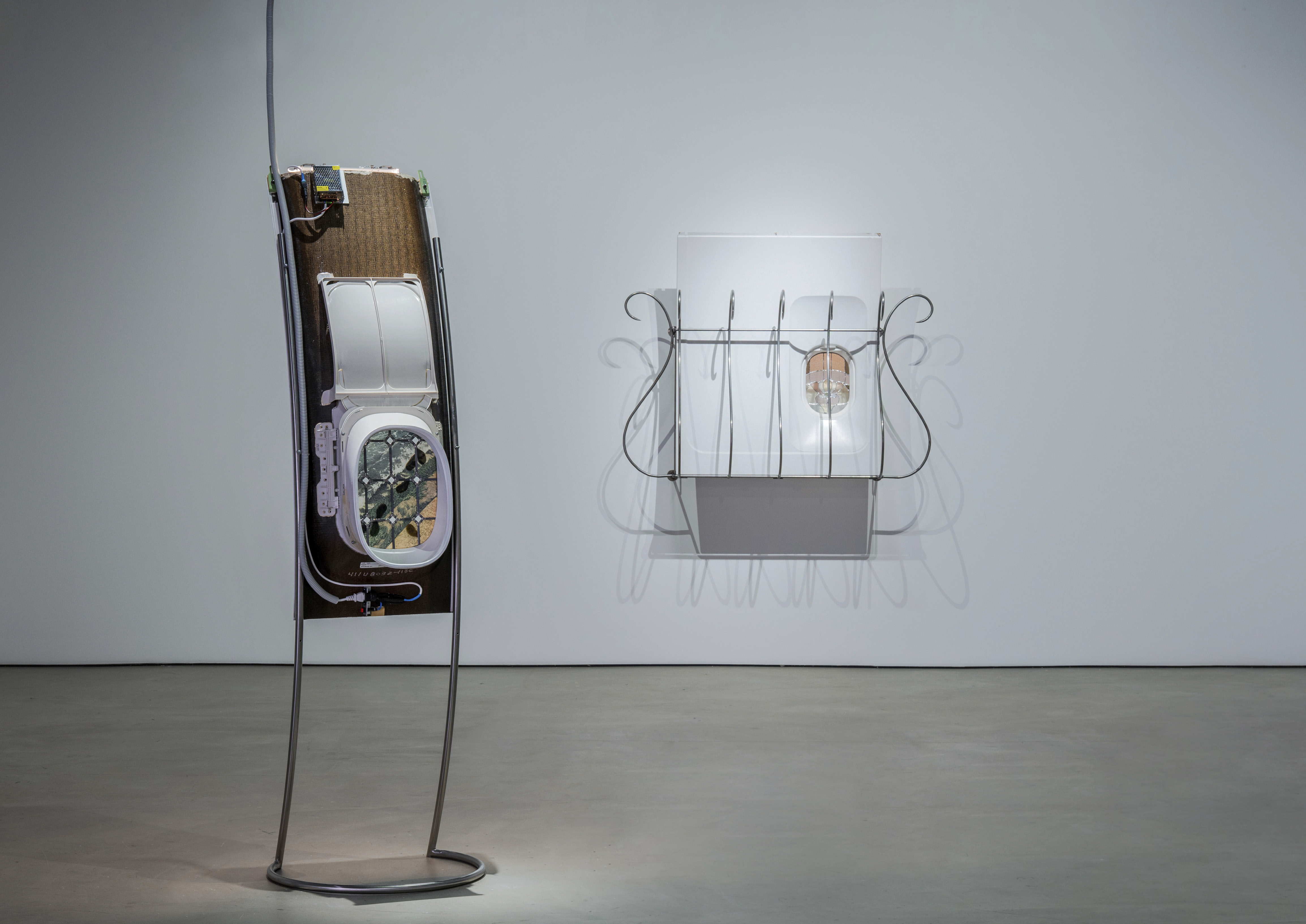
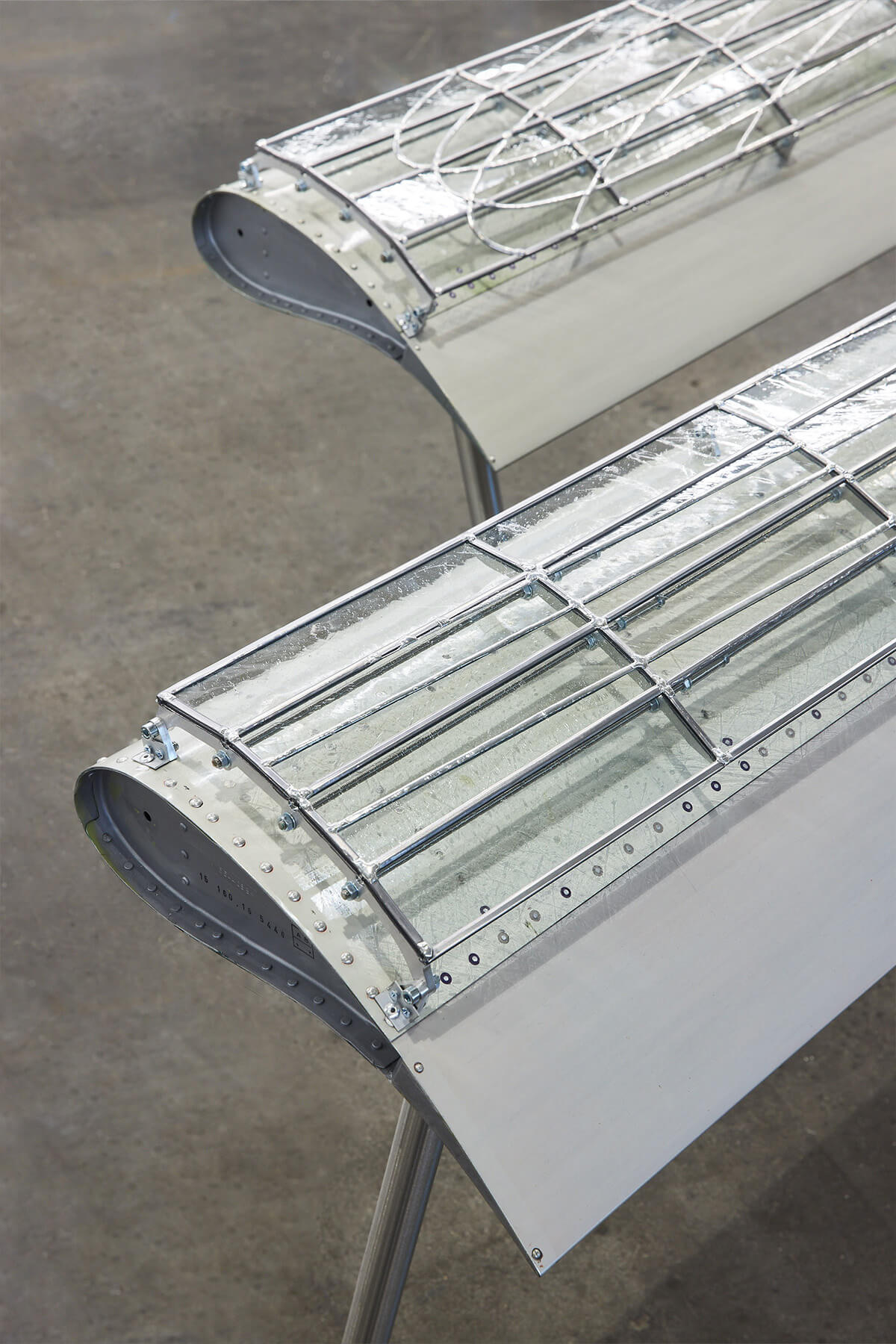
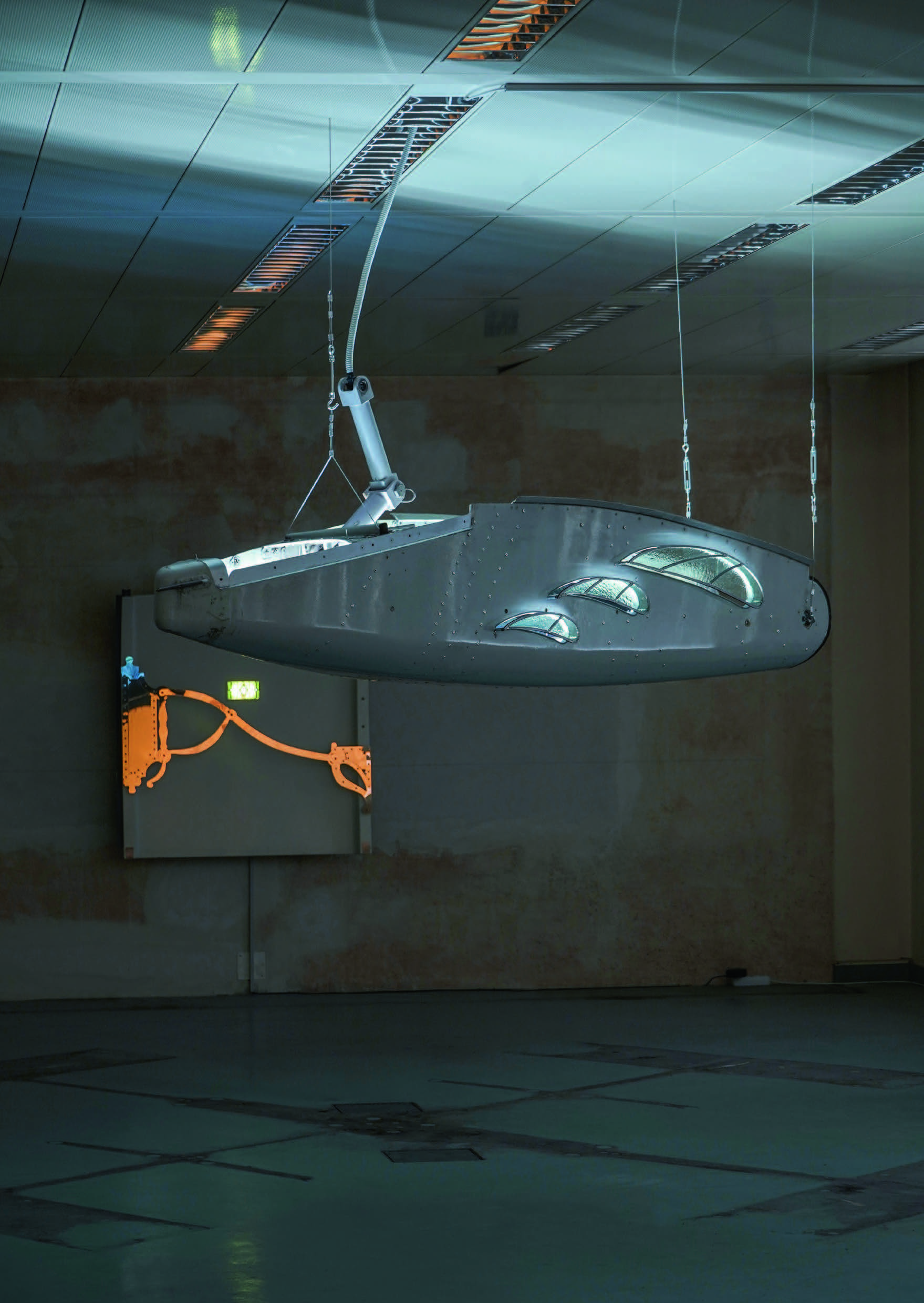
Other examples include Unsent Parcel (2025), a suitcase with personalized fabric and light system, or Where Your Arrival Is Postponed (2025), in which a streetlamp is combined with stained glass casing. In Almost like Whale Watching (2024), aircraft fairings are combined with leaded glass, bringing together industrial remnants and the visual language of historical craft, while Not for Navigation (2024) features map fragments made from fused glass and ceramic print. Across these works, Kim traces a fragile threshold between industrial systems of mobility and personal memory, turning anonymous infrastructures into vessels of longing, intimacy and reflection.
Other examples include Unsent Parcel (2025), a suitcase with personalized fabric and light system, or Where Your Arrival Is Postponed (2025), in which a streetlamp is combined with stained glass casing. In Almost like Whale Watching (2024), aircraft fairings are combined with leaded glass, bringing together industrial remnants and the visual language of historical craft, while Not for Navigation (2024) features map fragments made from fused glass and ceramic print. Across these works, Kim traces a fragile threshold between industrial systems of mobility and personal memory, turning anonymous infrastructures into vessels of longing, intimacy and reflection.
A room of suspension
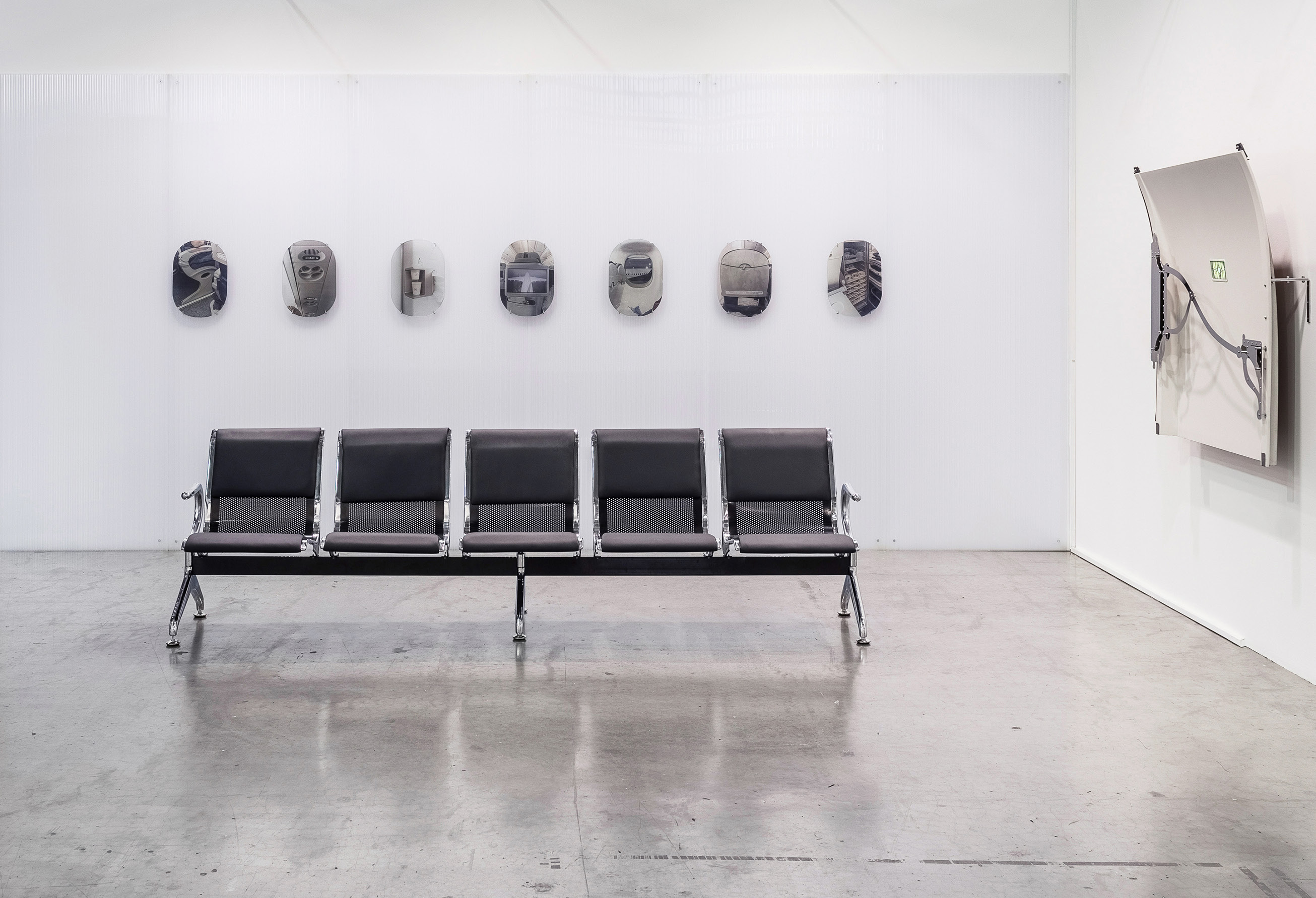
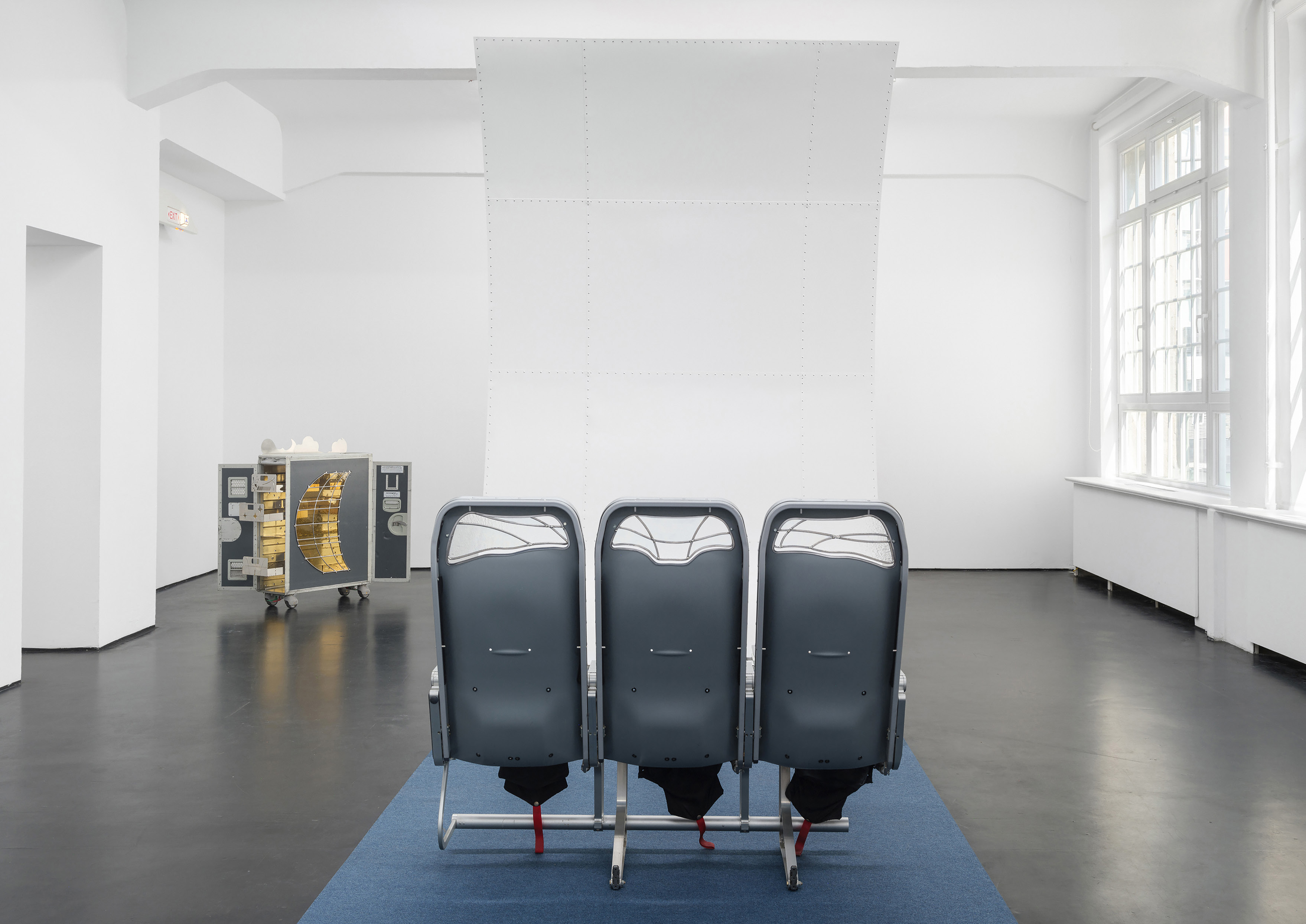
While the cold, seamless aircraft objects are factory-made, a great deal of careful, handmade work goes into the cast metal and stained-glass elements. In one of her recent solo exhibitions, Holding Lounge, presented at P21 in Seoul (2026) and now at Liste Art Fair Basel 2026 with max goelitz, she takes these efforts a step further. Her signature pieces, as well as a new wall piece and sculpture, will be placed in a composed waiting lounge. The airport lounge is meant as a space for rest and relaxation, but even here, the underlying ambiguity is of great importance. She comments: ‘A lounge usually suggests comfort, rest, waiting, and a certain calmness. But the word “holding” also introduces another layer of meaning. It can describe a temporary pause, but also a condition of suspension, delay, or containment.’
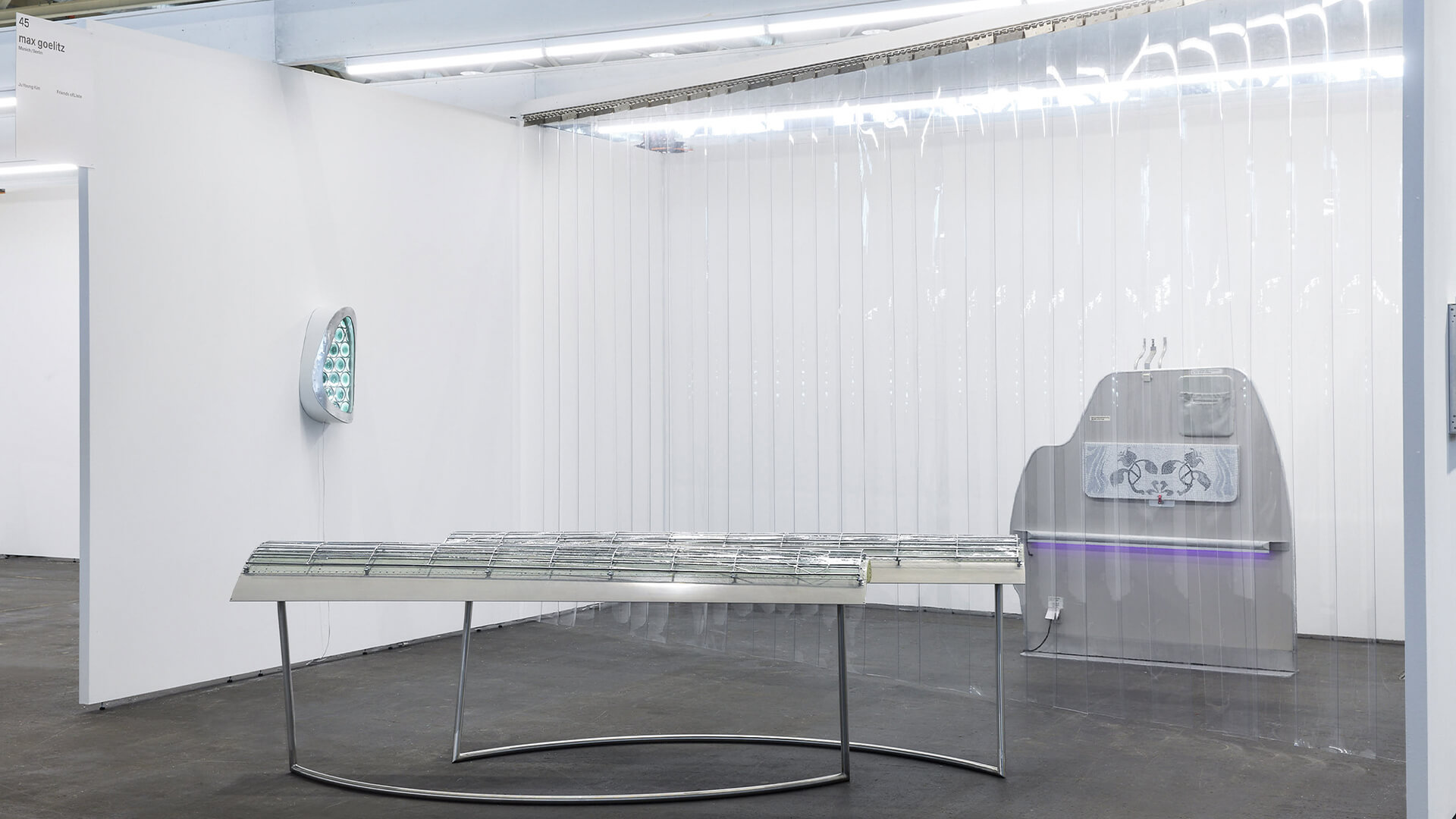
'A psychological atmosphere that feels both comforting and unsettling'
Where planes rest
We often spend more time in liminal spaces such as waiting rooms than we would choose, yet they can feel strangely meditative, offering nothing to do but wait. ‘Travelling keeps my senses sharp’, Kim comments on her own experience of travelling. She sometimes visits airport sites without even having to travel. ‘I remember one particular night when I went to the airport spontaneously, without any intention to travel. I simply wanted to be there. I had this quiet, almost naive desire to see the aircraft bodies resting on the ground. The bodies of the aeroplanes were barely visible, lined up next to each other like books leaning on a shelf. There was something deeply atmospheric about the combination of scale, silence, light, and movement. It felt industrial and emotional at the same time, both distant and intimate.’
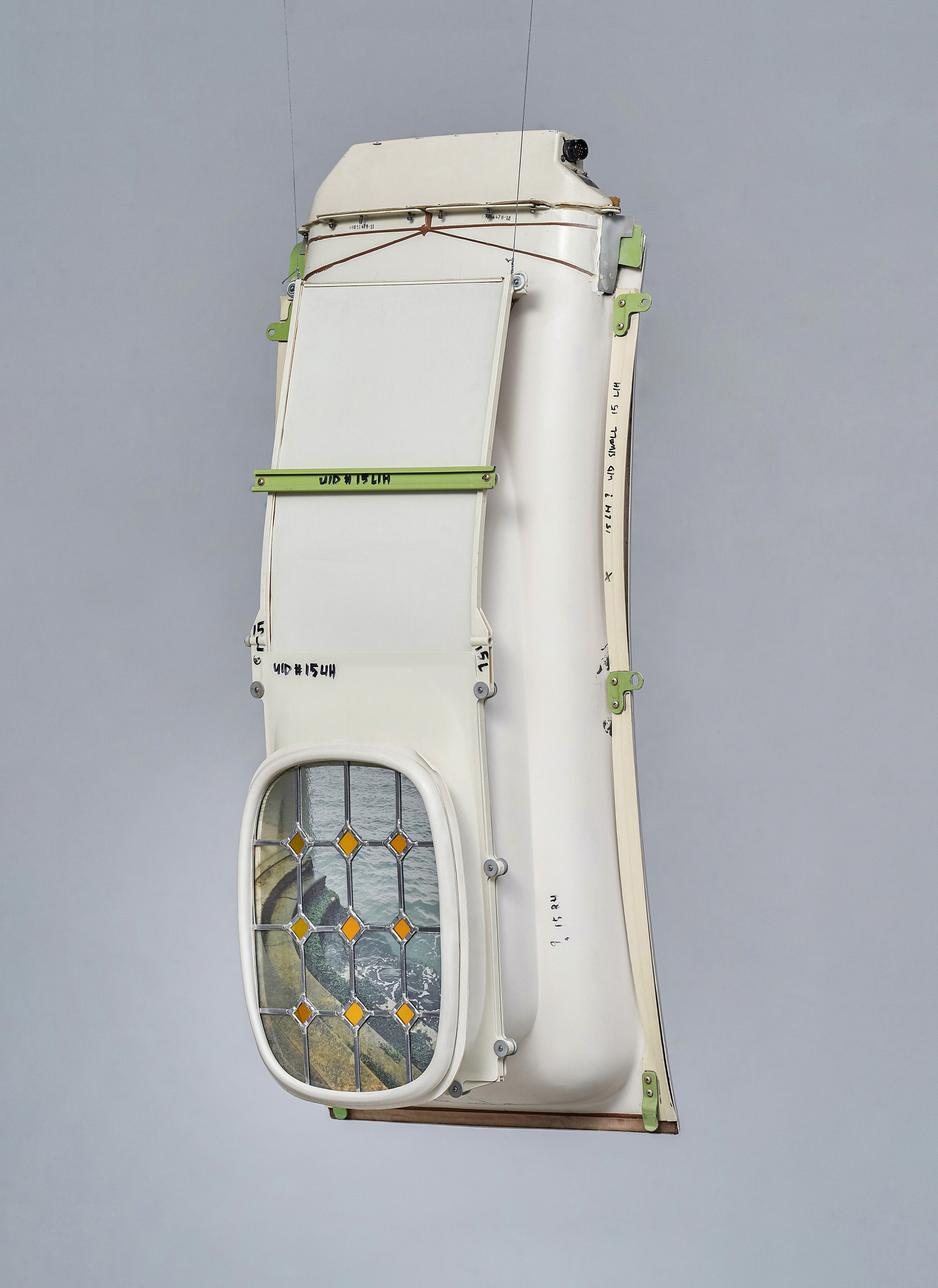

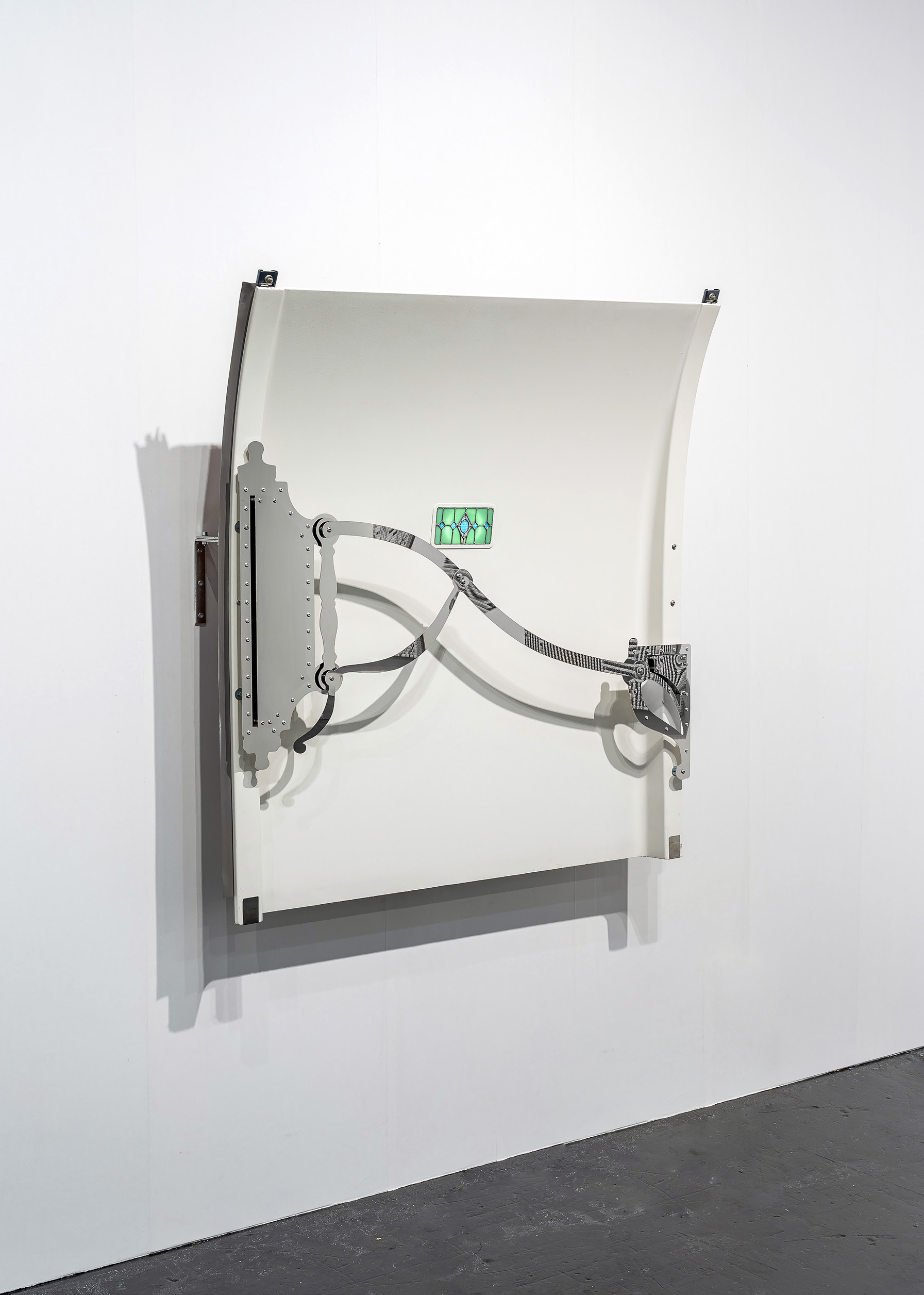
In her work, Kim pauses this movement. The mechanical plane objects are frozen in time, and at Holding Lounge, they enter the airport lounge, creating what she calls ‘a psychological atmosphere that feels both comforting and unsettling’.

Holding Lounge will be on view during Liste Art Fair in Basel (15 to 21 June), represented by max goelitz Gallery.


.jpeg)