New technologies have always been met with a certain hesitation and suspicion in the arts. Oil painting, music, photography, and film – all were subjected to resistance and heavy criticism. Nowadays, all eyes are on AI. The Hague-based art collective iii, Instrument Inventors Initiative, is not afraid of such innovation, with technology as one of its main pillars. What lessons can we draw from the collective’s views on technology?
Technology alters how we make art. Simultaneously, art explores what technology does. With the rise of digital and new media art, these premises are now taken as given. This type of technology, from computational art to AI art to algorithmic art, requires substantial critical thinking while also offering opportunities for different layers within art-making.
The importance of critical thinking stems from the social impact of such technologies. Digital technology comes with many contradictions. It has a democratic aspect (consider the NFT hype in 2021), but it also creates inequalities and injustices, particularly in its production phases. Technology is innovative, but it also comes with severe climate consequences. It creates greater freedom, but simultaneously makes every generation addicted to their screens through dark patterns in its design.

Growing with technology
Luckily, art is an ideal medium for examining such frictions. Art collective iii is an artist-run community platform and cultural incubator founded in 2013. Over the years, they commissioned work for renowned music and art institutions such as Rewire Festival, Into the Great Wide Open and CTM Festival – while constantly bridging art, science and technology.
With our lives increasingly mediated by the latter, it’s our shared responsibility to stay in constant dialogue with a tool that’s becoming more sophisticated, autonomous, and impactful by the day. We inquired iii about their takeaways regarding technology in the fields of arts and creativity and how to engage more actively with it in a fruitful way.
Technology extends beyond just devices; it’s a carrier of culture
These days, when you think of technology, you might, quite understandably, think of the ultra-rapid developments surrounding smartphones, algorithms, and AI. However, from the perspective of iii, technology is much more than that. iii Director Ezequiel Menalled explains in a video chat with him: ‘There exists a misconception of technology, applying the concept only in discourses around the latest gadgets. Technology is not just the latest technological development, but refers to different kinds of technology that have been present throughout history and through different cultures.’
For instance, industrial inventions are just as much part of technology as the latest digital developments. ‘Ever since humans have existed, technology has played a key role’, visual artist and one of iii’s founding figures, Mariska de Groot, notes. Dieter Vandoren, also an artist and iii founding member, points out hunting tools and primary tools that eventually evolved into agricultural implements. It may sound like a cliché, but there’s no escaping the fact that even the very first sharpened knife was a technological breakthrough. From there, we’ve progressed to the marvels of systems like quantum mechanics and artificial intelligence. Dieter continues: ‘The intertwining of humanity with technology is not something confined to the 19th or 20th century – it is far older. This synergy between humans and technology is apparently deeply ingrained in our very nature.’
It is interesting to consider that technology exists by virtue of humanity. Our technology, therefore, says a great deal about how we live as human beings. iii translates this into an even more far-reaching view of technology, in which they see technologies as “carriers of culture”. The website reads: Technologies are our stories and songs, our languages and governments, our art and music: all the many ways human beings encode beliefs, knowledge and desires into systems, objects and rituals. Dieter specifically points out: ‘Technology can never be viewed in isolation. It is always intertwined with economic and political processes.’
Great thinkers of the past were also well aware of these dynamics. The German philosopher Martin Heidegger, for example, distinguished between classical craftsmanship, such as that of a mill, in which humans work with nature, and modern technology. In modern technology, however, nature is often tamed and exploited, which somewhat frighteningly reflects how we view nature within our cultures: separated from us as humans, even though we are part of it.
Technology is not just our ubiquitous screens, nor is it limited to industrial tools – it goes even deeper: technology reflects our society. How we communicate, how we trade, how we structure our economic models.
Technology extends beyond just devices; it’s a carrier of culture
These days, when you think of technology, you might, quite understandably, think of the ultra-rapid developments surrounding smartphones, algorithms, and AI. However, from the perspective of iii, technology is much more than that. iii Director Ezequiel Menalled explains in a video chat with him: ‘There exists a misconception of technology, applying the concept only in discourses around the latest gadgets. Technology is not just the latest technological development, but refers to different kinds of technology that have been present throughout history and through different cultures.’
For instance, industrial inventions are just as much part of technology as the latest digital developments. ‘Ever since humans have existed, technology has played a key role’, visual artist and one of iii’s founding figures, Mariska de Groot, notes. Dieter Vandoren, also an artist and iii founding member, points out hunting tools and primary tools that eventually evolved into agricultural implements. It may sound like a cliché, but there’s no escaping the fact that even the very first sharpened knife was a technological breakthrough. From there, we’ve progressed to the marvels of systems like quantum mechanics and artificial intelligence. Dieter continues: ‘The intertwining of humanity with technology is not something confined to the 19th or 20th century – it is far older. This synergy between humans and technology is apparently deeply ingrained in our very nature.’
It is interesting to consider that technology exists by virtue of humanity. Our technology, therefore, says a great deal about how we live as human beings. iii translates this into an even more far-reaching view of technology, in which they see technologies as “carriers of culture”. The website reads: Technologies are our stories and songs, our languages and governments, our art and music: all the many ways human beings encode beliefs, knowledge and desires into systems, objects and rituals. Dieter specifically points out: ‘Technology can never be viewed in isolation. It is always intertwined with economic and political processes.’
Great thinkers of the past were also well aware of these dynamics. The German philosopher Martin Heidegger, for example, distinguished between classical craftsmanship, such as that of a mill, in which humans work with nature, and modern technology. In modern technology, however, nature is often tamed and exploited, which somewhat frighteningly reflects how we view nature within our cultures: separated from us as humans, even though we are part of it.
Technology is not just our ubiquitous screens, nor is it limited to industrial tools – it goes even deeper: technology reflects our society. How we communicate, how we trade, how we structure our economic models.
Reclaim agency by opening the black box
Vandoren reflects on technology nowadays, which introduces the next takeaway: ‘What truly defines our era is the complexity of technology combined with the economic aspects of corporate life – creating a much greater distance between the average person and that technology. We increasingly see it as something we can no longer engage with directly, not just as consumers, but in an active and creative way.’
Technology is often incomprehensible and invisible, and in times when powerful tech CEO’s find themselves around dinner tables in a certain white house, perhaps they are kept elusive deliberately. ‘Companies make it impossible to repair your own devices’, Vandoren exemplifies. ‘It’s important to open that black box. We want to convey an attitude towards technology in which technology is not seen as a given, but something that you have agency over. Technology is malleable. The composer, electronic music instrument inventor and previous STEIM director Michel Waisvisz said, “if you don’t open it, you don’t own it”.’
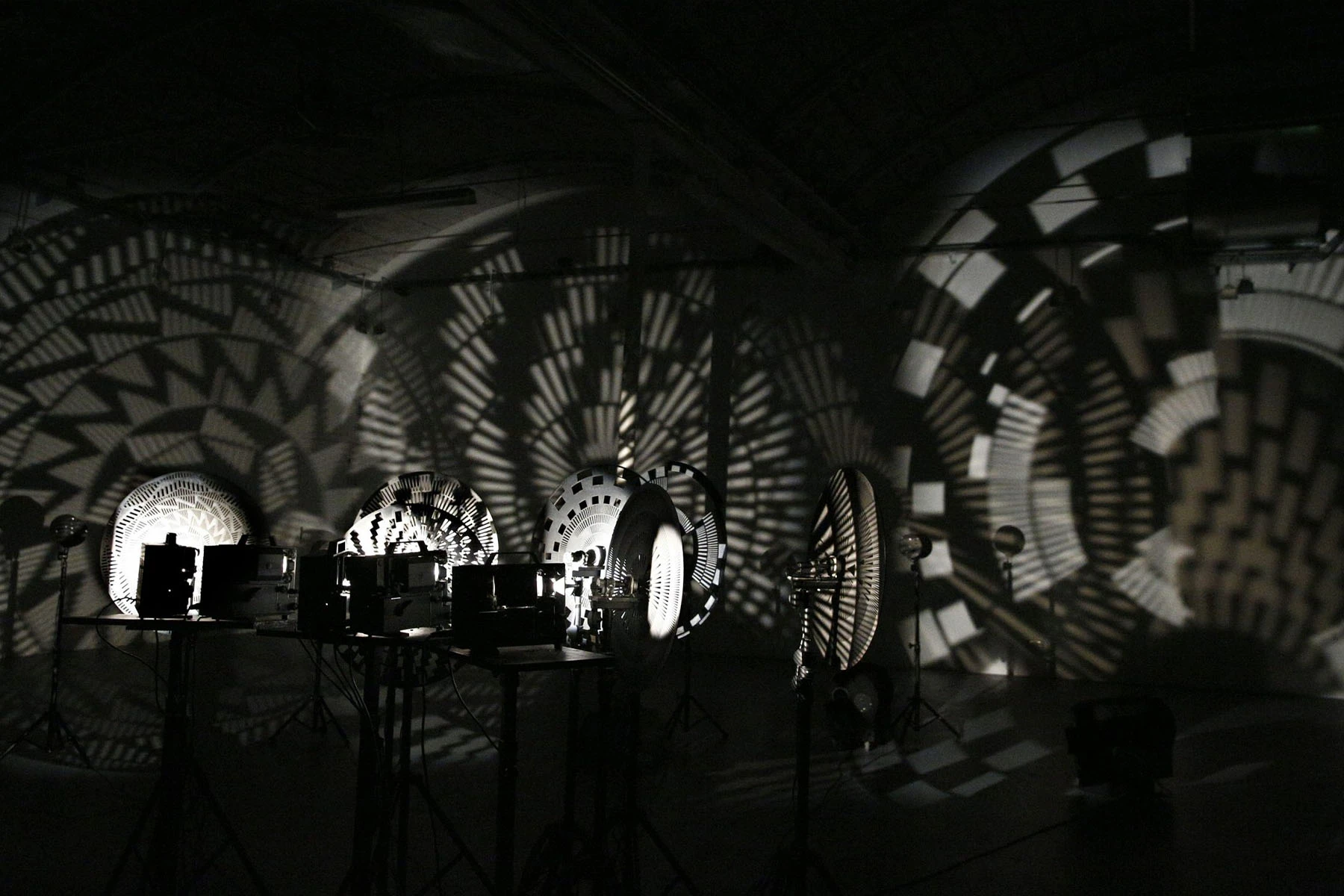
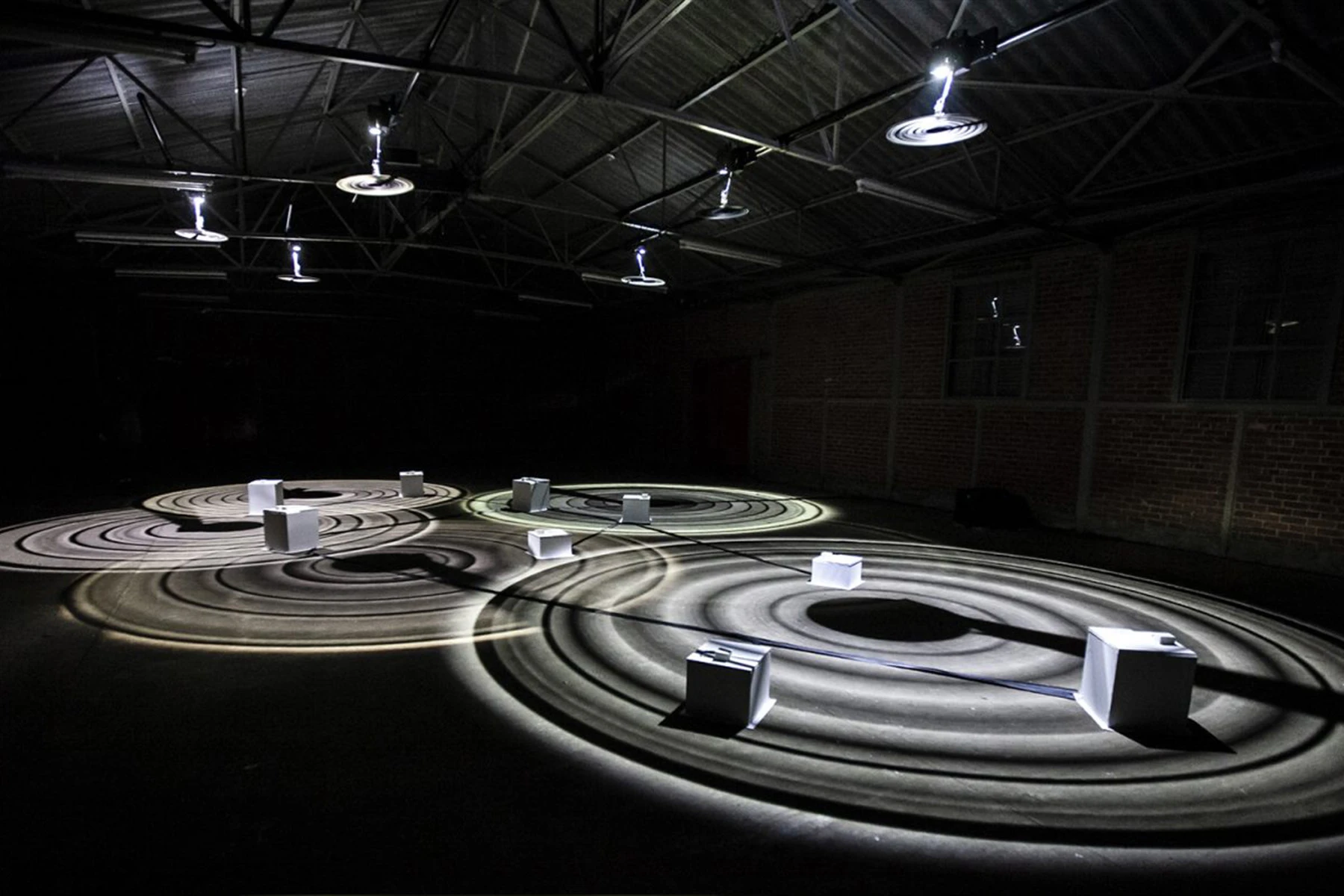
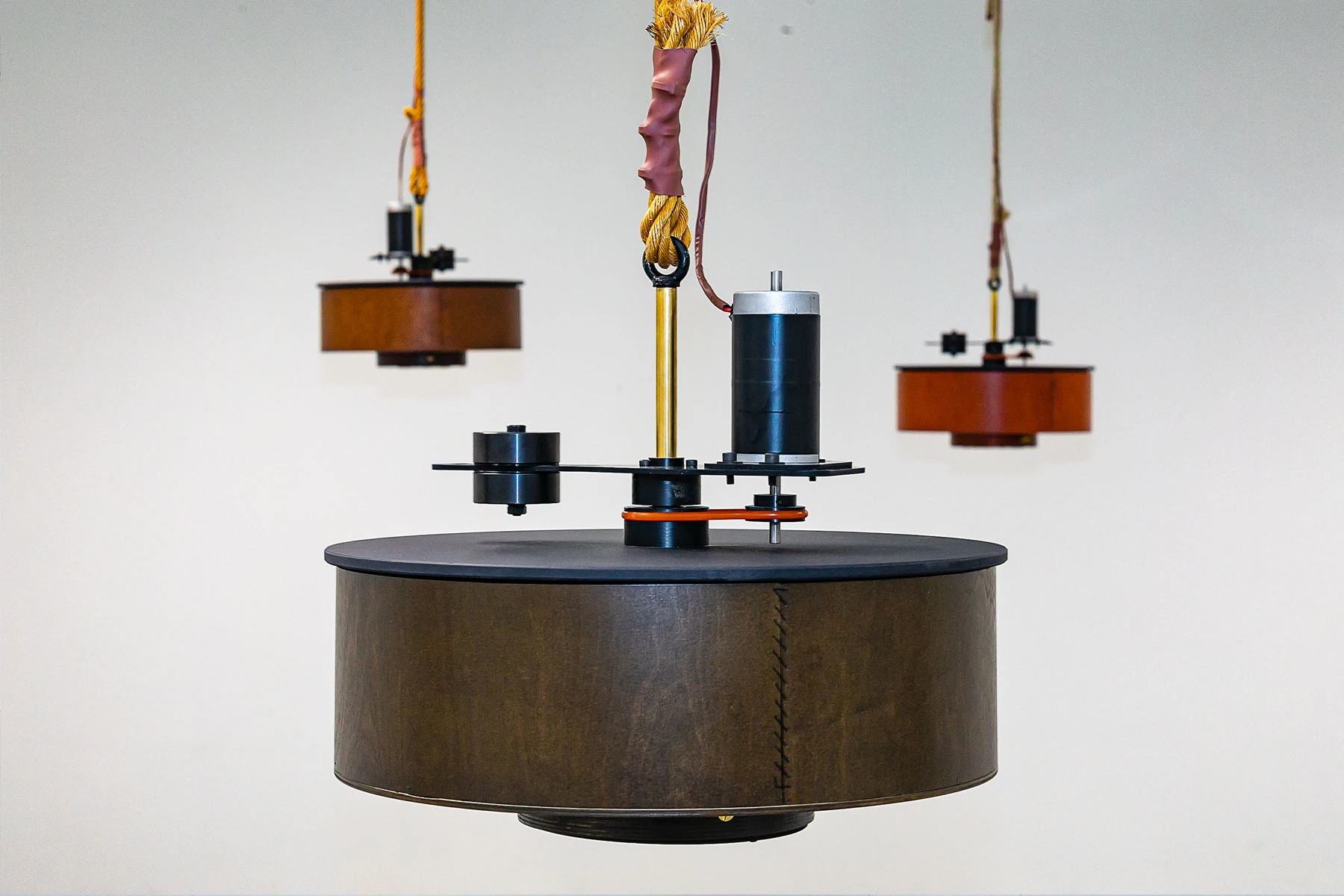
Mariska De Groot’s work BROM from 2021 consists of motorised instruments hanging from the ceiling – an enlarged version of the sound and movement techniques of a humming top. ‘My practice starts with a fascination for a technique, fairly simple or seemingly simple, which I magnify to experience on a larger scale,’ she explains. Similarly, her light installation Hidden Patterns (2017) focuses on old animation techniques by turning them into a full sensory experience.
These installations reclaim agency over techniques that are opaque to non-manufacturers, thereby bringing technology closer to us. iii creates the artistic tools to bridge the widening gap between us and tech. But beneath it lies a deeper message: it’s prompting us to take agency over technology in our everyday lives, too.
Intelligence beyond the human
Finally, we come to what might be the world’s most debated topic of current times, artificial intelligence. With the rise of AI, the art world is once again adjusting to a new technological advancement – an adaptation driven either by curiosity or by a certain restraint and suspicion – while the fundamental philosophical question of what intelligence is and who, or what, is entitled to ‘having it’ is widely debated.
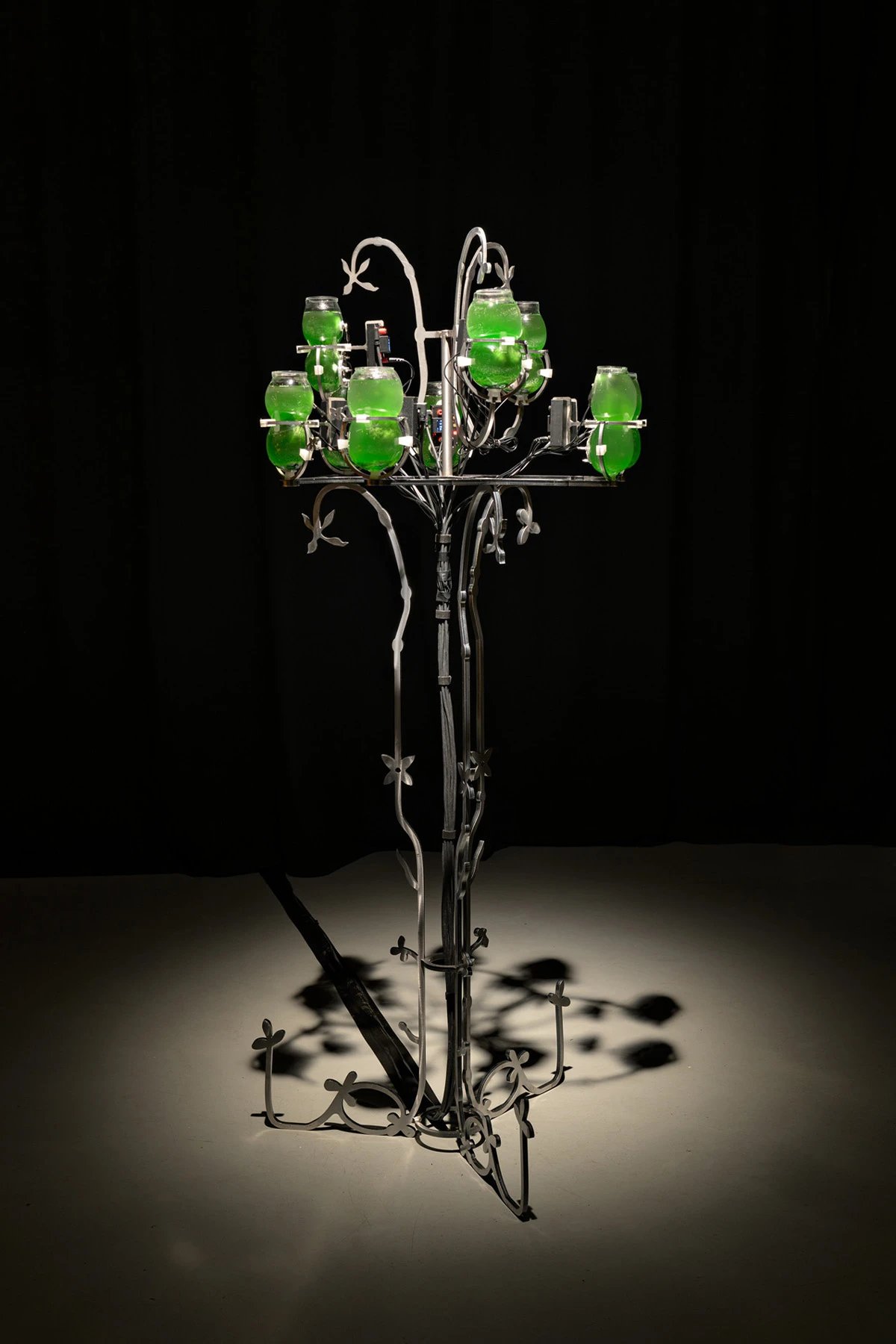
Following the ideas of feminist thinker Donna Haraway and anthropologist Anna Tsing, iii approaches the concept of intelligence as something not just bound to humans but to multiple species and multiple beings as their website underscores: iii works with artists who bring us into new relationships with intelligences of all kinds – be they electronic, biological or geological, collective or collaborative exploring non-human and imaginary forms of perception and life.
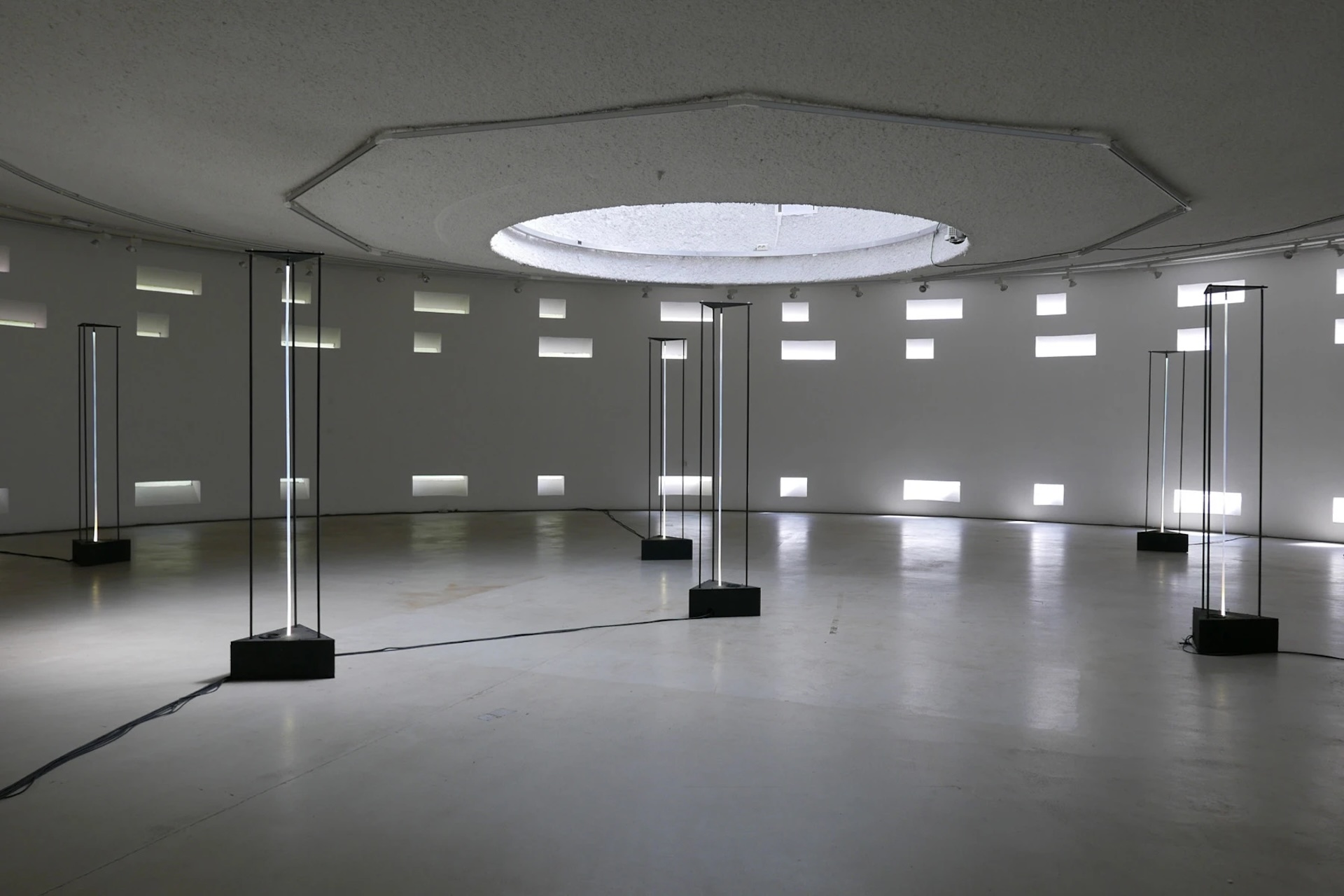
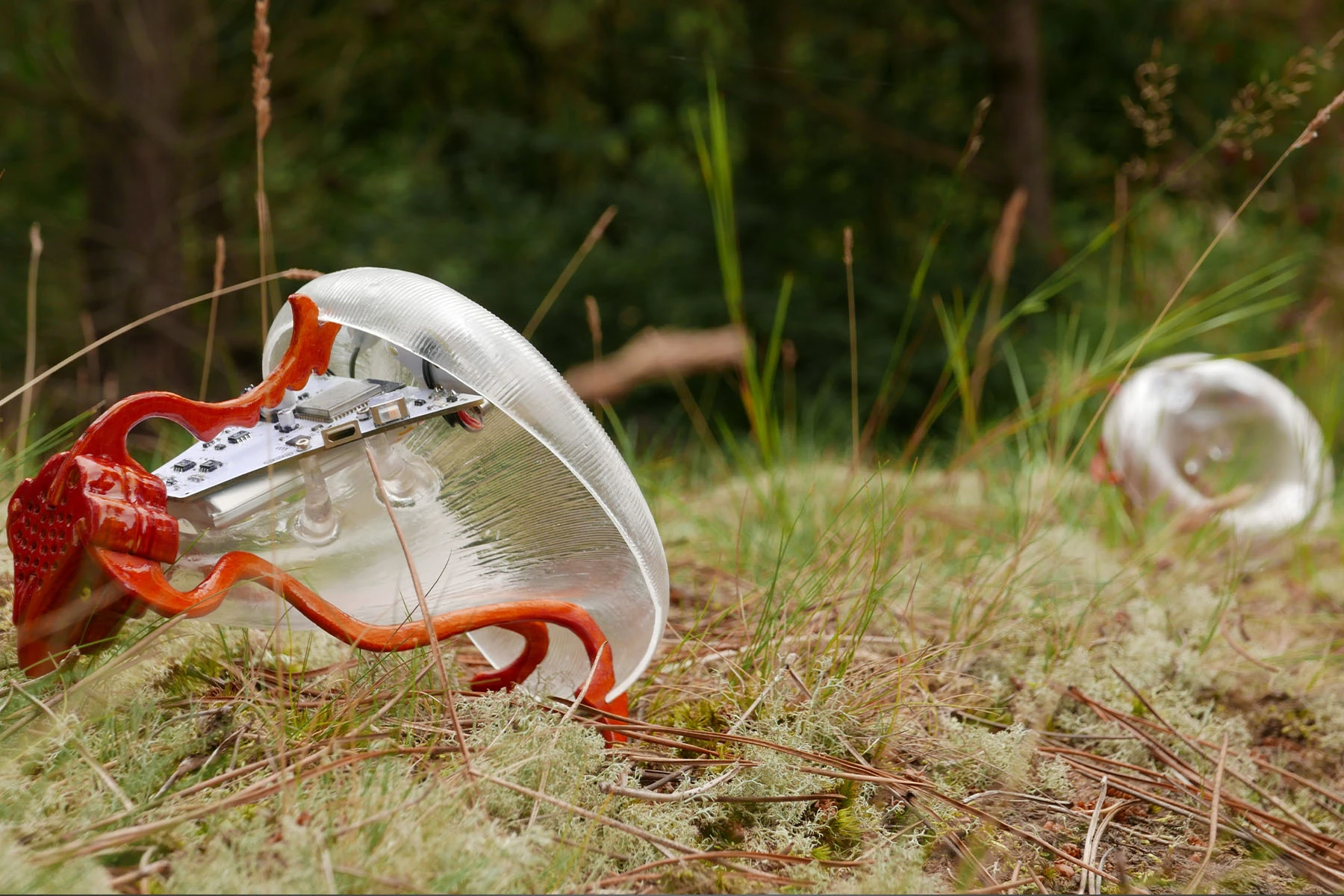
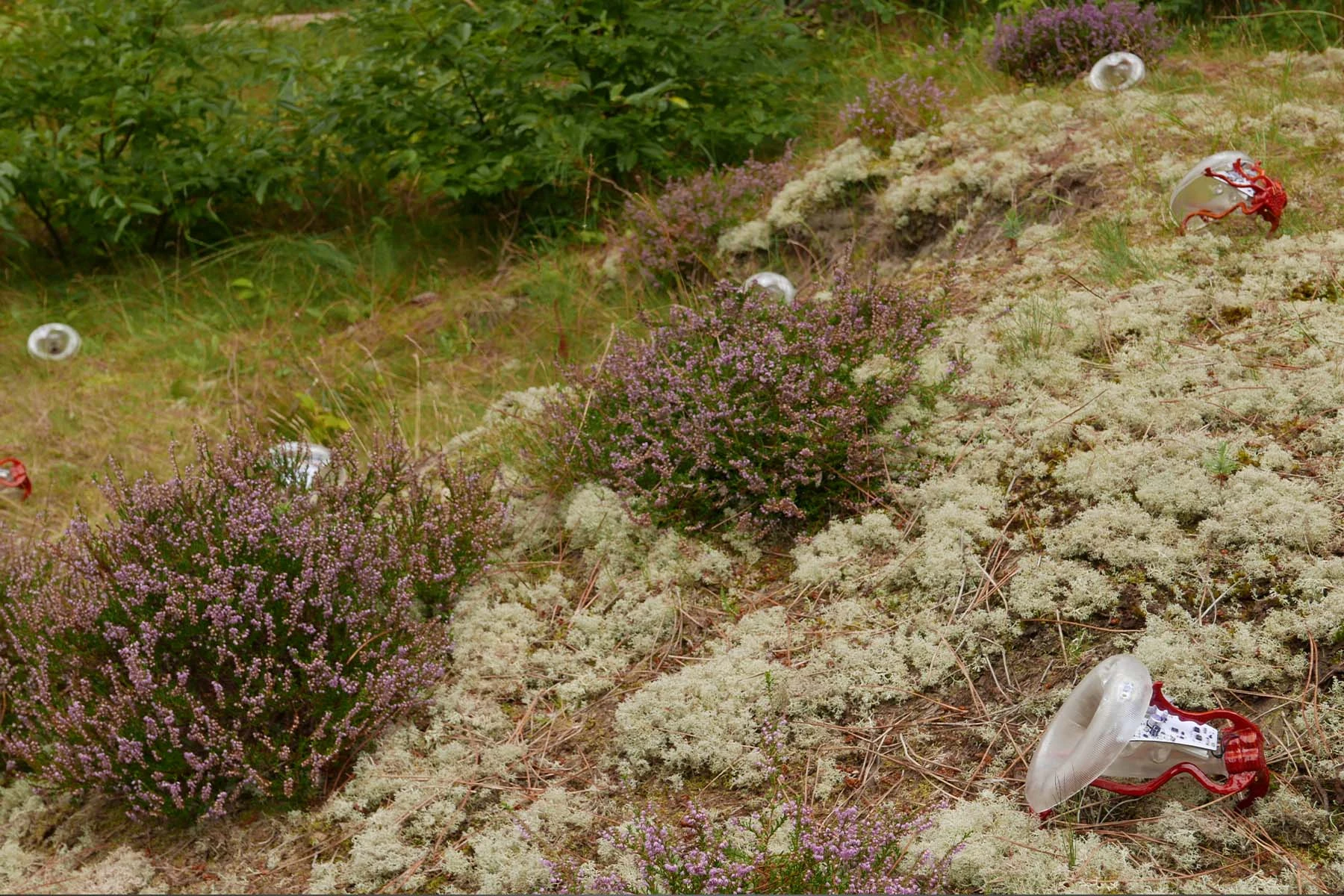
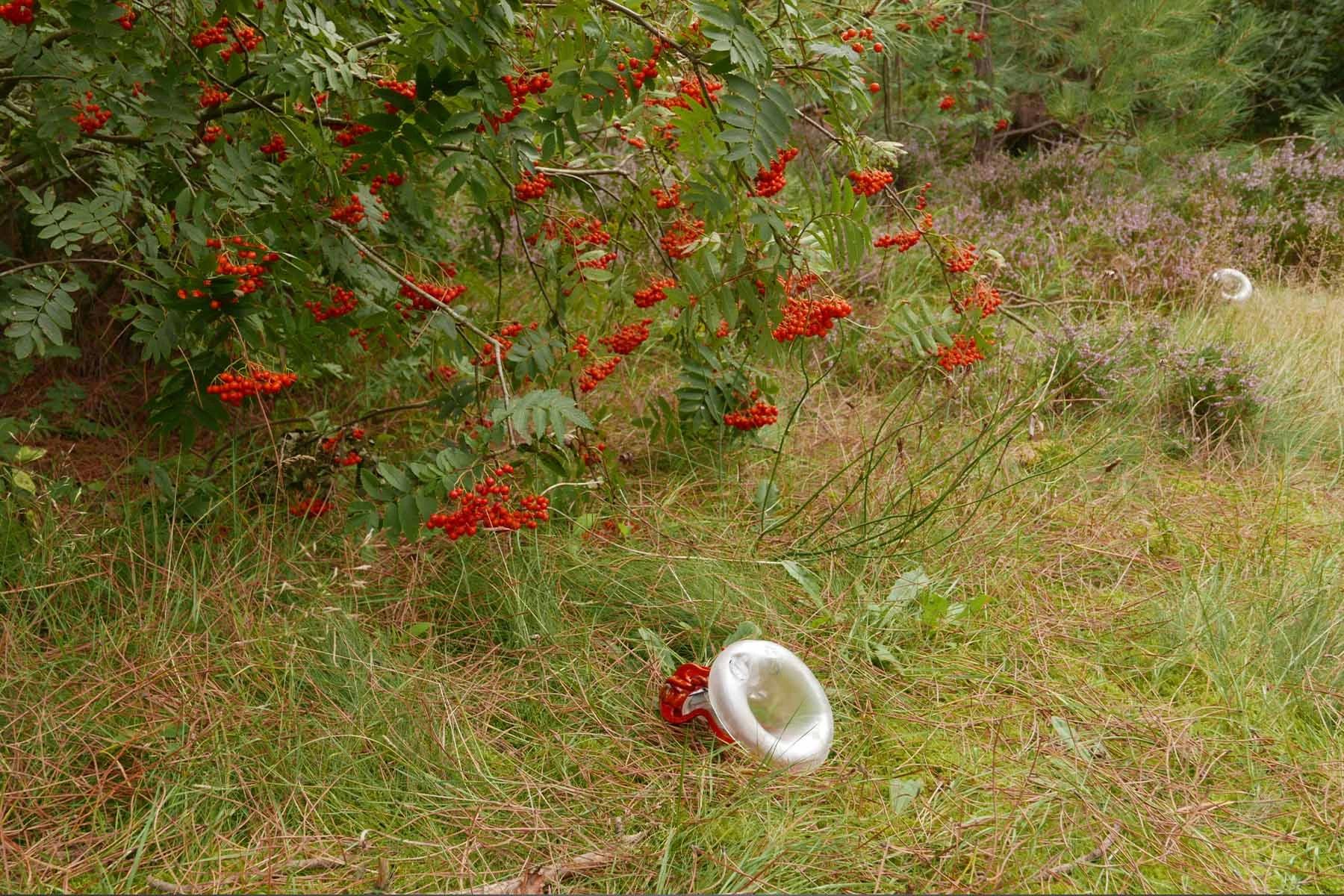
Tapping into this idea is the sound installation Komorebi (2016) by Matteo Marangoni and Dieter Vandoren. The work consists of a swarm of artificial creatures that, each on its own, makes music in response to changes in light conditions caused by the movement of trees and clouds and the shadows created by their interplay with the sun. These responses make it an intelligent, living machine that responds to life beyond organic forms (in this case, the patterns created by the wind).
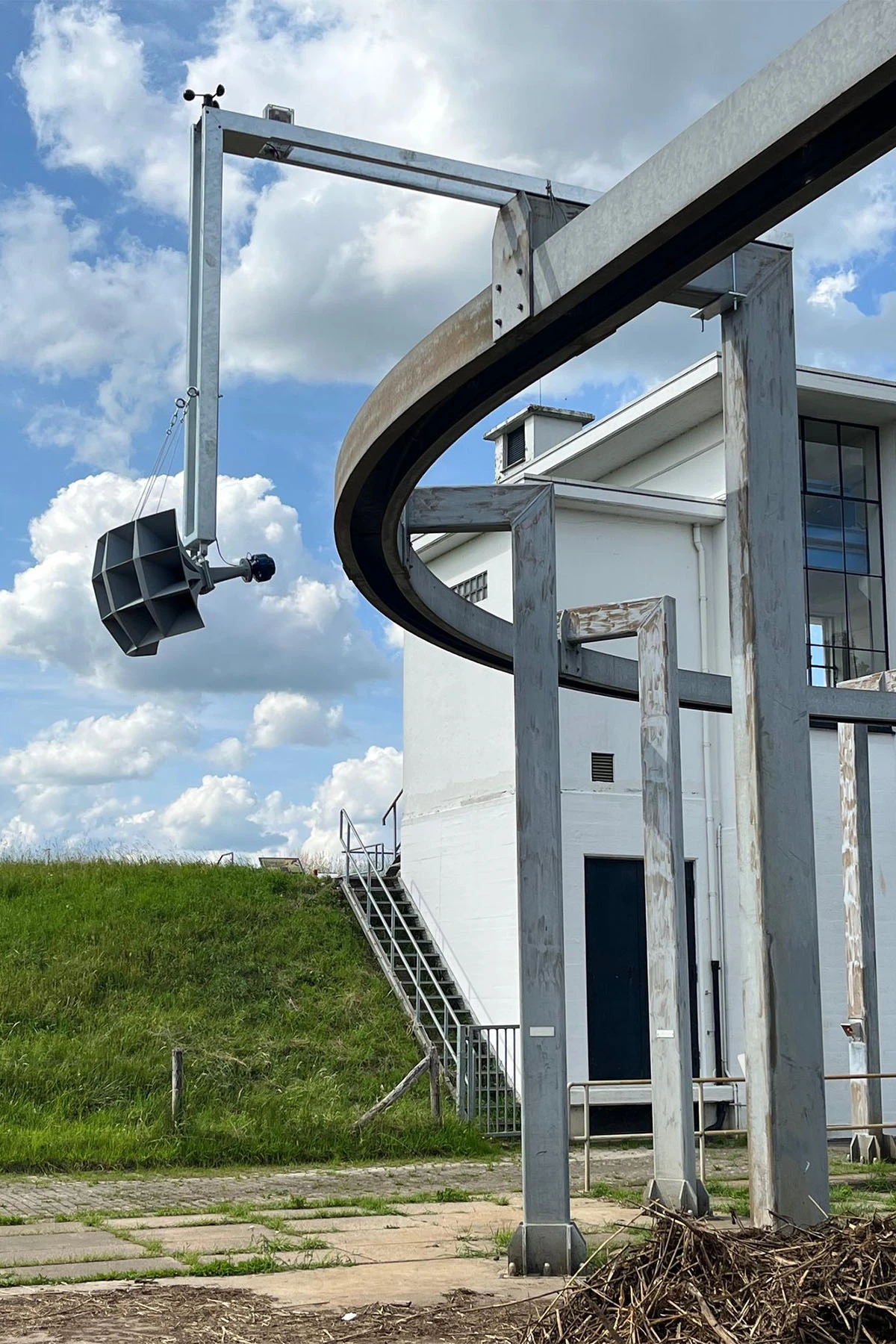
In 2025, Matteo Marangoni worked with the same thematics, bringing a pump station to life as part of the IJsselbiennale. A machine learning algorithm analysed the behaviour of birds in the surrounding environment of the pump station and, in combination with weather data, converted this into a digital music synthesis program generating electronic music in real time. In this way, the work functioned as both an algorithmically driven extension of the pump and an extension of the natural environment. The Living Pump Station is a human-made living machine, with its own intelligence that stands in direct relationship with biological life.
This year, Marangoni will deepen his research with Chorusing Symbionts, ‘a project investigating the possibility of interspecies music bridging the worlds of humans, robots and animals within the framework of ecoacoustics’. Where do human intelligence and machine intelligence meet, merge or interact? And is there a way to make us more aware of biological intelligence by applying machine intelligence? Even though the biological entities have no say in this, it could be a way to bring us closer to nature.
This turn towards multispecies intelligence is a direct stance against the dominant narrative that AI will take over creative work, our jobs, and even our rituals. Instead of crumbling under this doom scenario, iii members explore their interaction with AI tools and the way they can inspire us to take a closer look at the sorts of intelligence with which we co-exist. A harmonic future that brings back the togetherness of technology and humans under the one very thing we’re actually all part of: nature.
.webp)
We move with technology, and technology moves with us. Both are never separate, and therefore, it's important to stay curious about the technological tools we have at hand and how we can collaborate in a non-damaging way. We have the agency to actively shape our relationships with technology, and it’s exactly that point of departure that iii embraces. ‘A curious approach to technology is important, driven by wonder, play, and discovery’, Vandoren emphasises.
%20(1).webp)

