What lies within the walls of a church can feel both apparent and mysterious. In the Oude Kerk, centuries of symbols, stories and meaning remain visible, while other layers have been obscured or lost. In conversation with Tharim Cornelisse, namer, Woody92 and Picture, we explore how artists reinterpret history through sound and contemporary practice. Can a place ever hold a fixed meaning, or is it constantly rewritten by those who enter it?
The space between scale and self
The organ space of a church is a space that feels forbidden, only reserved for the organ player. But once you make it up there as a sporadic guest, it feels like being an atomic particle inside a network of pipes that communicate upwards to a spiritual presence. The organ is a sonic relic of the church, yet with each tap of the keys, click of the valves, and push of the pedals, it writes a new version of the sound within the space. The intensifying resonance can become so repetitive that it guides you into a state of hypnosis, connecting you to the breadth of the instrument's capacity and, most importantly, to its story. The organ pipes represent an earthly fungal network, and become larger than life not in the way of religion, but in the way of cellular frequencies. A new narrative.
Our relationship with forms of such a monumental scale that exist within sacred spaces raises questions around the meaning of consciousness, and the ways in which we choose to engage with it. For Post-Space, this type of scale is being examined by Tharim Cornelisse, who is developing the audiovisual live show Nooga in collaboration with Woody92 and Floid, as well as the audiovisual art installation Hieropixel. ‘I tried to focus on the vast volume that exists within the Oude Kerk. The sheer size of the building and what this does to a person walking through it’, explains Tharim, ‘in which I imagine an almost god-like computer machine that renders out everything we see around us with the inevitable glitches and bugs. It can be quite soothing to think that the harder things in life, are dreamt up by something else, maybe something you can’t fully comprehend, and have no influence on.’ Tharim describes that at some point during Hieropixel, that backend of the “machine” will break down and be exposed, reflecting the destruction of this god-like power, and the tears in the seams of its awe-binding presence.

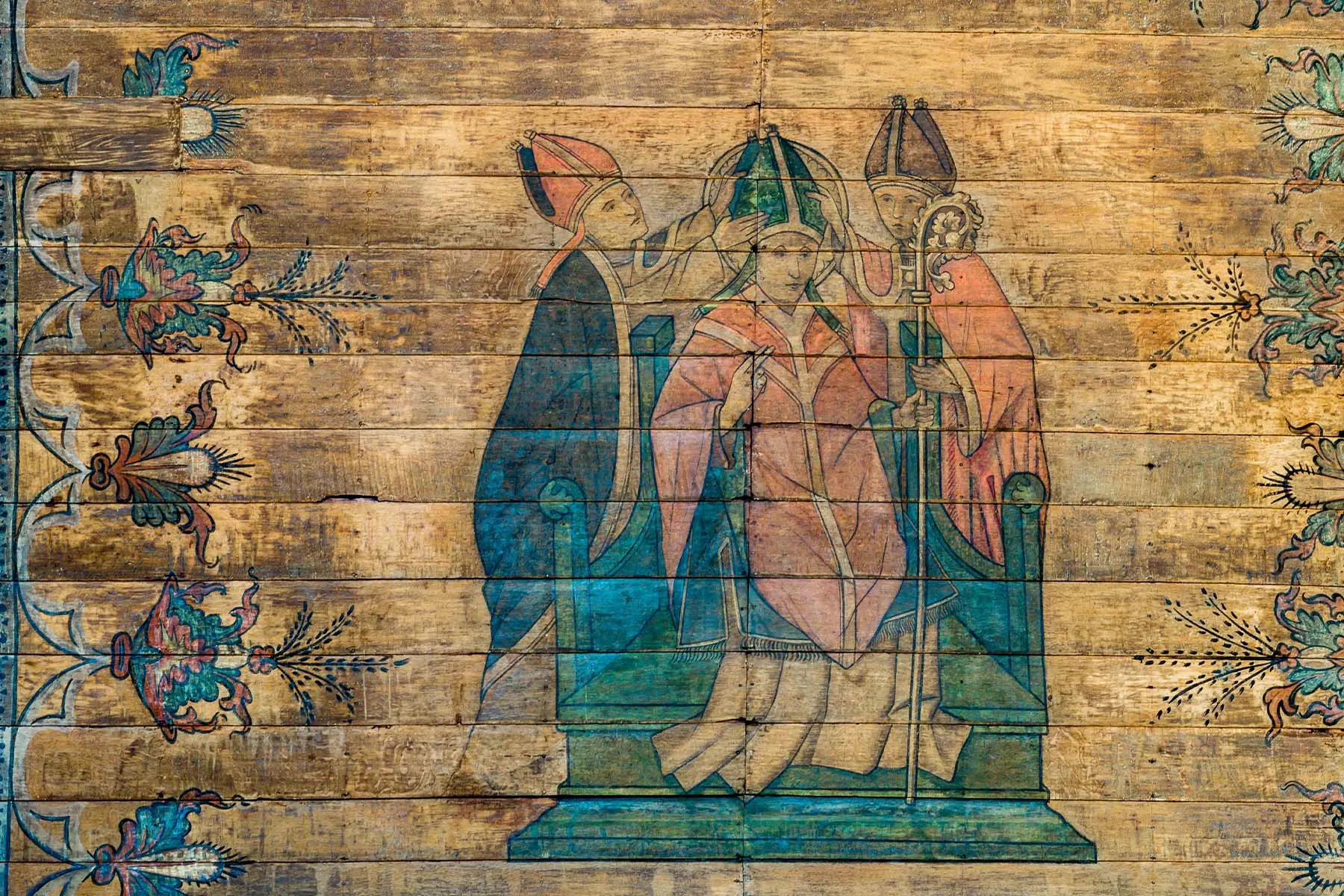
'The forgotten meaning opens up a whole world of interpretation for the viewer to transpose onto it'
Spirits of duality
namer (formerly known as Lazergazer), formerly programmer at Oude Kerk and performing at Post-Space during ADE, also comments on the nature of the church as a presence that now contests power. ‘When you walk in, it's hard to think of it as anything other than a church. We have some of the most beautiful Orthodox churches in Syria, but I can't unsee what their architecture is for, and I've always resented it. Places of worship are built at a scale that makes you feel small and helpless before God. The height, the vaults, the light are an apparatus, and the body is what it works on. But if you take the religious context away, there is something beautiful about feeling that small. You become a small component in a large space. The same room holds both, and that duality shapes how you experience anything played in it.’ The relationship between large and small, plays directly into the hands of the power dynamics that religious institutions omit.
But the Oude Kerk has rewritten its history time and time again, building beyond its Christian origins. Today, the Oude Kerk is still a church, but mostly an incubator for art and music. Artists are invited to make site-specific work in dialogue with the church, and in that dialogue, power structures are often challenged. For example, they recently hosted Jesse Darling’s Godsworth exhibition, which, in a time when social, political, and ecological systems are under pressure, reflects on what is valuable and how value is redefined and rediscovered time and again.
.jpg)
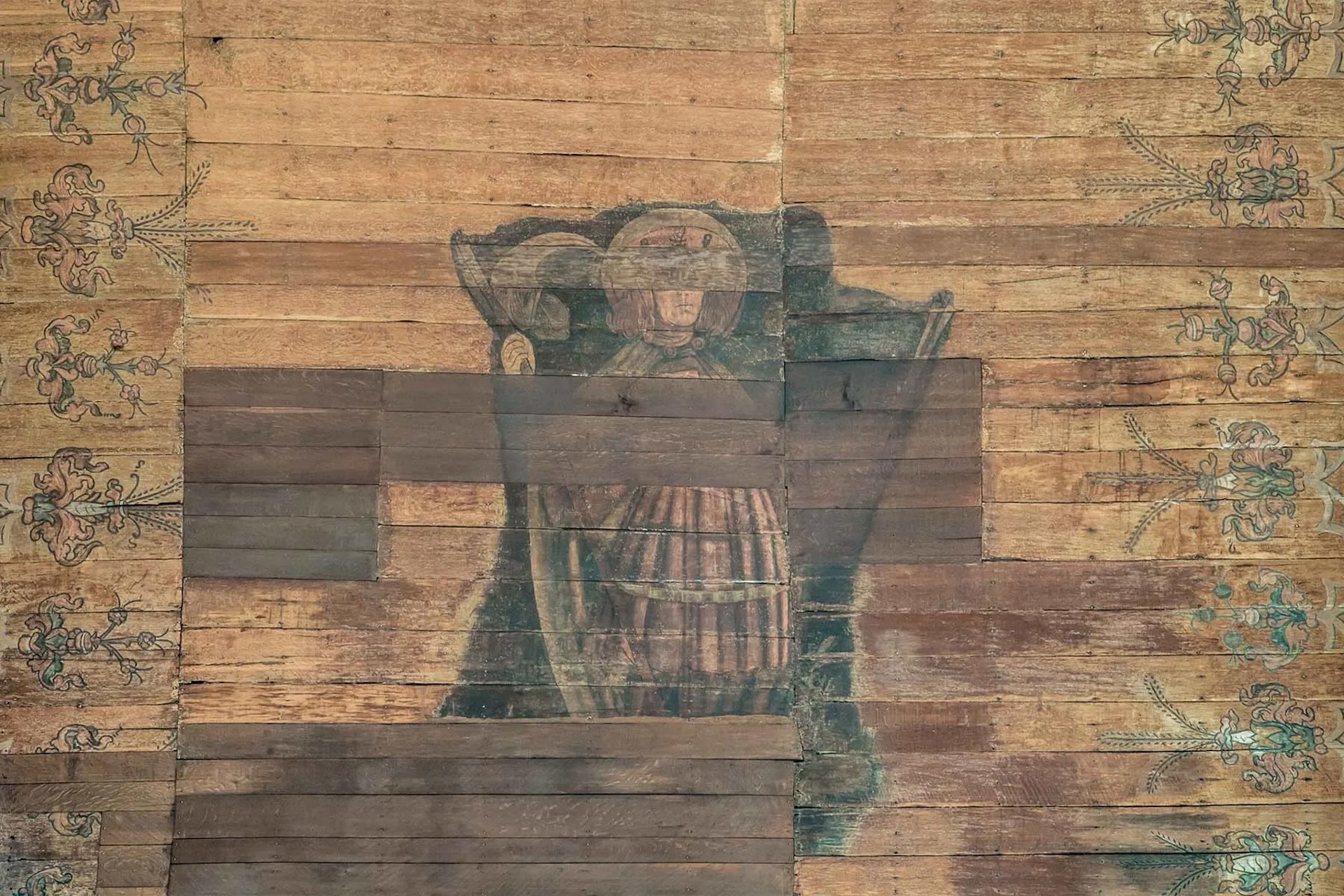
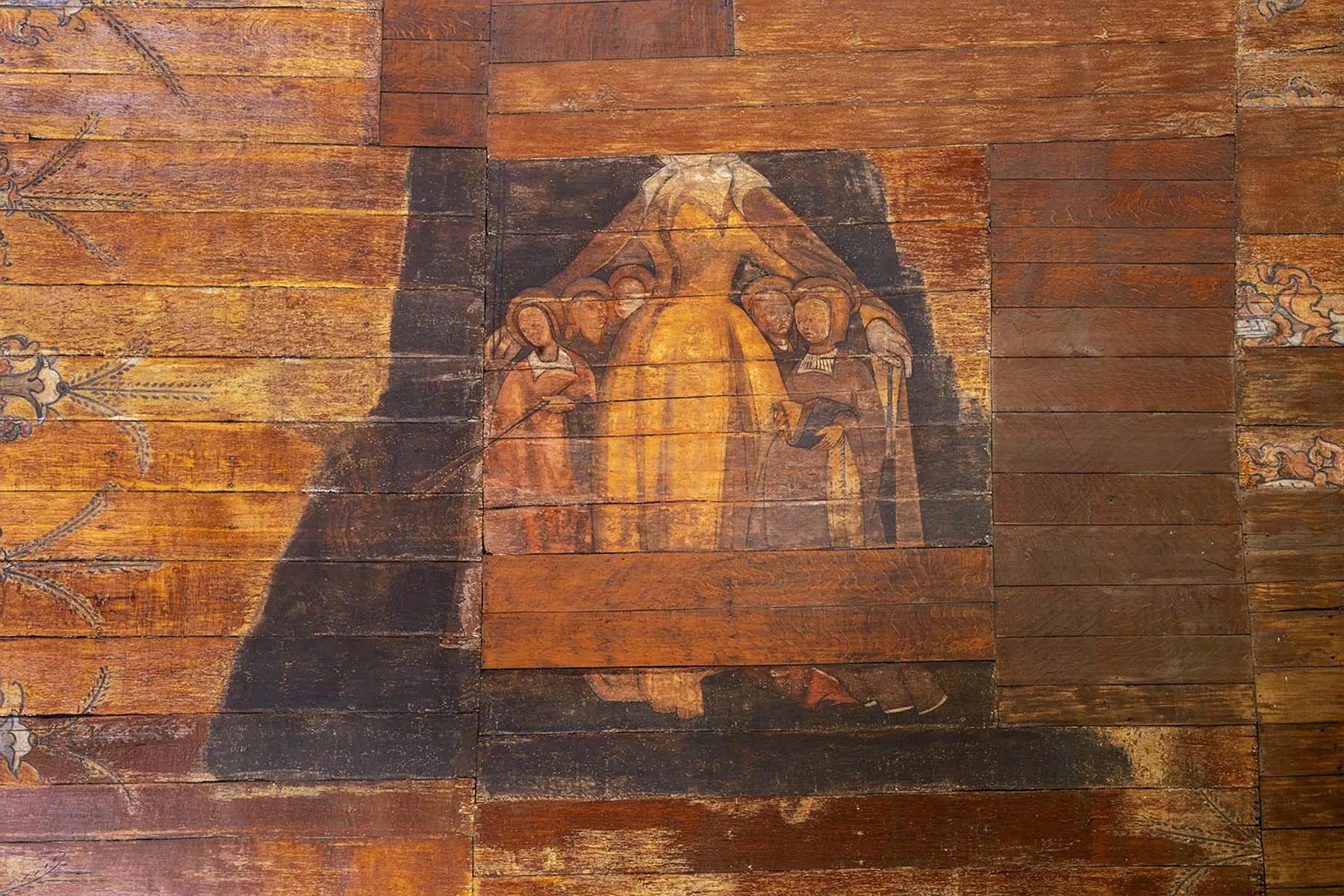
Spirituality in itself carries much ambiguity. The foundations of what it means to be spiritual as a human go back before religion was introduced into our society, known as paganism (Latin for “countryside”) or polytheism. Paganism and related folklore found themselves amongst different societies, including Egyptian, Greek, Roman and Celtic. The latter forms the basis for Tharim, Woody92 and Floid’s Nooga project, which will premiere at Oude Kerk for Post-Space. All being fascinated by ancient mythology, Nooga is an audiovisual performance based on “The Hooded Spirits” (or the “Genii Cucullati”), which are relics of three figures in cloaks who have never been deciphered in ancient texts. ‘What interested me about the image is that the forgotten meaning opens up a whole world of interpretation for the viewer to transpose onto it’, explains Tharim, pushing the narrative that the ambiguity of contemporary art can also mirror the ambiguity of ancient symbols, where meaning is abstract rather than concrete. Woody92, who’s performing under his W92 moniker, together with his blood brother Floid, approaches the same idea through sound: ‘What we would like to try out is to take a certain part, shape, symbol out of its context and place it in our Nooga world.’
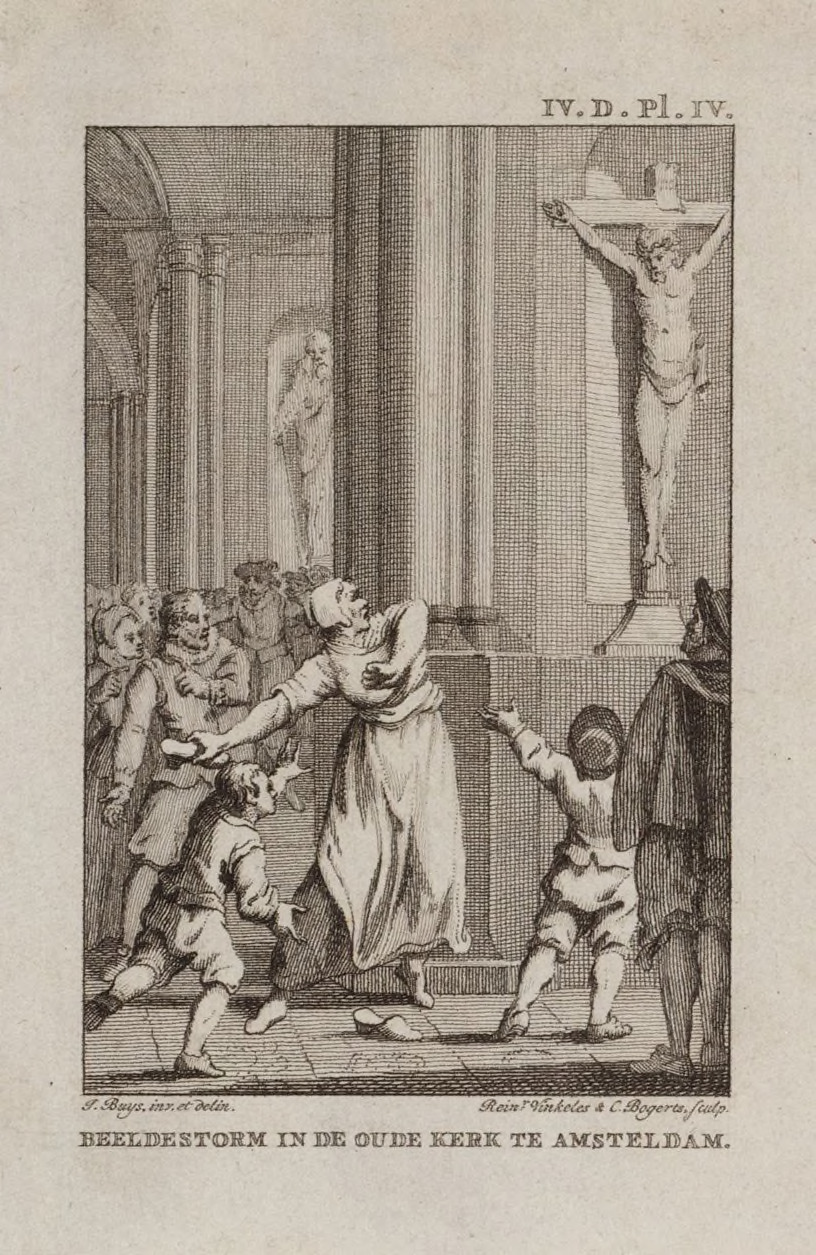
In the context of sound, designer and producer Picture adds that ‘I would be a bit critical of the notion that ideas belong to a certain time or place. If we boil it down, much music exists for similar reasons.’ On the one hand, social parallels can be found in music, whether to escape, find solace, or seek a sense of identity. On the other hand, the ownership of music becomes warped, decentralised, and sometimes even lost. What can sometimes feel beautiful to be lost can at other times be culturally harmful. This discourse is present in the historic symbolism of the Oude Kerk, where the iconoclast events of 1566 called the “Beeldenstorm” saw artefacts and relics become vandalised or destroyed by Calvinist mobs. Tharim adds that ‘Nooga is the creation of digital relics focused on two ideas: the idea of the lost or destroyed symbol – post-iconoclasm – and the comparison between the dance floor and places of worship as spaces where we find a contrast between our day-to-day mundane and the sublime.’
Spirituality in itself carries much ambiguity. The foundations of what it means to be spiritual as a human go back before religion was introduced into our society, known as paganism (Latin for “countryside”) or polytheism. Paganism and related folklore found themselves amongst different societies, including Egyptian, Greek, Roman and Celtic. The latter forms the basis for Tharim, Woody92 and Floid’s Nooga project, which will premiere at Oude Kerk for Post-Space. All being fascinated by ancient mythology, Nooga is an audiovisual performance based on “The Hooded Spirits” (or the “Genii Cucullati”), which are relics of three figures in cloaks who have never been deciphered in ancient texts. ‘What interested me about the image is that the forgotten meaning opens up a whole world of interpretation for the viewer to transpose onto it’, explains Tharim, pushing the narrative that the ambiguity of contemporary art can also mirror the ambiguity of ancient symbols, where meaning is abstract rather than concrete. Woody92, who’s performing under his W92 moniker, together with his blood brother Floid, approaches the same idea through sound: ‘What we would like to try out is to take a certain part, shape, symbol out of its context and place it in our Nooga world.’
In the context of sound, designer and producer Picture adds that ‘I would be a bit critical of the notion that ideas belong to a certain time or place. If we boil it down, much music exists for similar reasons.’ On the one hand, social parallels can be found in music, whether to escape, find solace, or seek a sense of identity. On the other hand, the ownership of music becomes warped, decentralised, and sometimes even lost. What can sometimes feel beautiful to be lost can at other times be culturally harmful. This discourse is present in the historic symbolism of the Oude Kerk, where the iconoclast events of 1566 called the “Beeldenstorm” saw artefacts and relics become vandalised or destroyed by Calvinist mobs. Tharim adds that ‘Nooga is the creation of digital relics focused on two ideas: the idea of the lost or destroyed symbol – post-iconoclasm – and the comparison between the dance floor and places of worship as spaces where we find a contrast between our day-to-day mundane and the sublime.’
.webp)
Relics as technology
As the claim of what truly is the divine truth within any religious tale will always shift over the course of generations, one can end up in a state of mystical ambiguity if you let loose ideas of ownership or truth. When we ask Picture how he builds on what already exists in music, he highlights technology's role and how new technology doesn’t always mean an improvement of music. ‘I really like the idea that technological "advancements" shouldn't be a one-way road. The aesthetics of the time might have moved on, but they should loop back if they resonate with individuals or movements today.’ Here, there is a relationship between imitation and erasure. The creator never wants to imitate, but instead to be inspired by the work. But when it comes to historic symbolism, at what point does the vagueness of inspiration delineate them entirely from their original context? Or, perhaps we want to weaponise their context, as a counter-narrative to oppressive systems. ‘From the moment you decide to collect it, you're responsible for carrying its story’, explains Namer. ‘You are constantly giving it new contexts and carrying it to new people, to be interpreted again and again.’
Counters and contrasts can provide a striking message to certain symbols. In the context of Post-Space, Tharim Cornelisse will be utilising a large LED screen whose contemporary apparatus imposes an extraterrestrial presence in a space inhabited by ancient artefacts. ‘The screen itself, as a monolithic presence in the church, feels like a relic and almost starts to feel like a sentient being brought into this world by all the symbols and architecture that is seen in the church’, notes Tharim. ‘By doing this intentionally, I think this contrast only adds to what the work tries to convey’, which is something Tharim prefers to leave unexplained. ‘If I leave space or create space for interpretation, I feel like my work starts to live in a richer context.’
Ambiguity and responsibility in the contemporary world
This leaves us with the question: what is the purpose of contemporary art and sound, if it is not to question and reinterpret the existing form? Picture mentions that ‘it's not about revivalism or fetishising the past, but picking up older things and being the filter that makes it "exist" again. In a new form and with respect for the past, but just enough disrespect that it breaks a bit.’ This disrespect is where art can act as both an honorary and a subversive vessel, or a blend of both.
The narrative you build within a space, such as Oude Kerk, comes with a level of responsibility to continue the whispers of dialogue that are ever present. Some may be obvious; some, fade into the mist. namer explains that “anything contemporary you bring in joins a conversation that started centuries ago. I think the most interesting work doesn't try to oppose the building or juxtapose itself with it. It understands that the Oude Kerk is more than a church. It's an undefinable place, a space in flux, and it's different every time you encounter it. That contingency is what makes it contemporary. The space is a collaborator in every encounter.’


