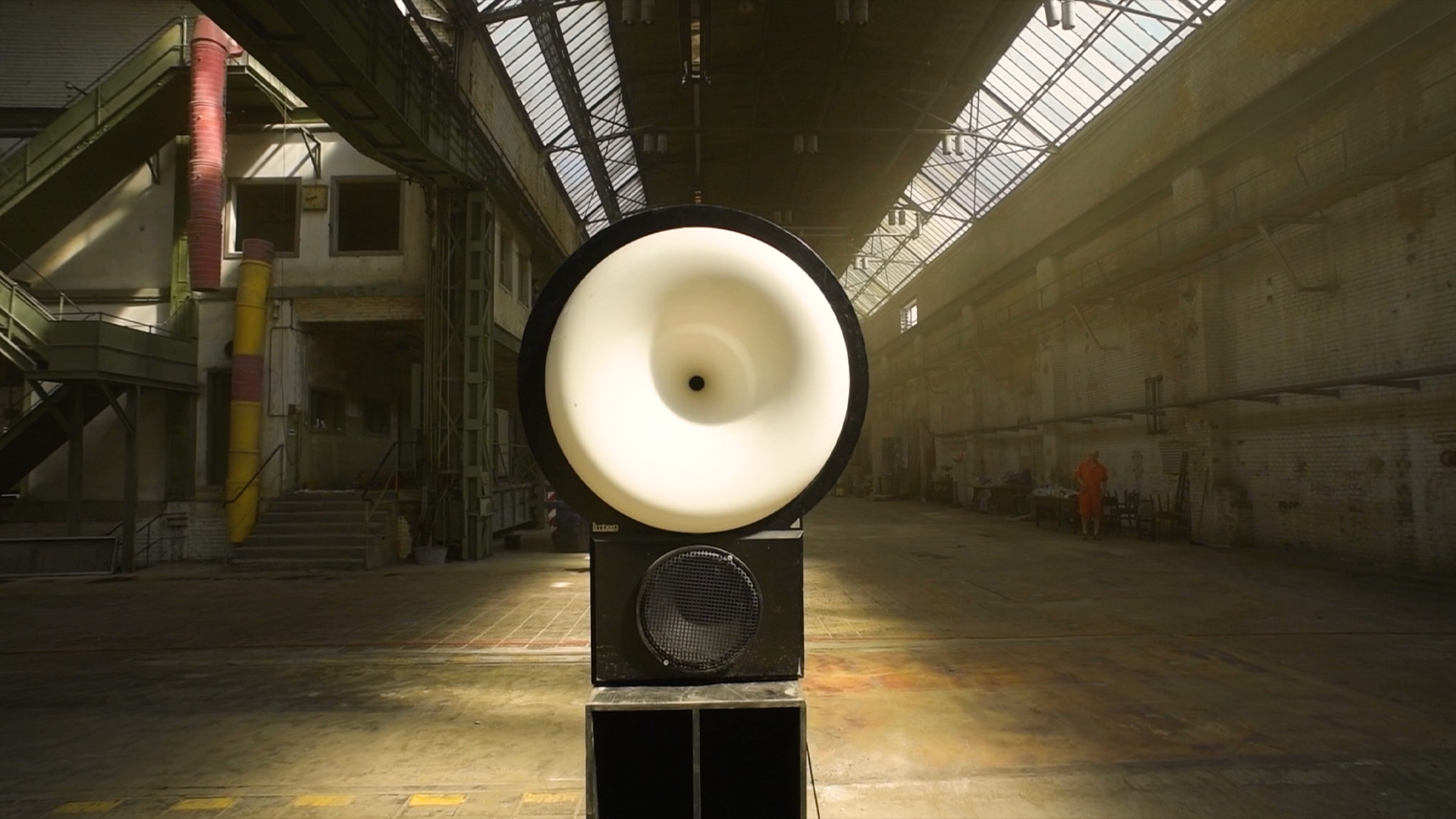
From the outside, MaHalla reveals very little of itself, but behind a small entrance, the former AEG industrial complex opens into a monumental hall with twelve-metre high ceilings, iron structures, and over a century of accumulated history. When filmmaker Ralf Schmerberg entered in 2019, he was not looking for a venue, but a studio. What he encountered instead was a space that altered his sense of scale, bodily awareness, and attention. What happens when the room starts dictating the programme?
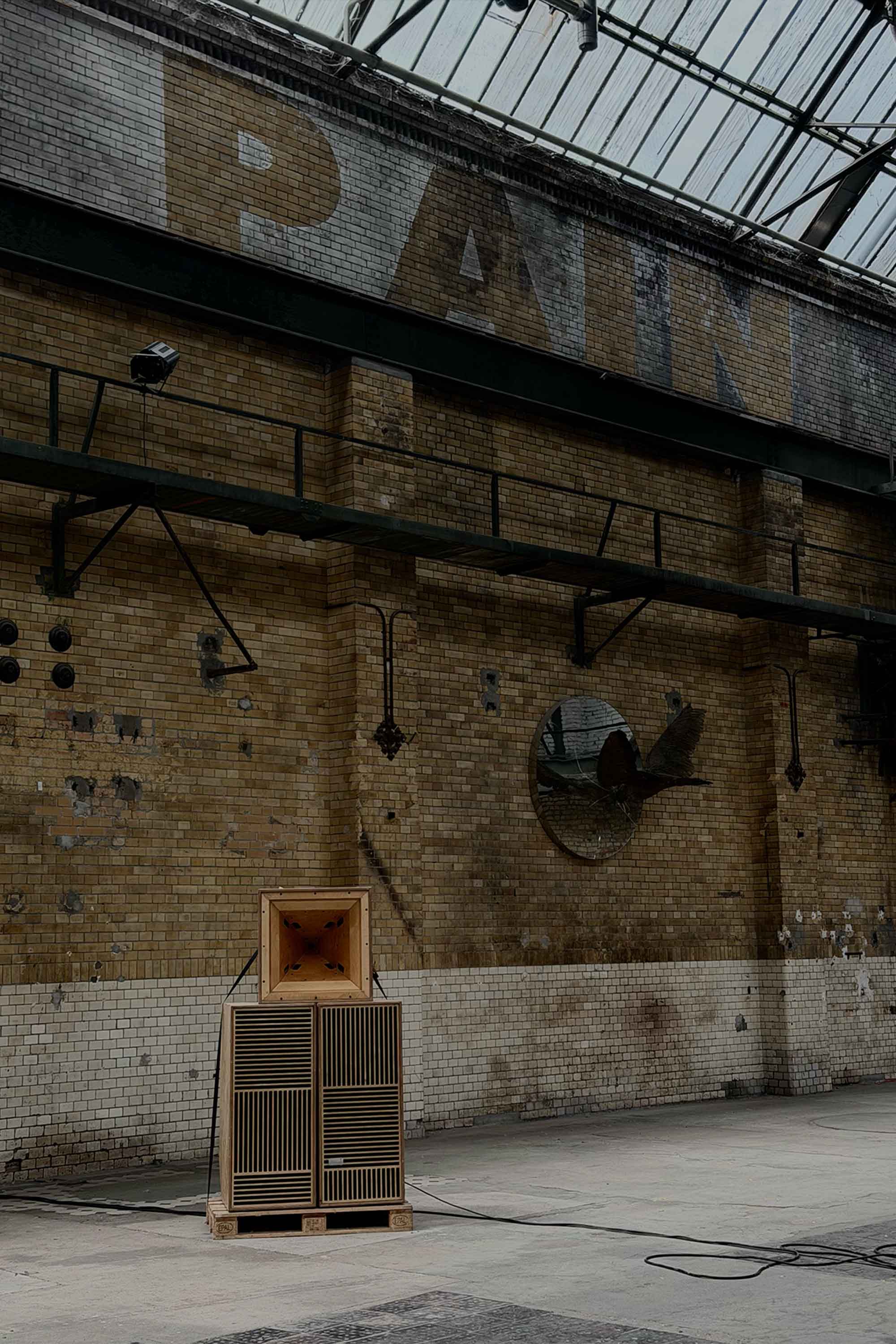
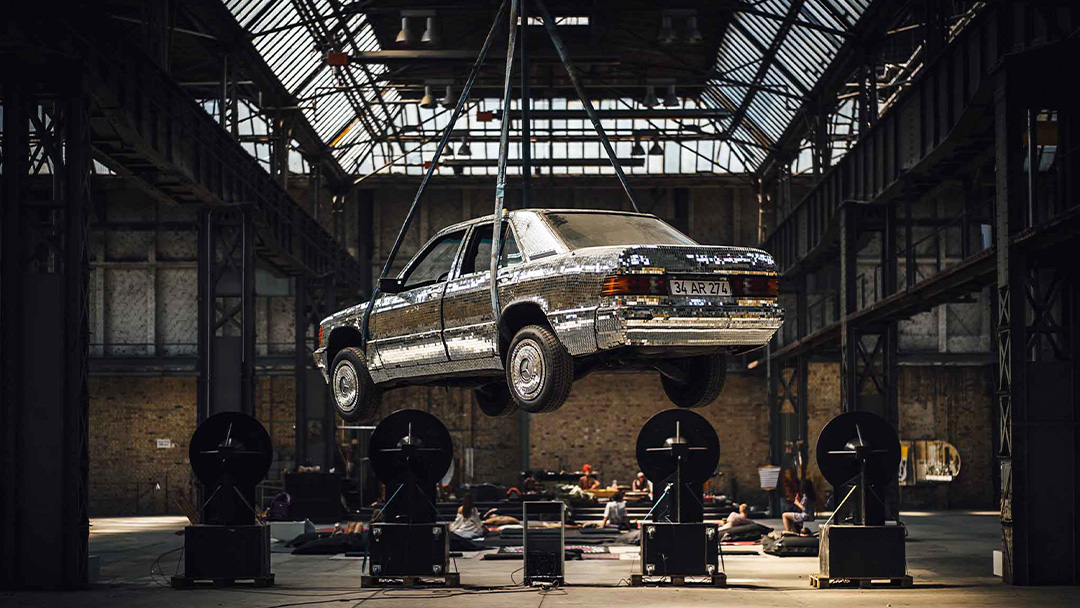
MaHalla is a 9,000-square-metre former AEG industrial turbine hall in Berlin that brings together studios, event spaces, and production rooms under one roof. ‘Once you enter a room like this,’ Schmerberg explains, ‘you become smaller, and that smallness is not diminishing, it’s clarifying. You stop being so sure that what you brought in with you is the most important thing in the room.’ Rather than functioning as a conventional venue, it operates as a shifting infrastructure where different forms of use overlap, from exhibitions and dinners to residencies and listening sessions. These spatial conditions are now extended in Sanctum of Sound, a 51-hour durational festival introducing a first experiment in long-form programming within the MaHalla space.
The conditions of a space
Early in conversation with Ralf it becomes clear that there is no fixed separation between production, presentation, and daily life within the space. What defines this approach is not curatorial control, but its absence. As Schmerberg explains, he does not programme MaHalla the way a curator programmes a gallery, but instead “plants conditions” in which different forms of use, encounter, and attention can emerge over time. ‘Real transformation is not something you can promise or deliver,’ he notes. The aim is not to produce outcomes, but to create situations where something might happen, or might not, and where that openness becomes part of the structure itself. Within this logic, the space remains continuously in use, shaped by those who work there as much as by those who come to experience it. Artists, organisers, and visitors move through the building at different speeds and in different ways, depending on what is unfolding inside it.

'The space starts to remember'
Schmerberg’s documentary Staub (German for “dust”) follows the large-scale cleaning and revitalisation of MaHalla’s industrial halls, treating the building not as backdrop but as active subject – something that is worked with rather than worked on. When applied to programming, this treatment allows you to shift away from “producing events” toward “shaping conditions for collective experience over time”. As artists, volunteers, collaborators, and visitors began shaping the building’s daily life, Schmerberg’s attention shifted. ‘Does the space feel like it is for them?’ he asks. ‘Not comfortable in the padded-seats sense, but generous. Honest. Alive.’ It is therefore unsurprising that “MaHalla” derives from the Arabic word for “place” or “neighbourhood”, reflecting an approach grounded in collective presence as much as artistic direction.
When events stop behaving like events
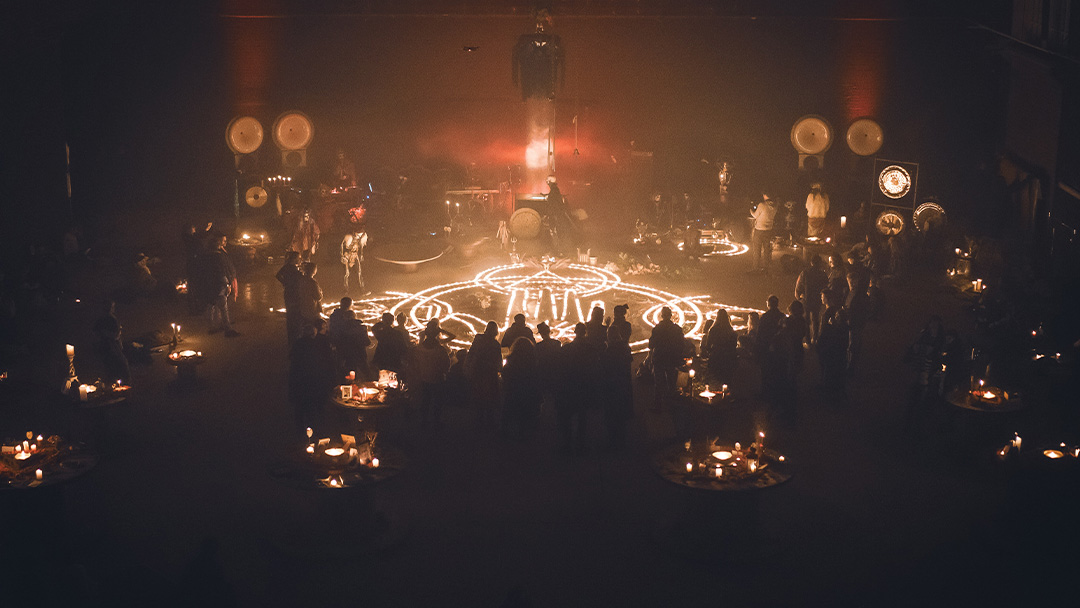
‘When you programme fifty-one hours, you are no longer programming an event. You are programming a life for a few days.’ For Schmerberg, the value of durational programming lies less in endurance than in the different behaviours and possibilities that emerge when time itself becomes part of the framework. The recently launched durational Sanctum of Sound festival extends far beyond the familiar arc of arrival, climax, and departure that shapes most cultural events. People leave and return. They sleep. They miss things. They encounter the space at different hours and in different states of attention. ‘A space needs different kinds of time to stay alive,’ he explains. ‘A space that only does deep work becomes a cult. A space that only does events becomes a venue. We are trying to be neither.’
What interests Schmerberg is not duration for its own sake, but what prolonged duration makes possible: ‘The first hours prepare you for what becomes possible later’. Unlike conventional event formats, where attention is continuously directed towards the next moment, long-form programming allows experiences to unfold more gradually. The event continues whether people are present or not. As Schmerberg puts it, ‘The festival does not need them. It continues.’
When events stop behaving like events
‘When you programme fifty-one hours, you are no longer programming an event. You are programming a life for a few days.’ For Schmerberg, the value of durational programming lies less in endurance than in the different behaviours and possibilities that emerge when time itself becomes part of the framework. The recently launched durational Sanctum of Sound festival extends far beyond the familiar arc of arrival, climax, and departure that shapes most cultural events. People leave and return. They sleep. They miss things. They encounter the space at different hours and in different states of attention. ‘A space needs different kinds of time to stay alive,’ he explains. ‘A space that only does deep work becomes a cult. A space that only does events becomes a venue. We are trying to be neither.’
What interests Schmerberg is not duration for its own sake, but what prolonged duration makes possible: ‘The first hours prepare you for what becomes possible later’. Unlike conventional event formats, where attention is continuously directed towards the next moment, long-form programming allows experiences to unfold more gradually. The event continues whether people are present or not. As Schmerberg puts it, ‘The festival does not need them. It continues.’
Attention, rest, intimacy
One of the most striking observations Schmerberg makes about MaHalla's longer formats is how they gradually alter people's relationship to participation itself. ‘You stop performing your presence,’ he explains. ‘You stop managing your experience and you just have it.’ Over time, attention begins to change. ‘Attention becomes more patient.’ Rather than moving between constant peaks of stimulation, people settle into different rhythms of listening, observation, and interaction. ‘Strangers become intimate very quickly,’ Schmerberg notes, describing a process that emerges not through organised participation, but through the simple accumulation of shared time and presence. The same shift can be observed in the role of rest. In many cultural settings, stepping away, lying down, or closing your eyes can be read as disengagement. At MaHalla, it becomes part of the experience itself. ‘When someone lies down on the floor at three in the morning with music moving through the space, and they close their eyes, that is not failure. That is arrival.’
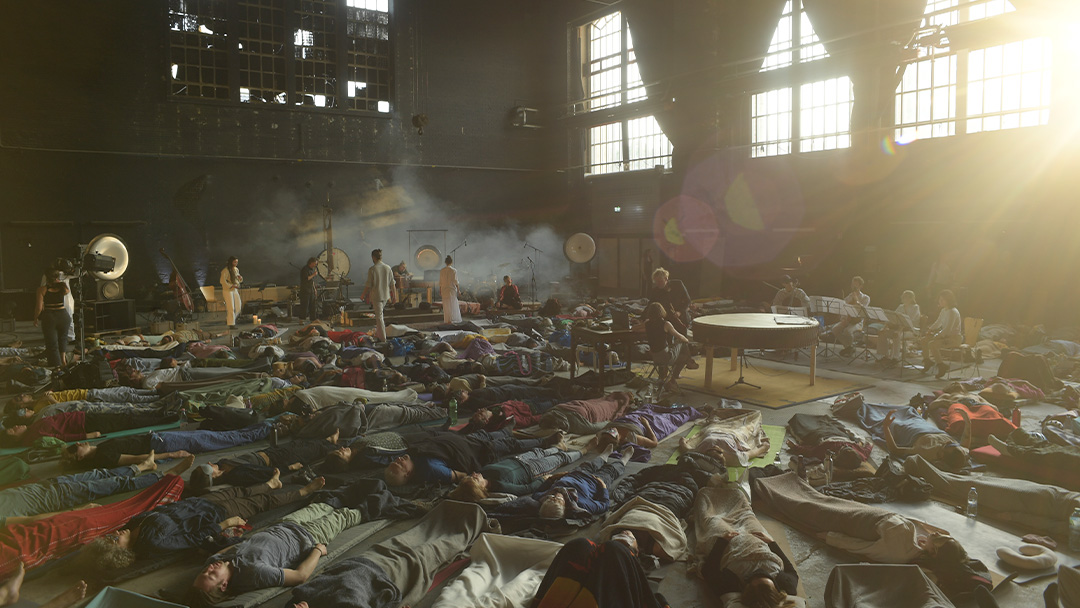
'Strangers become intimate very quickly'
The building as agent
For MaHalla, programming is as much about listening to a space as it is about filling it. The industrial complex is not approached as an empty shell waiting to be activated, but as something with its own rhythms, limitations, and possibilities. ‘The building has its own weight,’ Schmerberg explains. ‘You cannot ignore a room like this.’ That relationship carries a certain humility. The aim is not to impose a fixed experience onto the building, but to remain attentive to what it allows, amplifies, or resists. Over time, sounds linger, audiences return, and different activations leave subtle impressions behind. In this sense, Schmerberg speaks of the building as if it possesses its own memory. ‘The space starts to remember,’ he concludes.
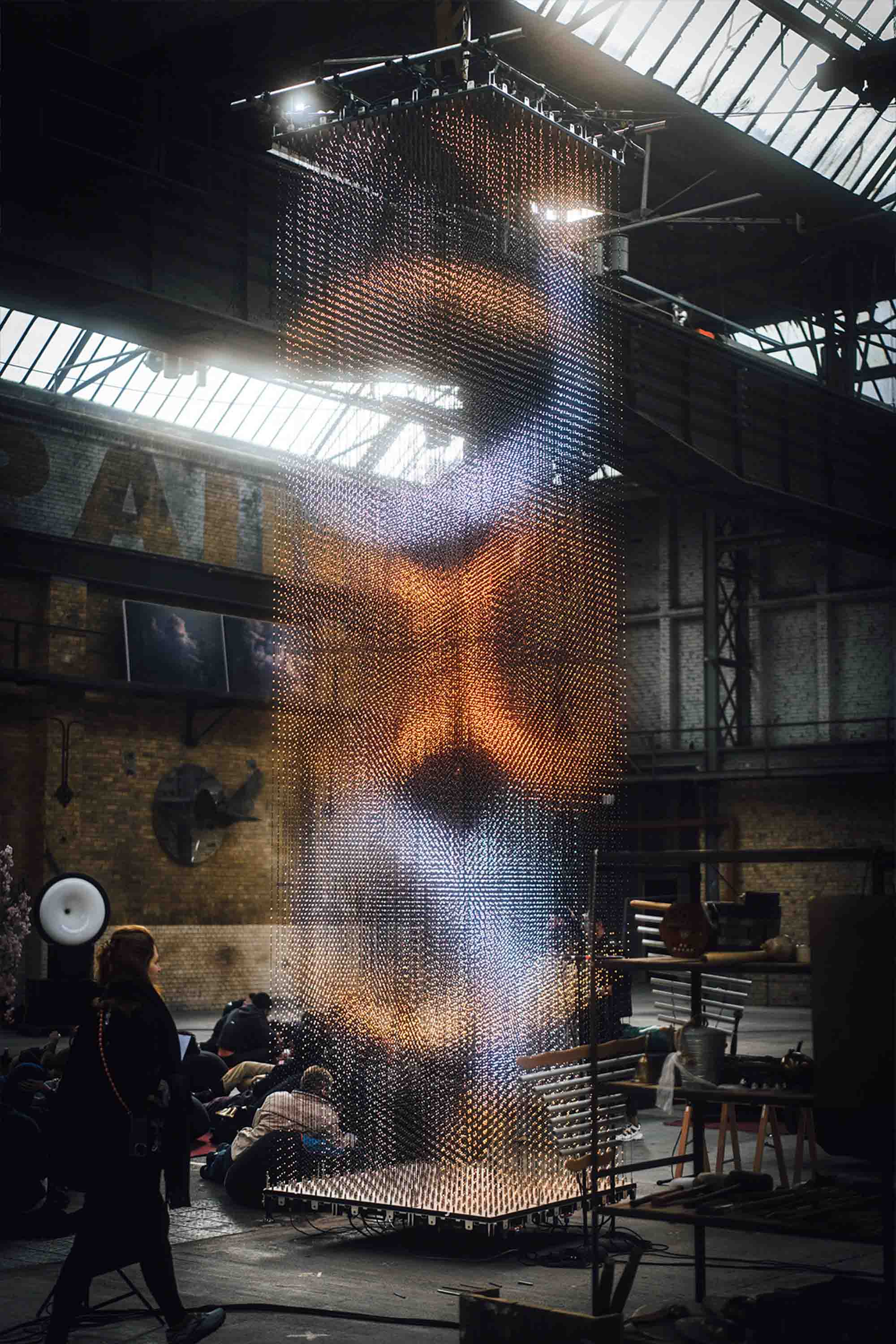
This approach extends across the different ways MaHalla activates the building. ‘The programming is what keeps you oriented inside it.’ Whether through exhibitions, performances, or community gatherings, they become ways of moving through the space rather than defining it. Sound offers one example: through spatial audio configurations and carefully considered moments of silence, the room remains perceptible between performances. ‘If you get the silence right, the next sound lands with a weight it could not have otherwise.’ With enough openness, the building itself becomes part of the experience.
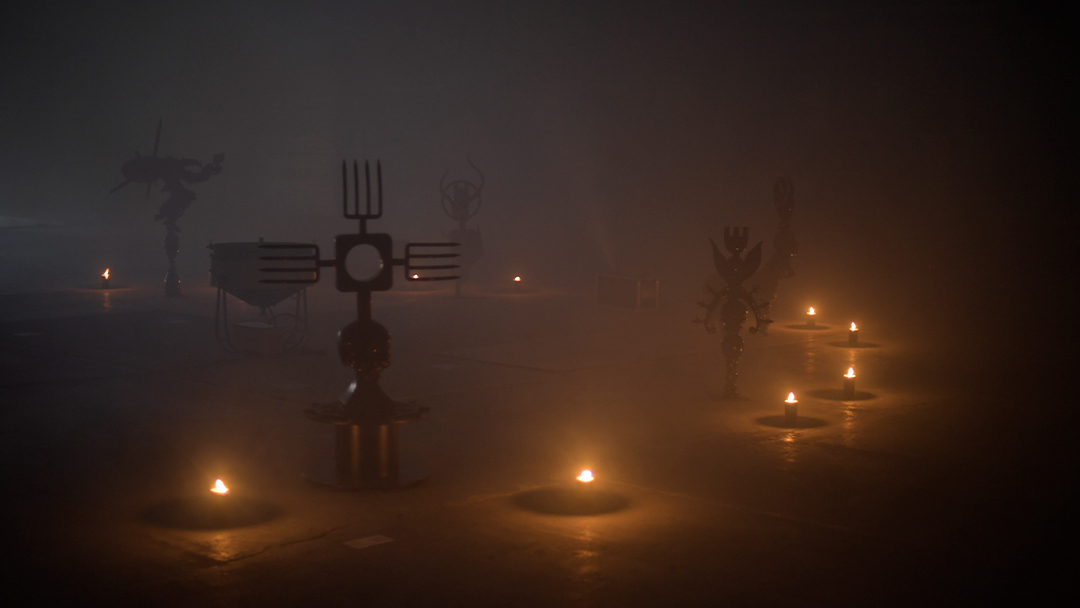
It’s clear that the programme in the former AEG factory provides a framework, but it is the building that ultimately shapes the experience. Sanctum of Sound Festival (July 3–5) perhaps offers the most direct encounter with MaHalla’s approach to date. Across fifty-one continuous hours, listeners are invited to move through the space at their own rhythm – entering, leaving, resting, and returning. Find out more here.

.webp)
