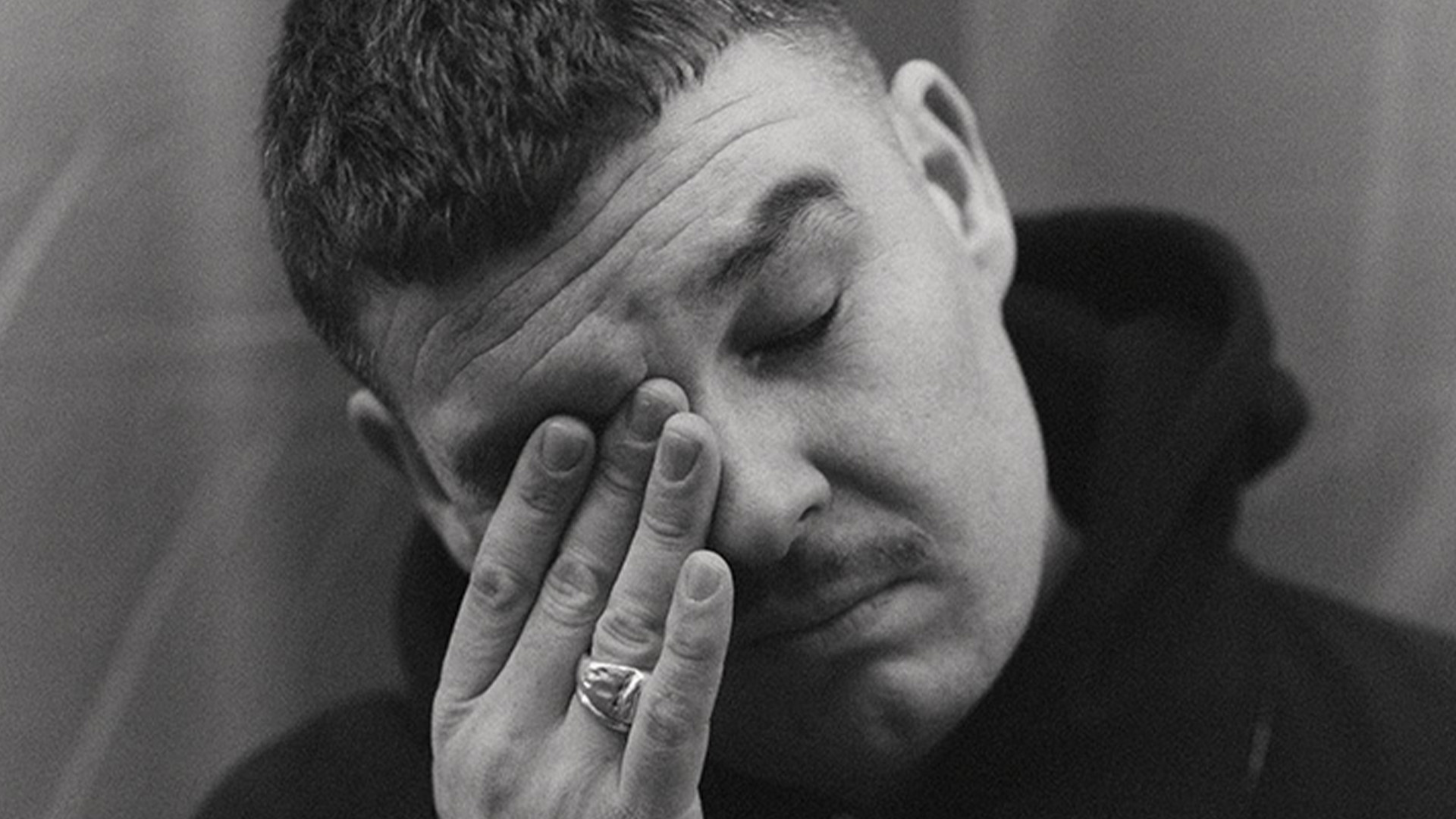
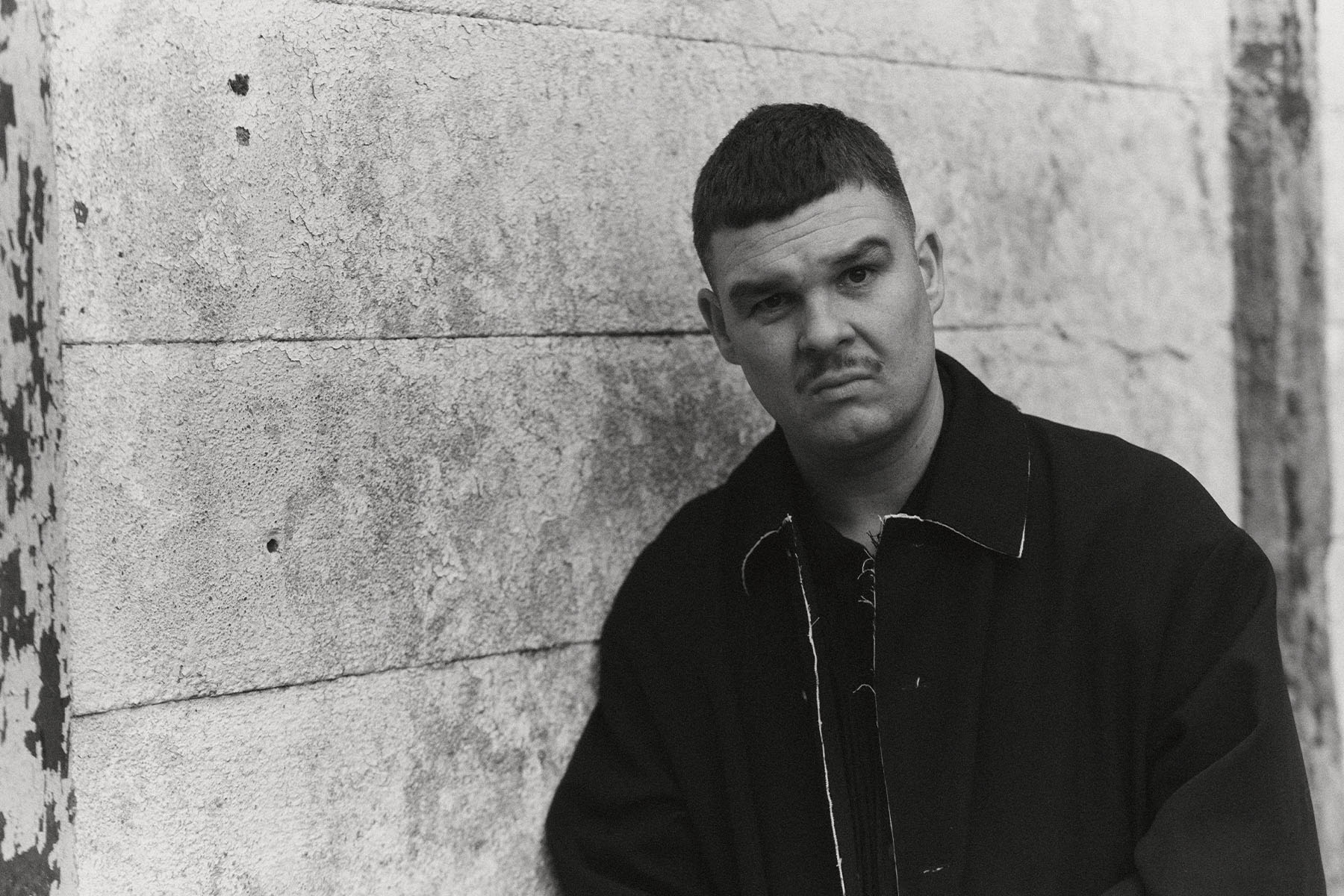
Words sometimes fail – too precise, too final. In Woody92’s universe, expression thrives in ambiguity: worn photographs, medieval objects, and sound that resists definition. The Omen Wapta founder builds a world where artists and listeners instinctively speak the same language. What does it take to understand and express without words? Insights from our conversations with Woody echo psychiatrist Carl Jung, who believed the subconscious communicates through symbols – a language we set out to decipher.
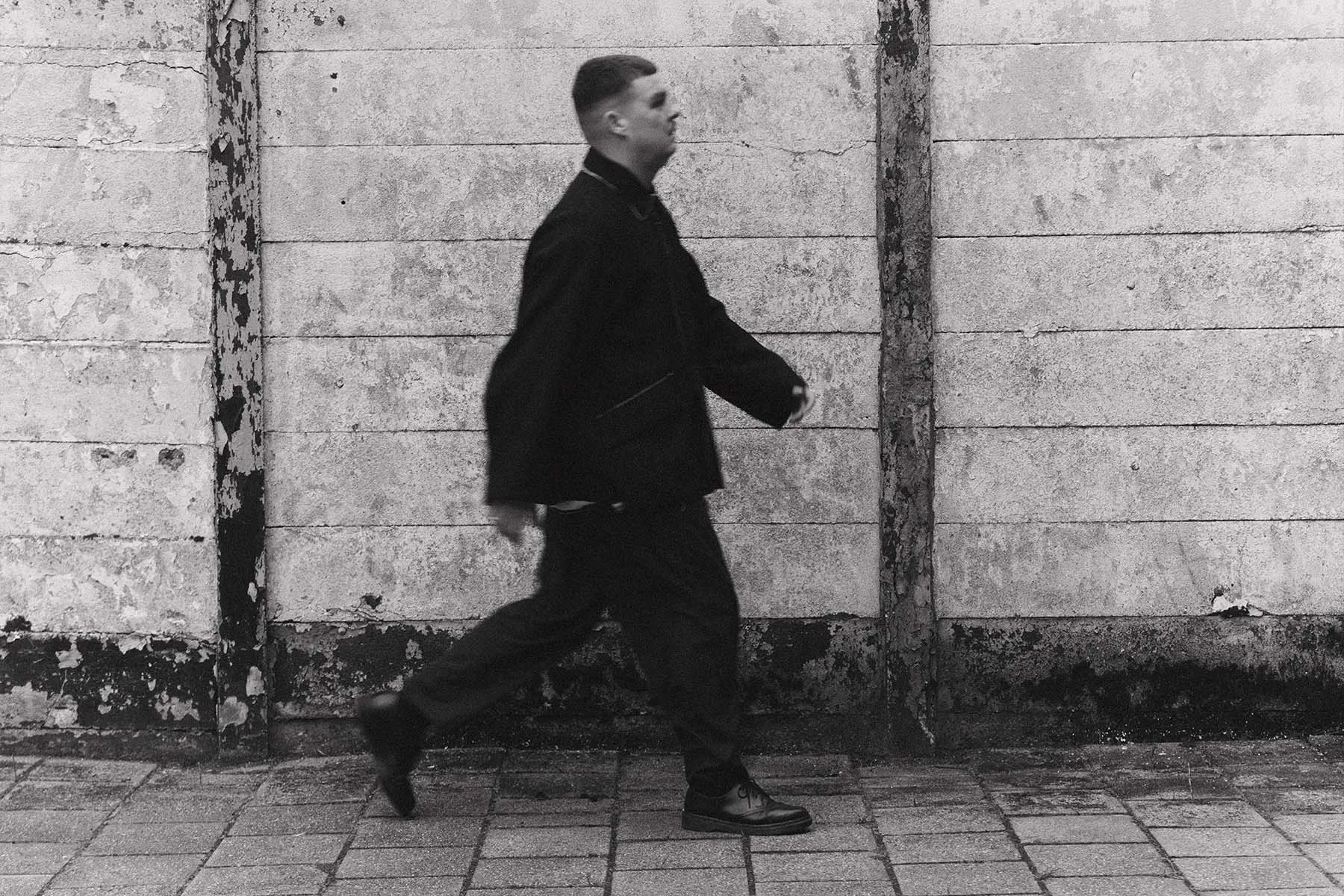
If you’re into contemporary club music, chances are that you are familiar with the audiovisual realm of Woody92 (whose real name is Woody) - the frantic sets, the shadowy releases ,and the mystical design. Whether curating his Neon Cleptu show for LYL Radio, performing DJ sets in unconventional ways, or curating his Omen Wapta label, Woody’s output is as hard to grasp as that it is distinctively recognisable. There’s been quite some speculation going on within the close-knit community around it, trying to make sense of the enigmatic label. Reddit subforums analysing music, Soundcloud feeds with discussions about tempos, and the lack of genre to categorise it all in - ‘modern tribe style’, ‘psychedelic’, ‘hypertek’ - people try, but nothing clearly captures it right. What’s behind this new wave of sound? We went on a quest to trace its source, starting back in 2020, after Woody left a mark on our minds and bodies after playing one of the weirdest DJ sets in a lifetime in 2019 at De School.

Delft as moodboard
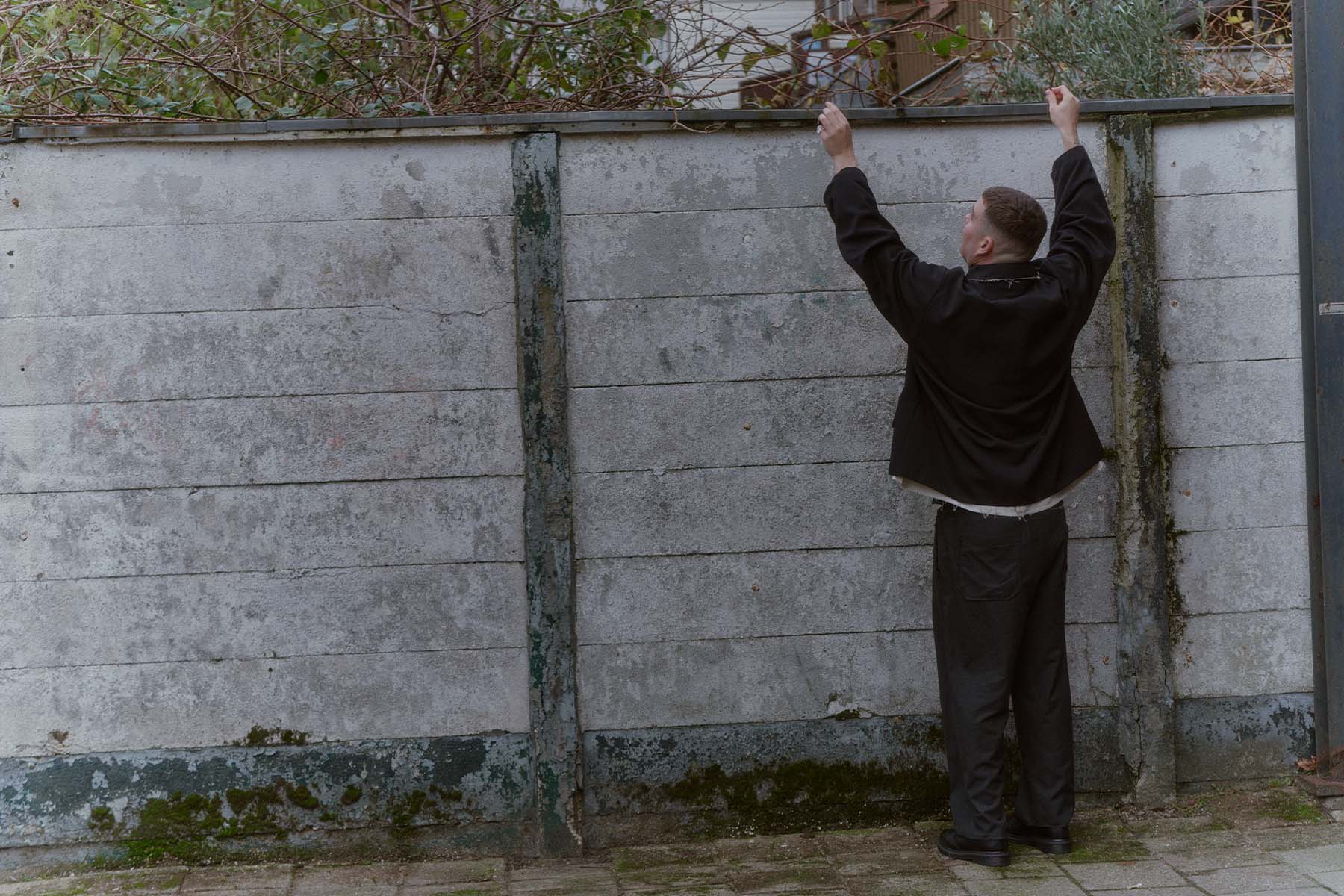
It’s noon, spring 2020. We took the train from Amsterdam to Delft to meet Woody at his home shortly after he played at Minimal Collective x Nxt Museum with his lifelong peer Spekki Webu. Stepping off the train, we follow the canals, over uneven cobblestones and moss-streaked walls. Although modest at heart, Delft goes back to the 1200s, famous for its Delfts Blauw, the blue-and-white earthenware born from local clay harvest. Nothing feels staged; the city just carries its past quietly. After a few minutes of walking, we reach Woody’s house, situated right above his mother’s sewing store. ‘Hoe issie dan?’, he greets us. His casual tone sits alongside the weight of the streets outside – deliberate and familiar – with its own internal logic. Little did we know back them, that this visit would quietly foreshadow how his environment shaped his body of work.

There’s a power in conveying a feeling or atmosphere without having to explain it
Embracing randomness
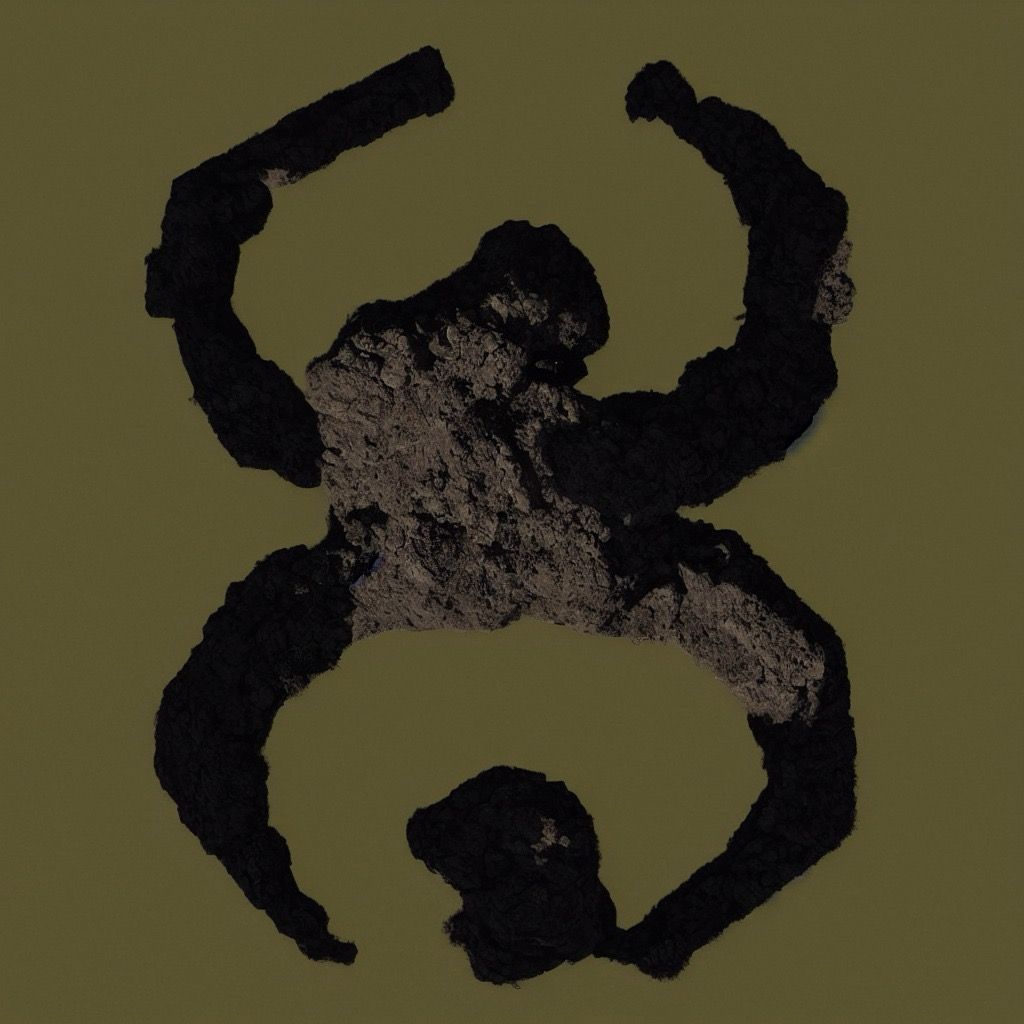
Walking in, the multi-layered personality of Woody unfolds. Printed photos of medieval-inspired garments hang nearby, random objects peek from the shelves, and the symbol now central to his Omen Wapta label is pinned above the desk. ‘This symbol spoke to me instantly. I’m in love with it.’
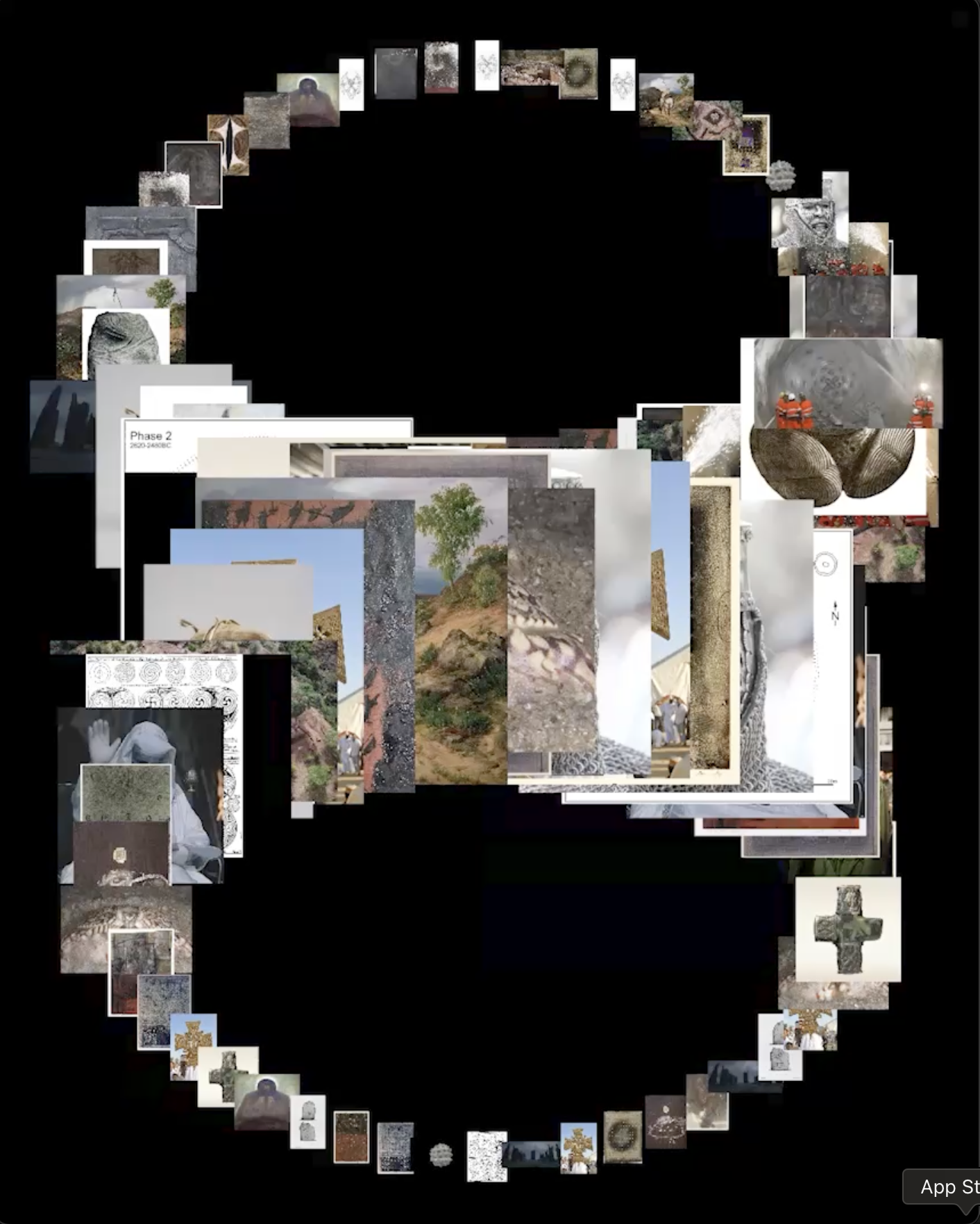
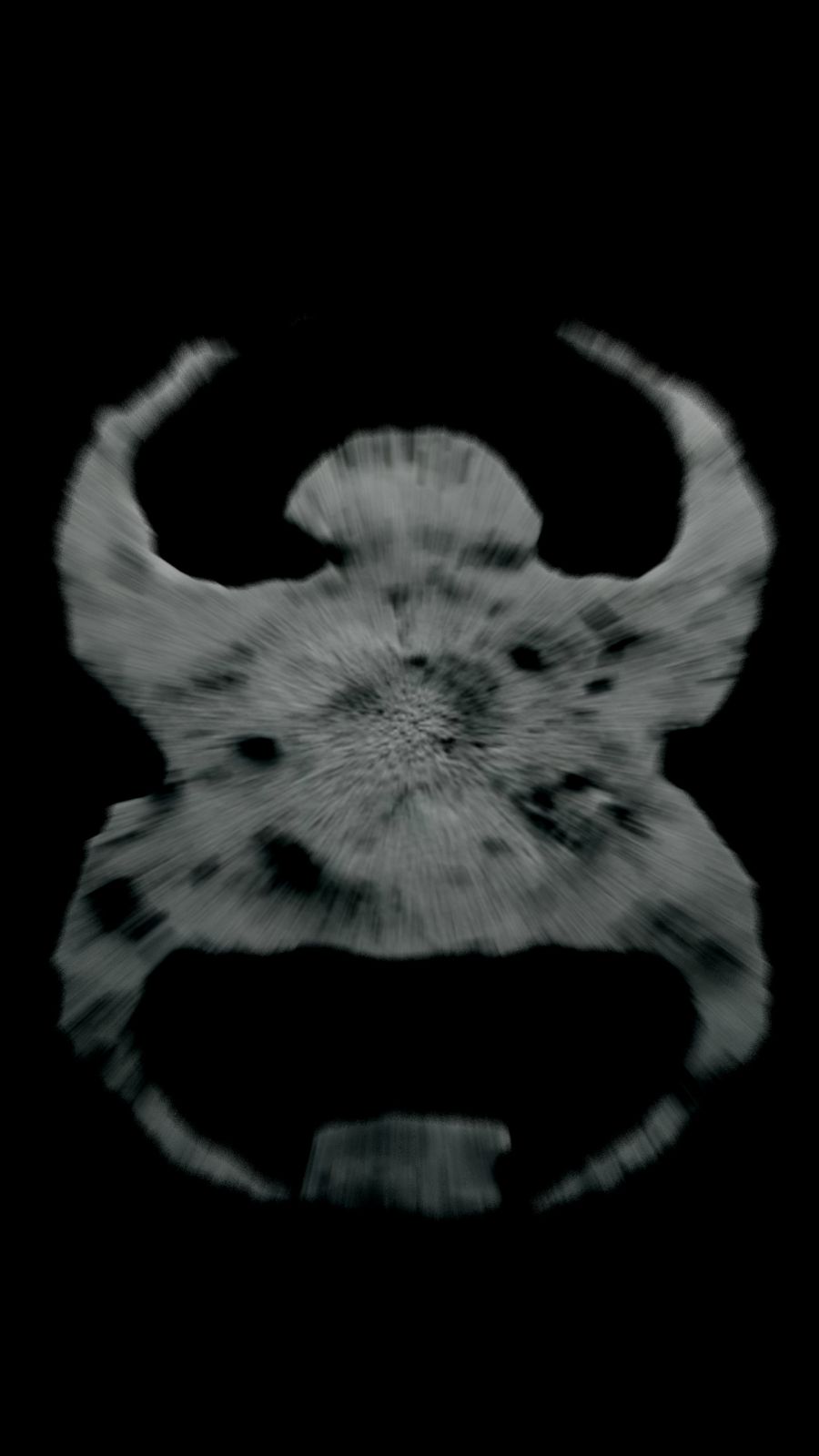
‘Every morning I take my camera and wander through Delft. Small alleys, strange corners, old doors, especially Westerkwartier, where I grew up, is a place I revisit a lot.’ Woody shows some pictures that, at first glance, look like typical Dutch hallways, but on closer inspection reveal textures, colours, and layers recognisable from Woody’s visual work: doorknobs, insects, and even zoomed-in photos of a cow’s nose from the artwork for his Neon Cleptu show at LYL radio. ‘I want to create a sense of ambiguity’, he tells us. ‘There’s a power in conveying a feeling or atmosphere without having to explain it.’
Finishing our dinner, we go through bits of his music collection in the altar-like corner of his living room. From 2000s stripped back psy-trance by Moksha, to a folder of fifty-something untitled soundscapes from Asian grounds, and the ethereal ambient of legends Steve Roach & Pete Namlook – it was a collection of music that’s clearly beyond the dancefloor. This was music for a mind that wanders off. How this exactly was translated to Woody’s hyperintense dancefloor sets, we did not get to understand that day. The conversation ended up being everything but the music. We came for answers, but left Delft pondering with more questions.
Reflecting on that 2020 meet-up today, we can tell a few things: Woody back then didn’t know that the symbol above his desk would become the logomark of his Omen Wapta label. Instead of endless strategising, he just picked it randomly as the symbol of his endeavour one year later in 2021. Similarly, he did not know back then where his label would go, which today counts 13 releases spread globally. This story needed more of an explanation, so we sustained dialogue and went back to find out.
Unboxing the box
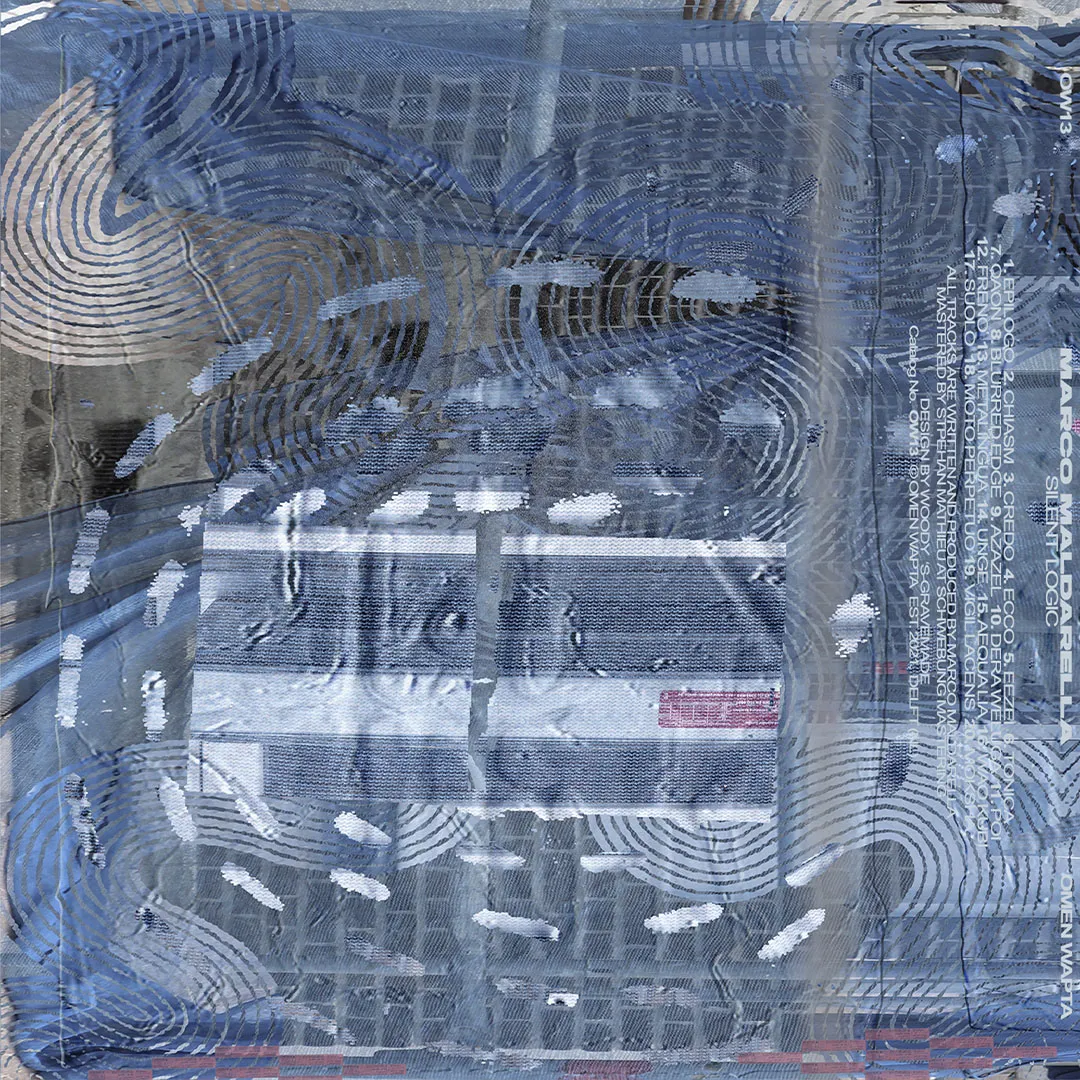
Today, Woody is touring worldwide, pushing the frontiers of local club scenes with his compellingly odd sound. Biannually, a close community of open-minded clubgoers joyfully gather at his curated weekenders in Garage Noord. The Omen Wapta catalogue spans from experimental glitch by Japanese Yuki Matsumura to tekno-oriented riffs on an 18-track album by Dutch Harald Uunk. Some artists appear more frequently, such as Amsterdam-based Loek Frey, his blood brother Floid, and Italian Marco Maldarella - whose sound-design-driven electronic music has been pivotal to shaping the label’s identity today.
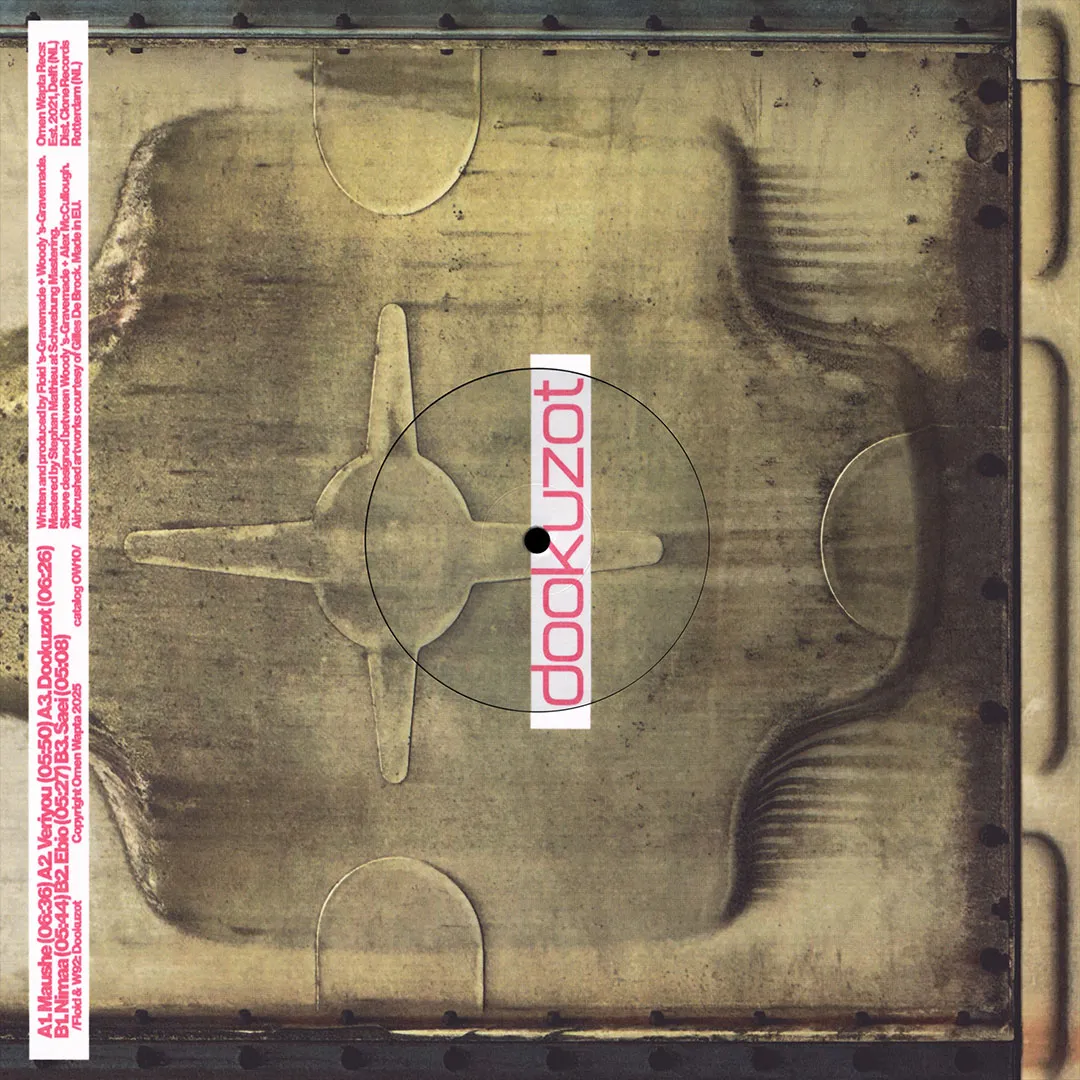
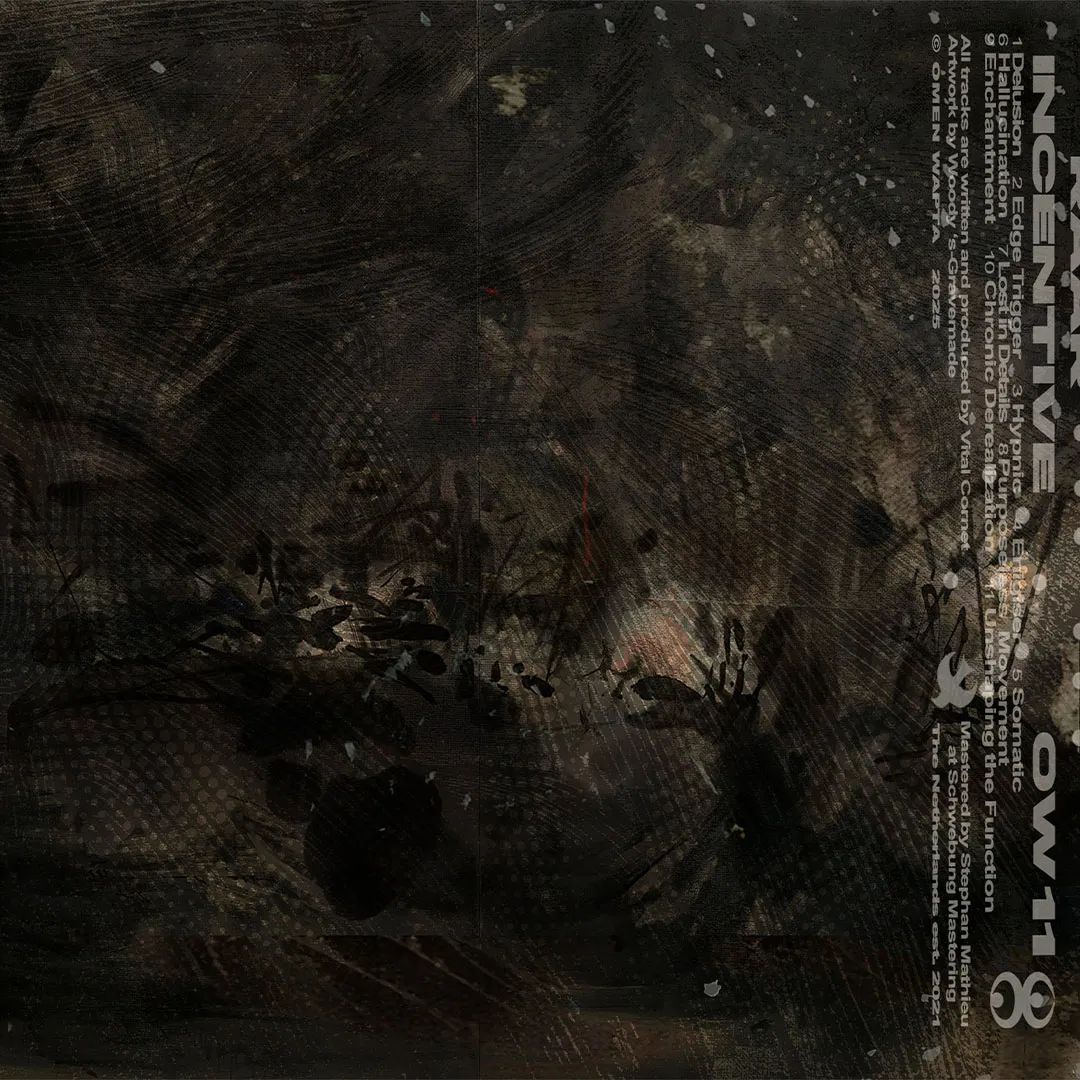
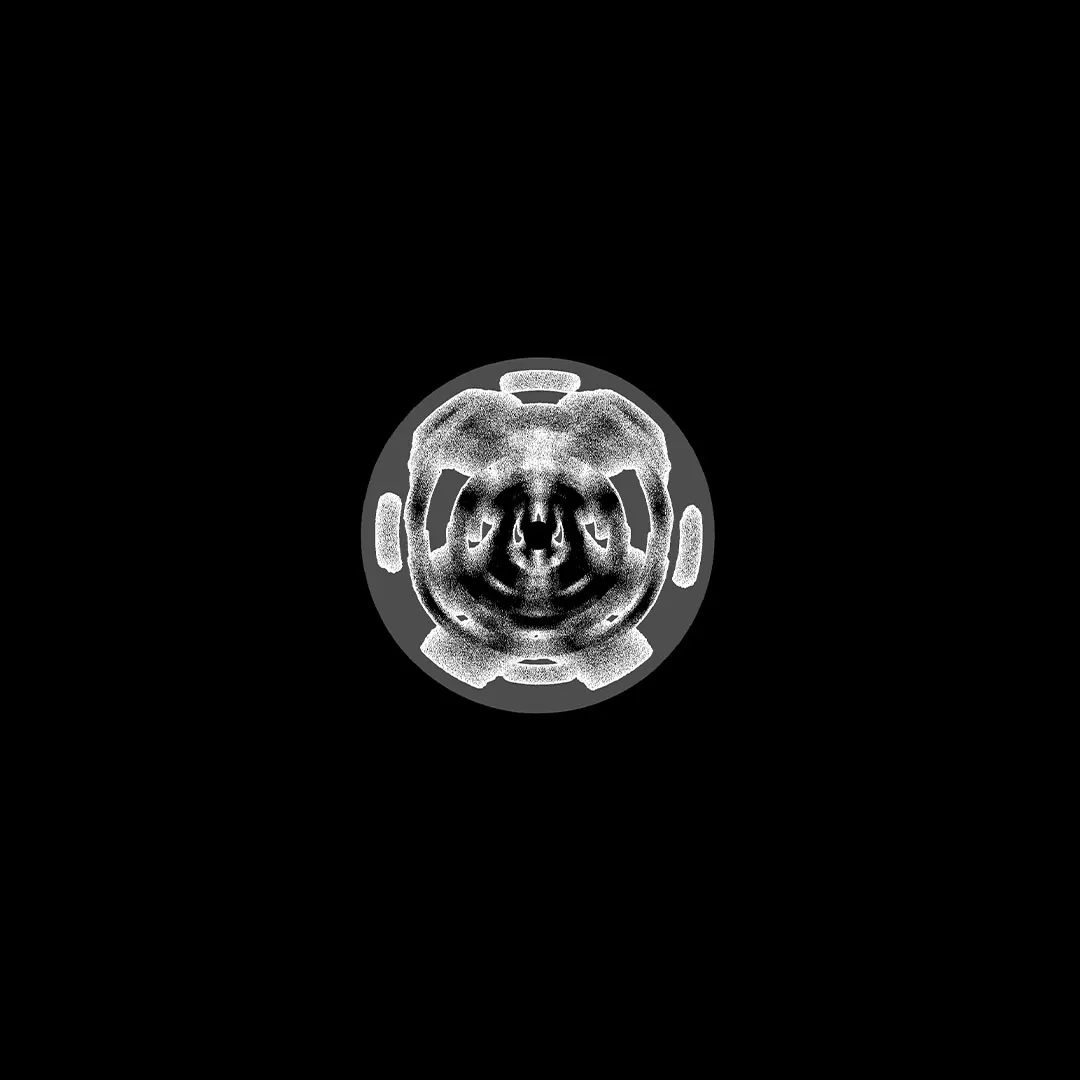
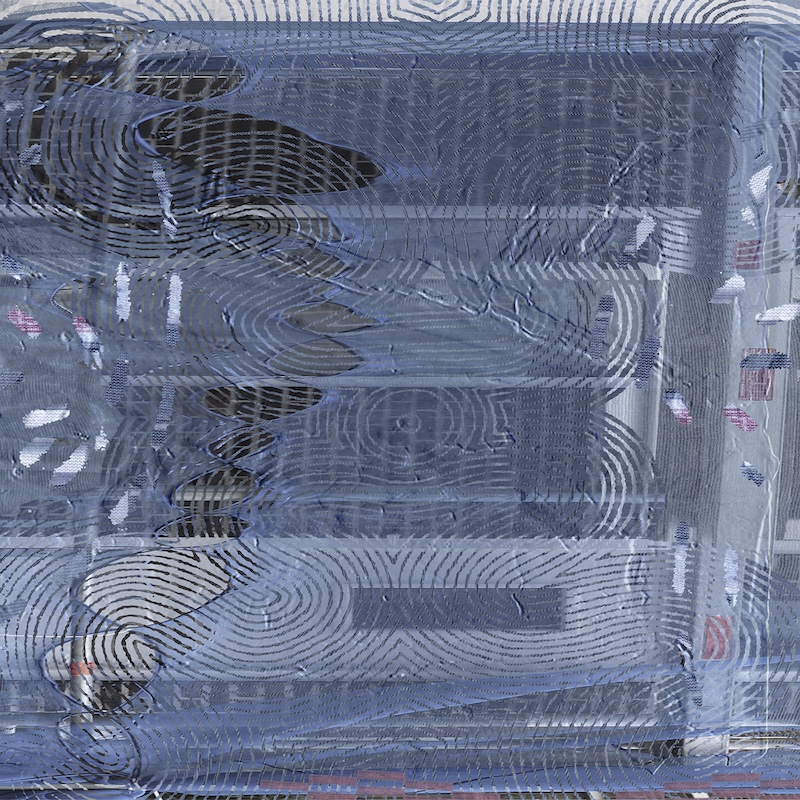
Adding to this is the visual identity. Woody's background in art school permeates the full discography, with each record looking like an artefact of digitally eroded textures and post-human mythologies. With Franco-Chinese painter Chu Teh-Chun as main inspiration, he fuses hand-painted colour strikes with greyscales draped in tribal graphic patterns, resulting in a body of work that carries the weight of an occult manuscript – one that only reveals its full meaning when held in total.
And still, just like back in 2019, the mystery around the so-called ‘sound’ isn’t solved. Till today, people are still breaking their heads over what genre this is and where to find more of it. Subreddit forums with paragraph-long feeds are prompting how "the Delft sound" can be described, which is played alongside peers Spekki Webu and JEANS. You can tell this hard-to-define sound is clearly leaving its mark on the scene and music in general - something that is usually hard to conclude as it unfolds. Even a certain introspective dancefloor mindset is adopted within the broader scene. It seems to open up a grey area in music that brings together the energy of traditional techno with the ethos of psychedelic oriented festivals. Dancing freely or exuberantly - eyes closed or open - with respect for your surroundings - is very welcome.
Observing this movement play out over time, Woody himself stands by a stripped-back takeaway: the definition doesn’t matter. The genre doesn’t matter. Where ‘it’ comes from doesn’t matter either. It’s about non-definition. Non-being. And simply mere intuition: ‘Just like my DJ sets, it’s purely intuitive, I always aim to build a storyline in the realm of the unknown by mixing abstract elements with rhythms’ he explains – an approach that turns four decks and a mixer into something closer to a live instrument than a conventional DJ setup.
But, if the answer to this new wave of music is non-definition, how to navigate that? Everyone starts somewhere right? We all need a plan or path to follow to get to a result.
Unboxing the box
Today, Woody is touring worldwide, pushing the frontiers of local club scenes with his compellingly odd sound. Biannually, a close community of open-minded clubgoers joyfully gather at his curated weekenders in Garage Noord. The Omen Wapta catalogue spans from experimental glitch by Japanese Yuki Matsumura to tekno-oriented riffs on an 18-track album by Dutch Harald Uunk. Some artists appear more frequently, such as Amsterdam-based Loek Frey, his blood brother Floid, and Italian Marco Maldarella - whose sound-design-driven electronic music has been pivotal to shaping the label’s identity today.
Adding to this is the visual identity. Woody's background in art school permeates the full discography, with each record looking like an artefact of digitally eroded textures and post-human mythologies. With Franco-Chinese painter Chu Teh-Chun as main inspiration, he fuses hand-painted colour strikes with greyscales draped in tribal graphic patterns, resulting in a body of work that carries the weight of an occult manuscript – one that only reveals its full meaning when held in total.
And still, just like back in 2019, the mystery around the so-called ‘sound’ isn’t solved. Till today, people are still breaking their heads over what genre this is and where to find more of it. Subreddit forums with paragraph-long feeds are prompting how "the Delft sound" can be described, which is played alongside peers Spekki Webu and JEANS. You can tell this hard-to-define sound is clearly leaving its mark on the scene and music in general - something that is usually hard to conclude as it unfolds. Even a certain introspective dancefloor mindset is adopted within the broader scene. It seems to open up a grey area in music that brings together the energy of traditional techno with the ethos of psychedelic oriented festivals. Dancing freely or exuberantly - eyes closed or open - with respect for your surroundings - is very welcome.
Observing this movement play out over time, Woody himself stands by a stripped-back takeaway: the definition doesn’t matter. The genre doesn’t matter. Where ‘it’ comes from doesn’t matter either. It’s about non-definition. Non-being. And simply mere intuition: ‘Just like my DJ sets, it’s purely intuitive, I always aim to build a storyline in the realm of the unknown by mixing abstract elements with rhythms’ he explains – an approach that turns four decks and a mixer into something closer to a live instrument than a conventional DJ setup.
But, if the answer to this new wave of music is non-definition, how to navigate that? Everyone starts somewhere right? We all need a plan or path to follow to get to a result.
Navigating non-definition
Citing the about text of the Omen Wapta label: “The word ‘Omen Wapta’ has no intended meaning. It just is. An oddly-shaped transitory playground for the imagination consisting of multiple ranges of styles.” This non-defining philosophy is something that breathes through Woody’s work at large: ‘When making visual art for the label, I like to take something and put it in an unusual context. Like using a dirty piece of old cloth with painting stains as a base for JEMAPUR’s Mode Cleaner'. An object that’s purely practical becomes the aesthetic core, conveying the visual message of a record. An alternation of perspective that flips the script on what matters and what does not – moving from practical functionality to something beyond that: aesthetic, emotional, or experiential.
The label text continues: "I see Omen Wapta as a social extension in search of musical connections with like-minded people I admire. Being my not-self in the not-self of Omen Wapta." Omen Wapta is intended to have no fixed definition. It’s interpretative. ‘I have dyslexia, so my consciousness becomes this sea of words. Woody tells us. ‘During my time in art school this difficulty made me hone the craft of translating thoughts into images’. It’s a way of communicating that is deeply embedded in Woody’s work today: ‘It doesn’t matter for me whether I brief visual artists, writers, or music producers for the label, I’ll always start out with visual references. Or with no briefing at all’. Examining the label's output, it’s noteworthy that such a distinct audiovisual landscape arises from an arbitrage process like that.
‘Collaborations are rather feeling-based, something subconscious we share.’ He adds with a smile: ‘I either send a track or an image and whatever happens after that is up to them. I often call the studio the temple of failure, because that’s where new worlds come to life.’ Intuition seems to be the compass, the results will follow. Yet somehow, by not-being, it becomes very much something. How does something so undefined become something so unified and distinct?


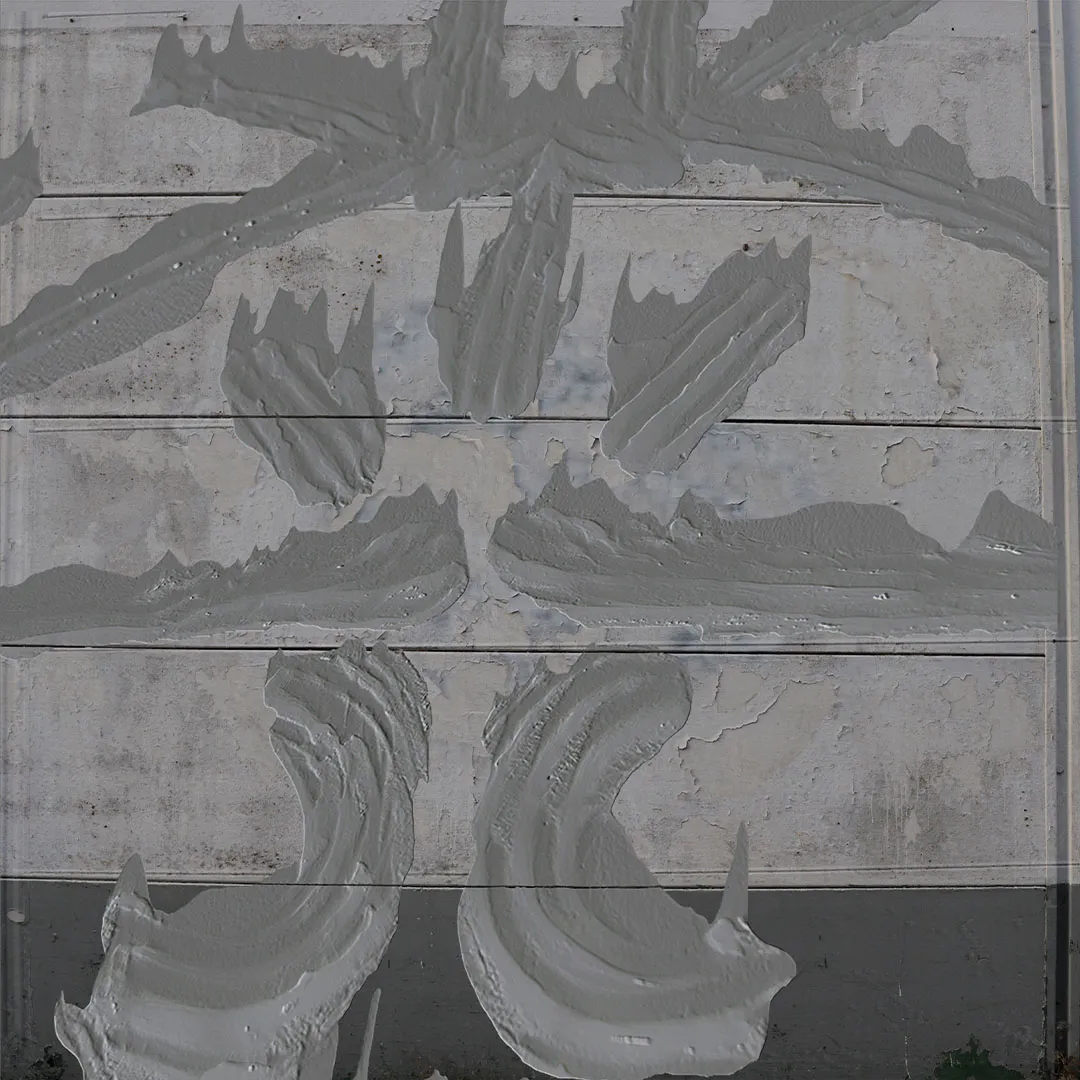
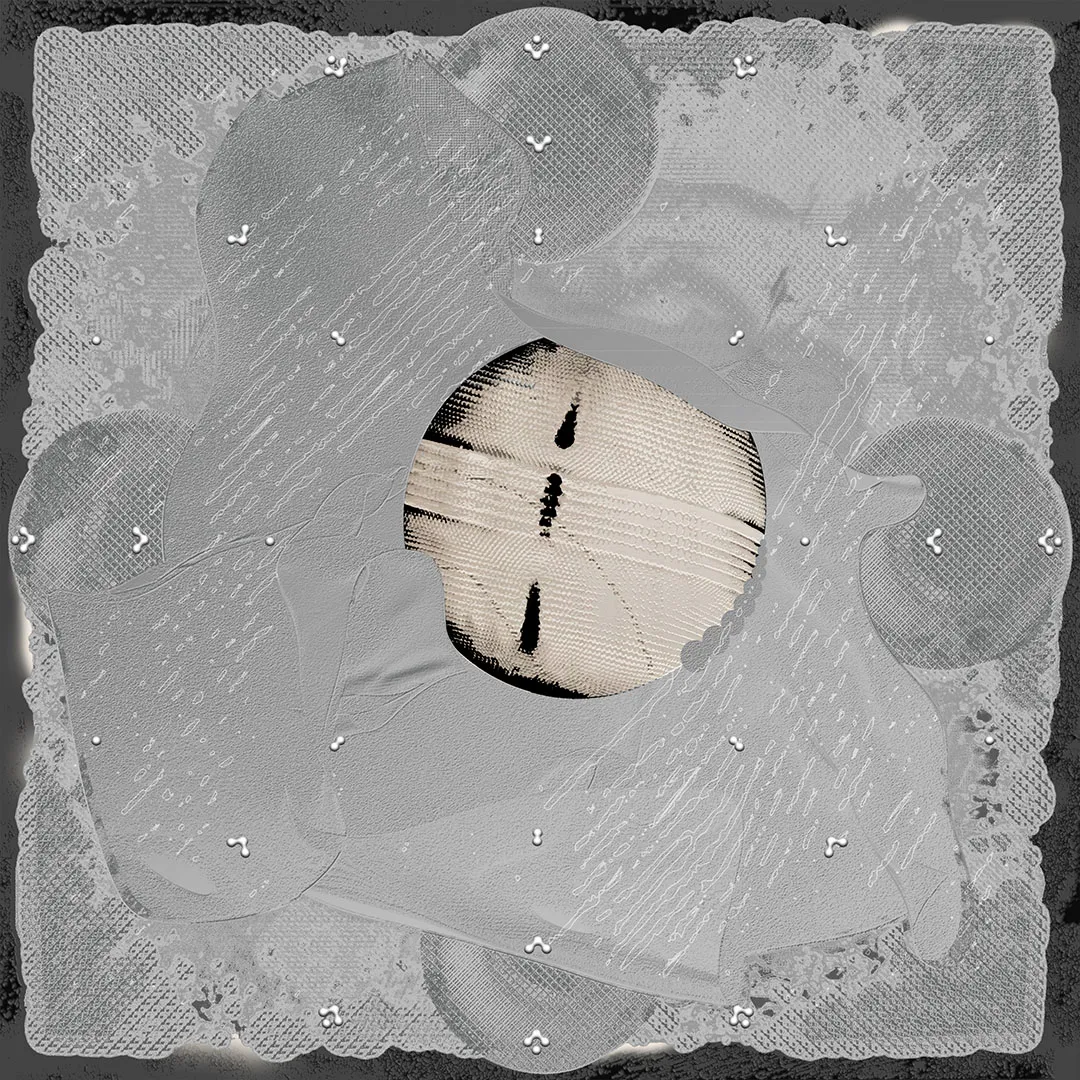
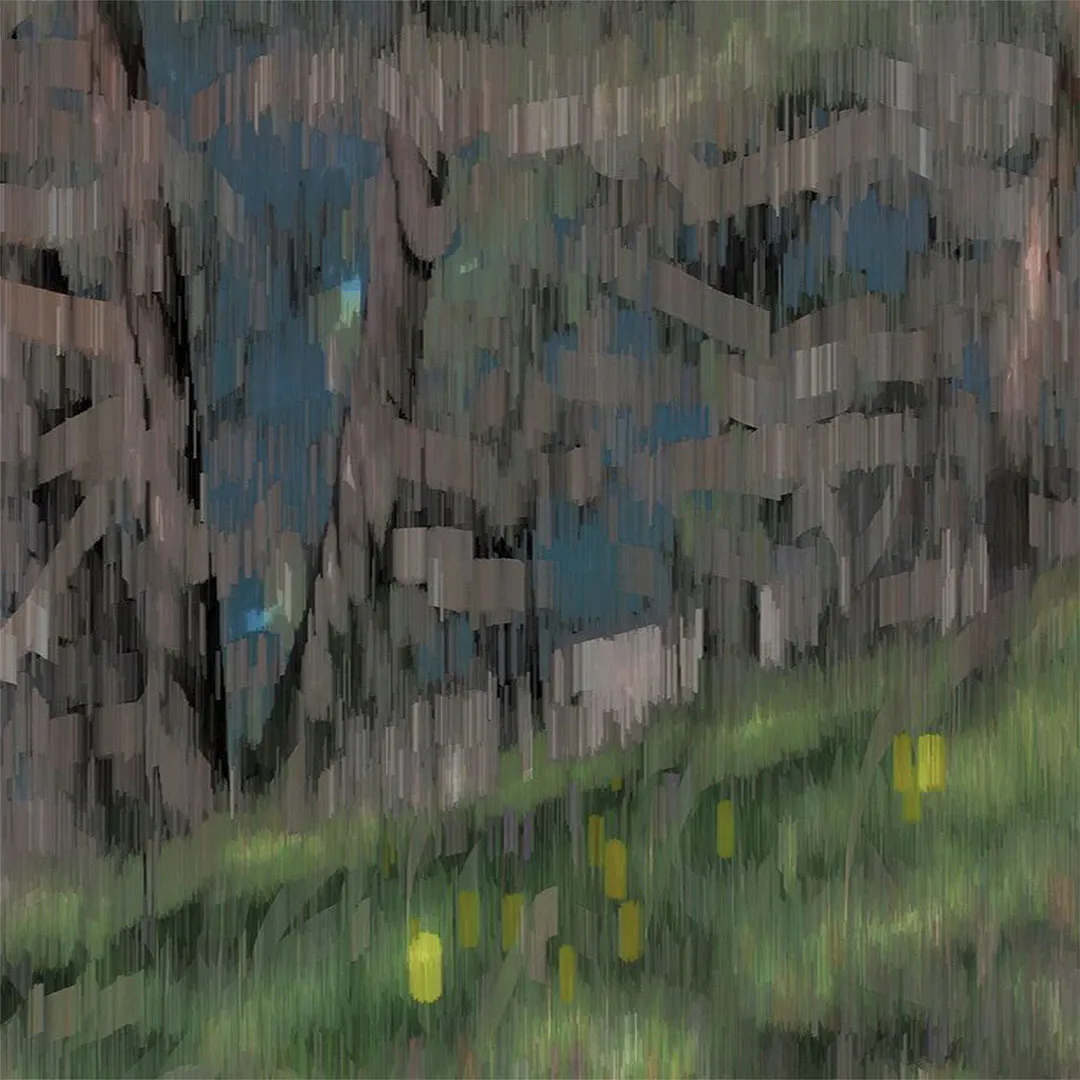
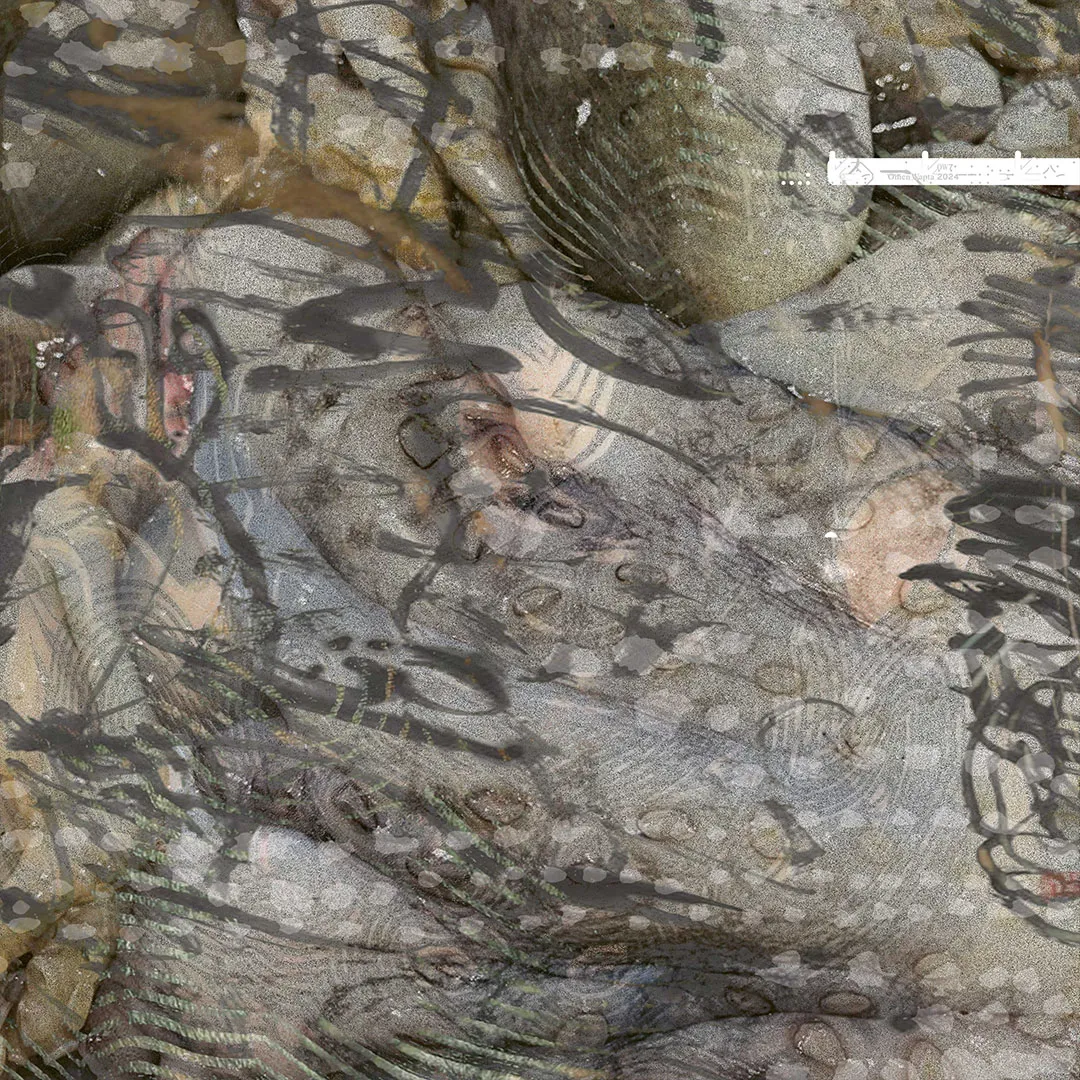
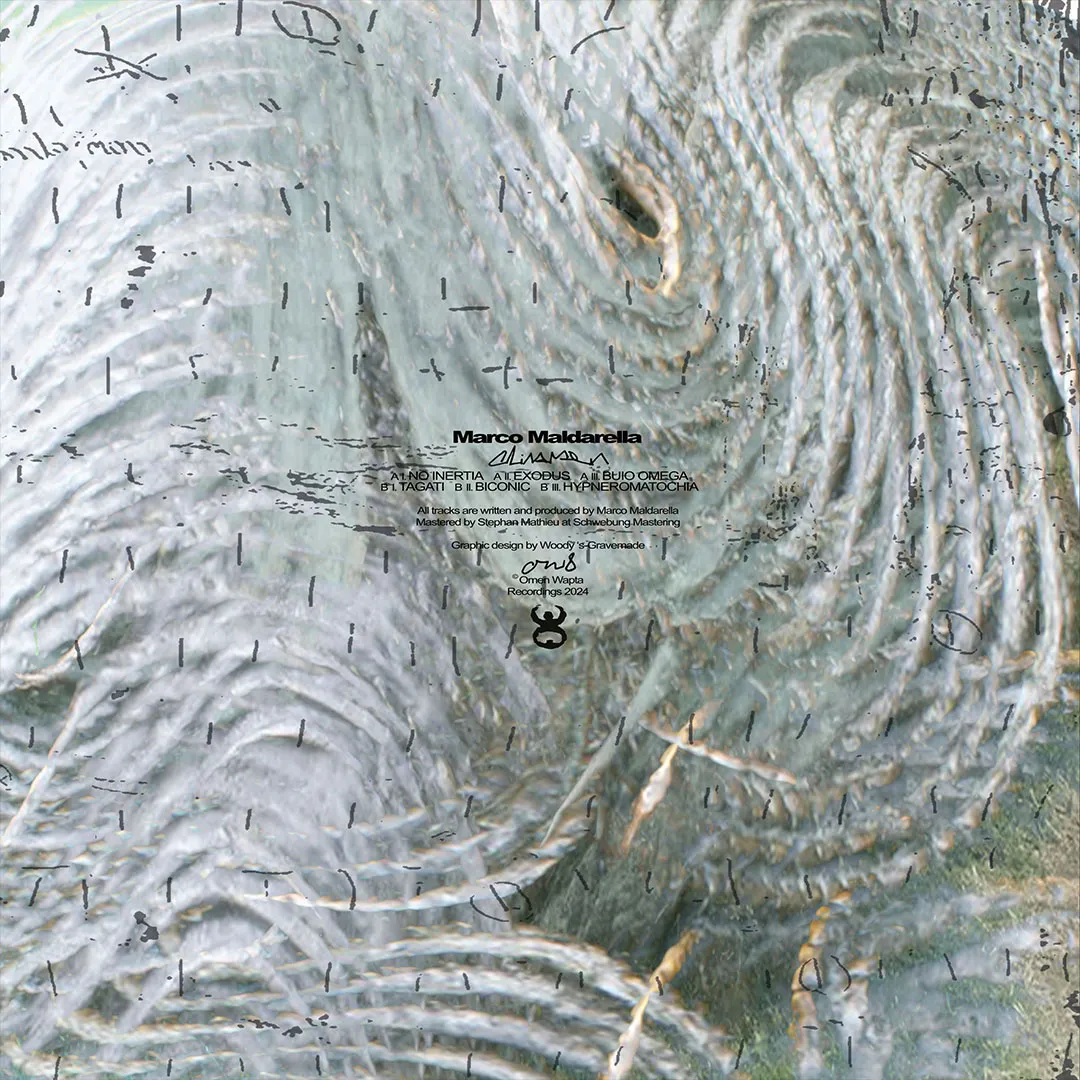
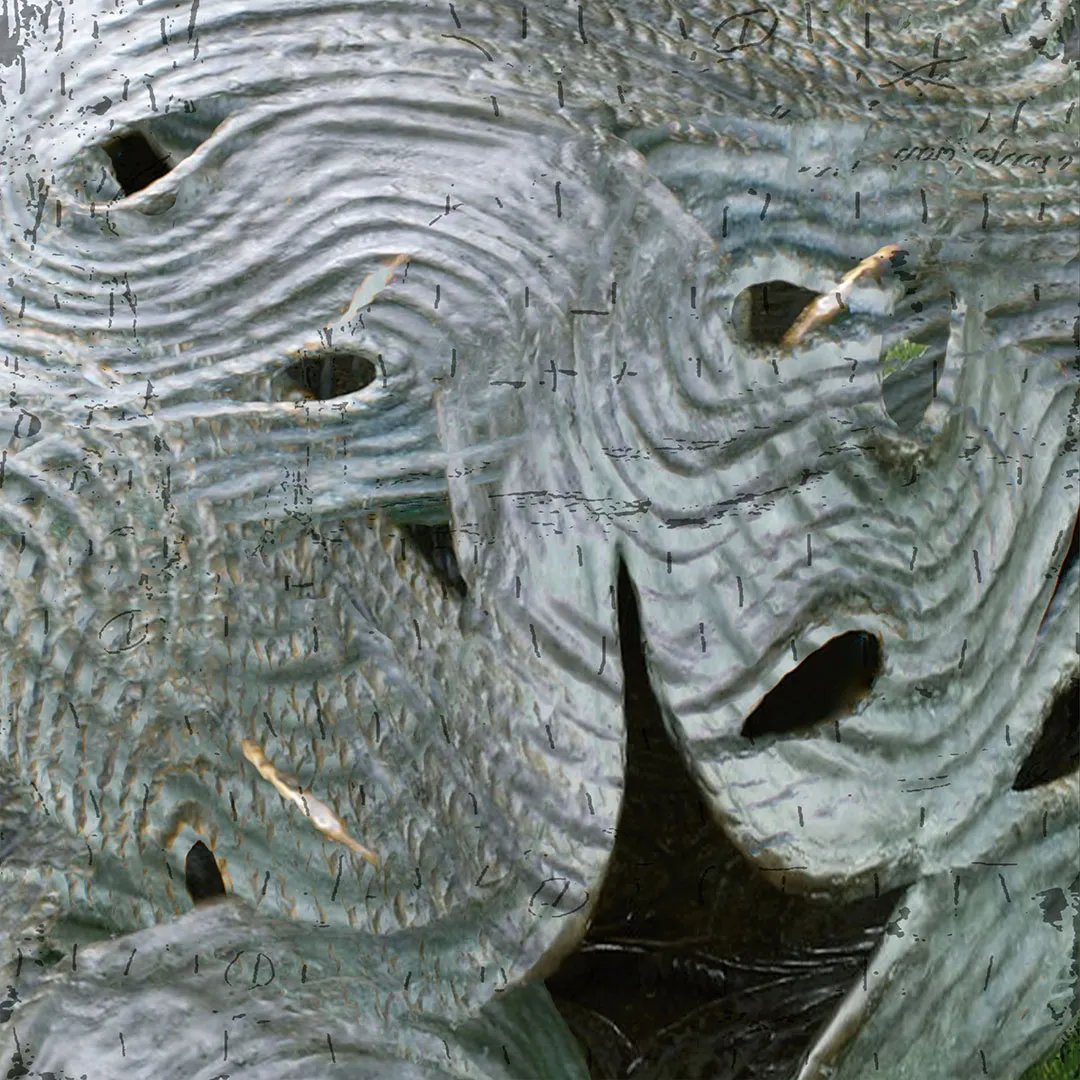
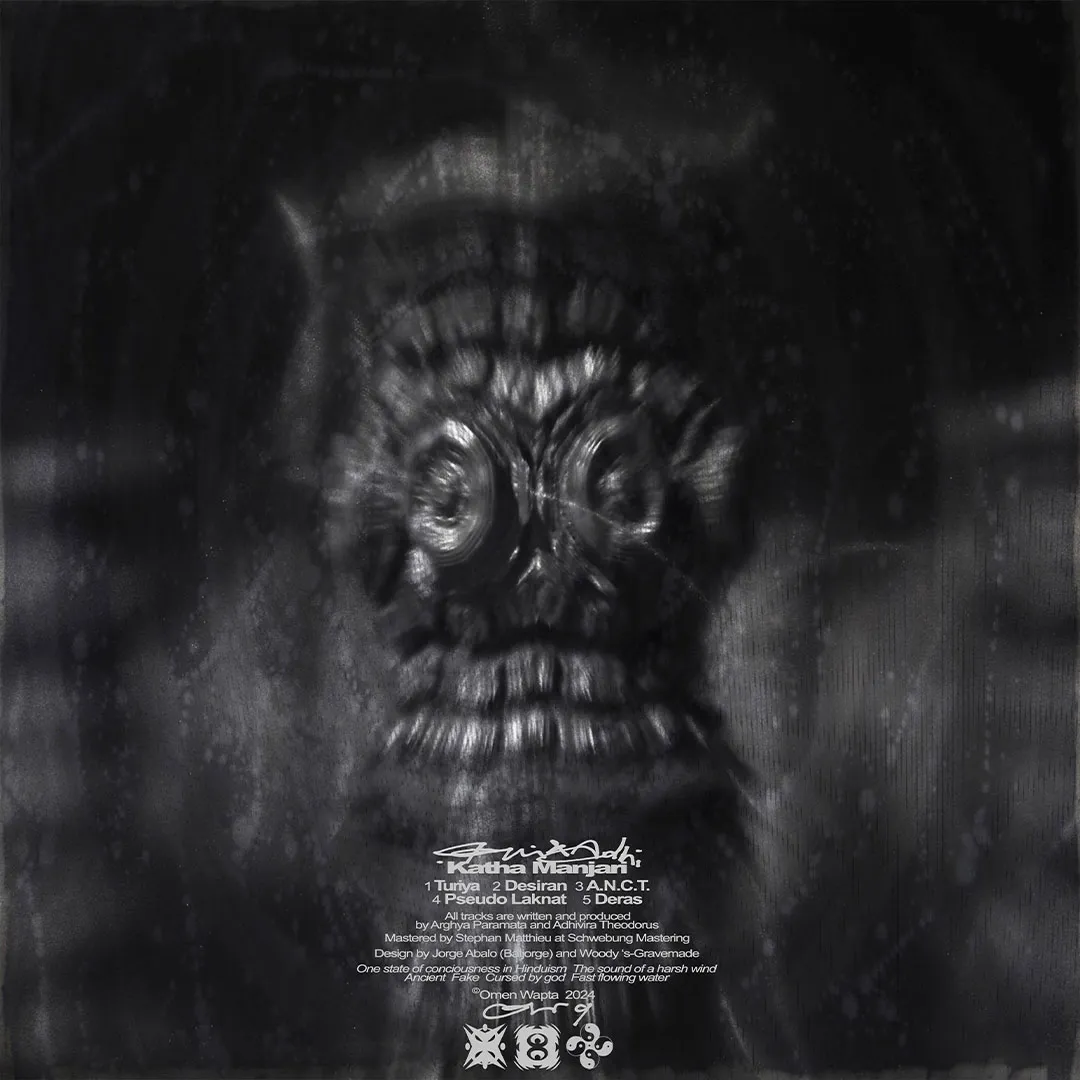

I often call the studio the temple of failure, because that’s where new worlds come to life
The collective unconscious
A definite answer doesn’t exist – art stops being art the moment you can fully explain it, some say. Yet, one critical thinker left us with ideas we can derive answers from: Swiss psychiatrist Carl Jung. He shaped much of how we describe the inner self today, introducing ideas like introversion versus extraversion, but also mapped our mind through functions such as intuition, sensation, feeling, and thought. But, there’s more…
Jung believed in the idea of the collective unconscious: a shared reservoir of symbols and archetypes that surface through dreams, instinct, mythologies, and art. These images aren’t meant to be logically decoded, but felt. It’s the same undercurrent that flows through Woody’s work. Remember the medieval garments in his room back in 2020? The strange objects and photos collected around his desk? The Keltic-like graphic layers within his artworks? It’s Woody’s inner world resonating within the collective unconscious. It’s a form of language Woody cultivated as an artist over time; a language called symbolism.
The power of symbolism
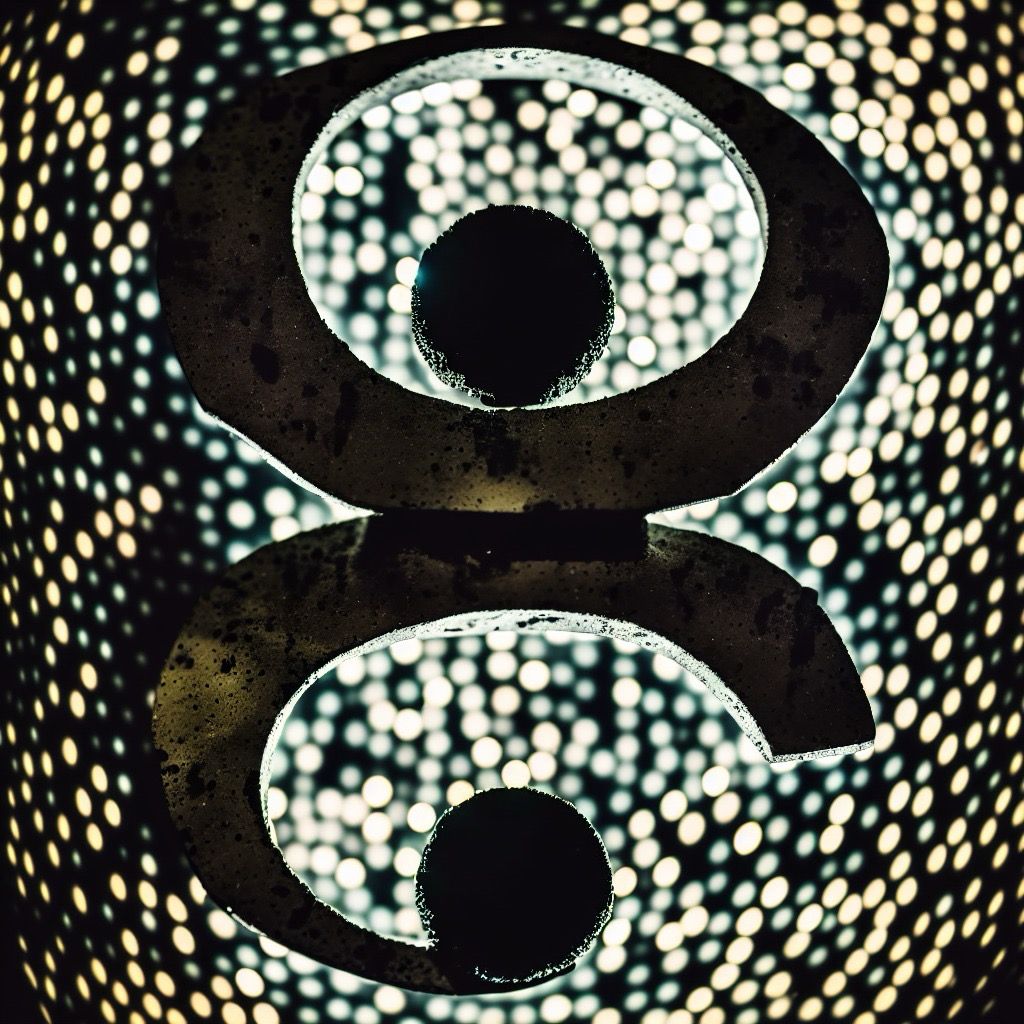
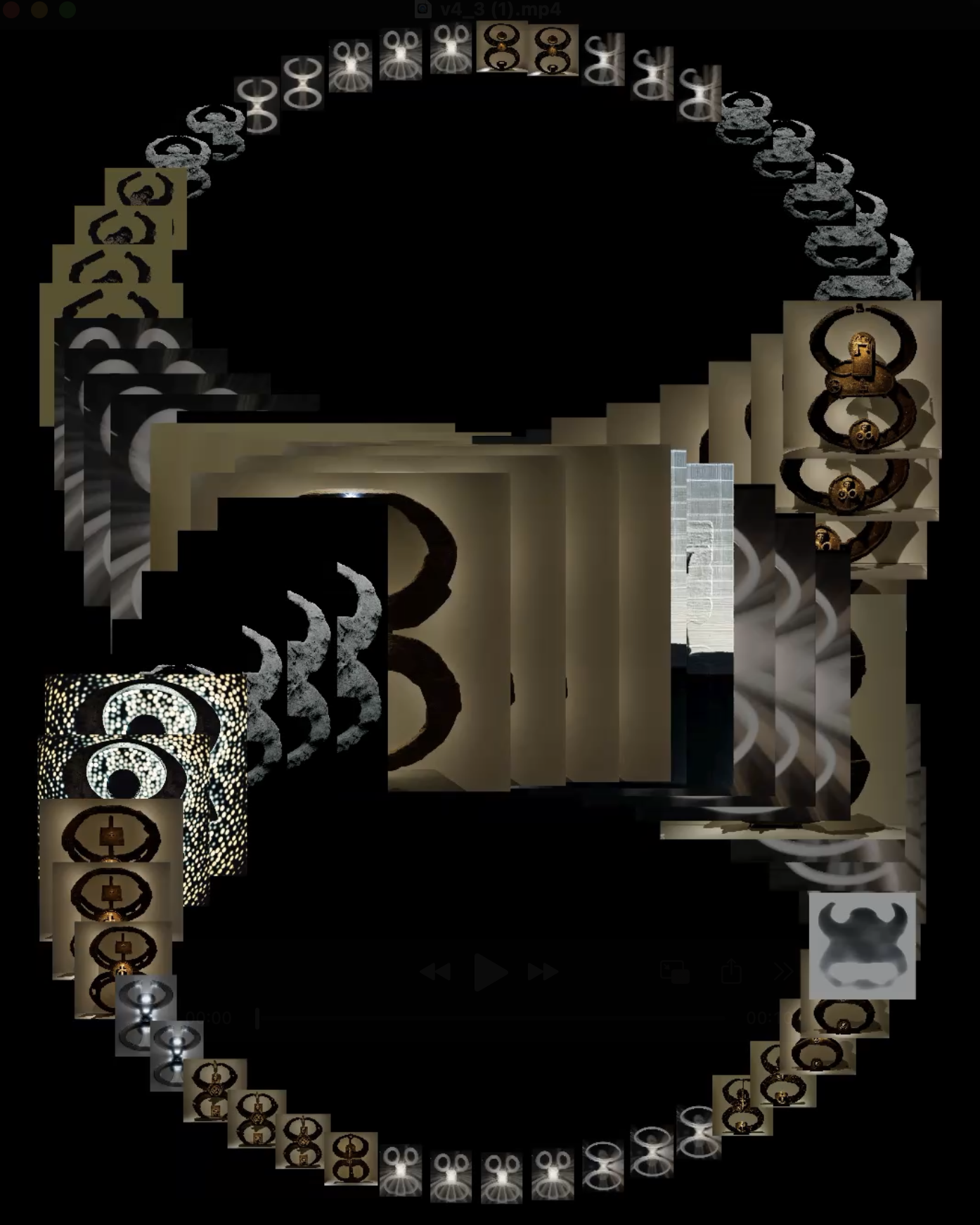
Jung himself had an obsession with circles, but also mythical stories and archetypes play an important role, described in his so-called ‘12 Jungian Archetypes’. Reflecting on Jung's theory with Woody, he tells us about his instinctive process behind the Neon Cleptu artworks: ‘I approach it as a sketchbook and just randomly add photos on to of each other. But there is however one system: the switch between circles and round shapes. Why? we ask. Woody searched for the right words: ‘Round shapes feel soft, warm, tender,' he tells us. 'Squares feel harder, more aggressive.’
Noted. Design works with shapes. The symbol of Omen Wapta sits in between these shapes - and must have been the right balance to embody the label for a lifetime. ‘I like to view design as storylines just like my set; front side calm, back more chaotic.’ he adds. ‘It’s a way of storytelling I like to embed in my work.’
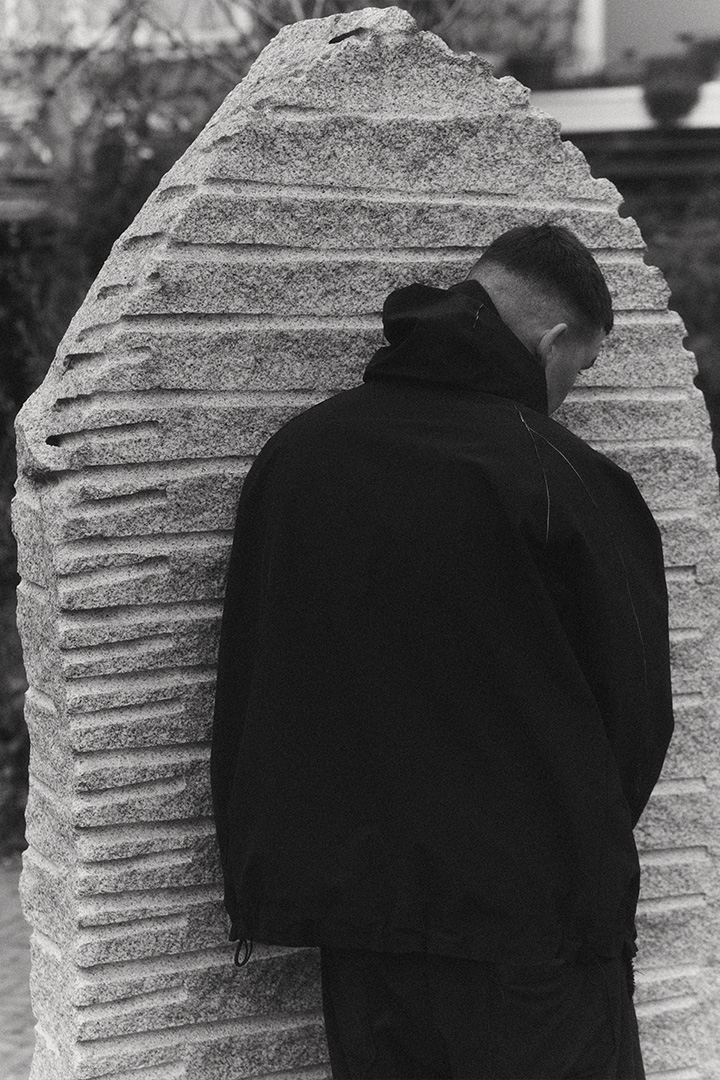
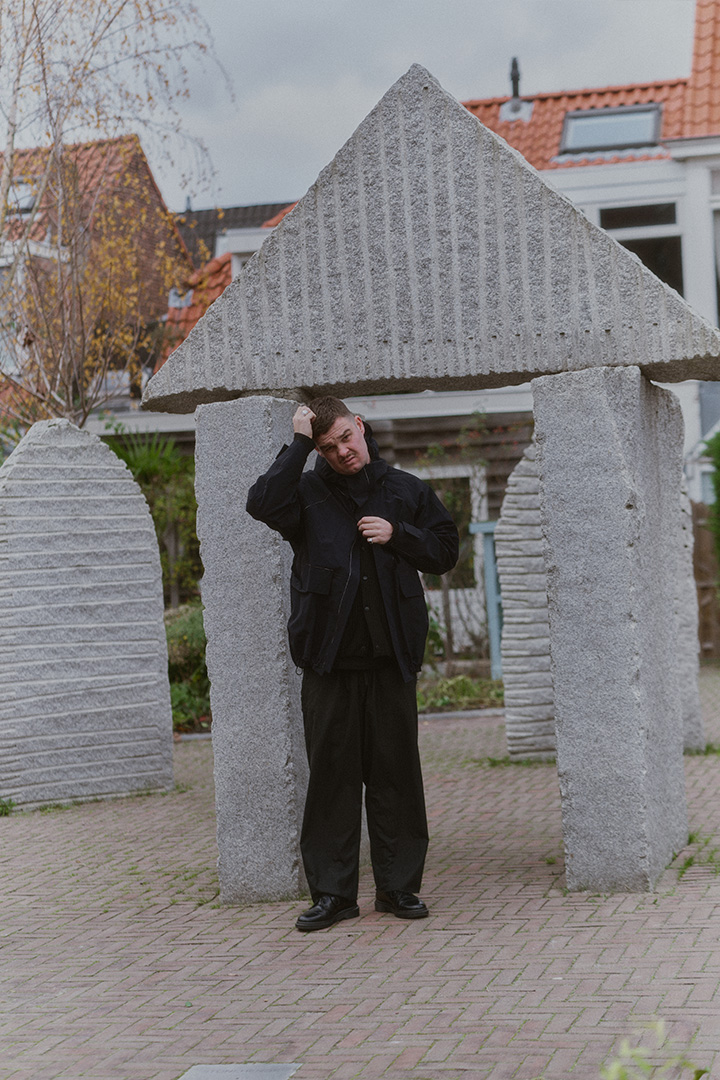
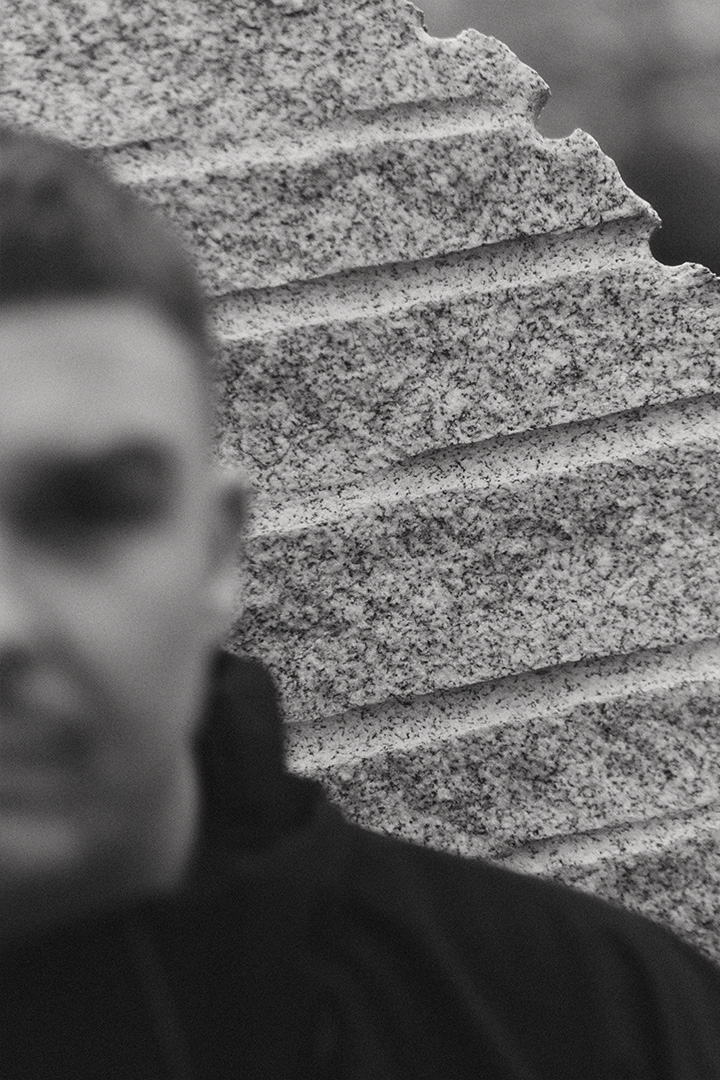
We listen to Veriyou, a track on the debut album of Woody under his W92 moniker made together with his younger brother Floid. Listening closely, one can hear ancient gates opening while a battlefield horn fills up the atmosphere. What’s up with this medieval timeframe? It’s not that Woody is a studied historian, but history is ever-present in his sonic and visual aesthetic. What’s the symbol at play here? ‘Remember the Westerkwartier? That place in Delft where I grew up as a kid? There’s this weird stonehenge placed in the middle of a blue-collar living area beside an old church.’ He’s talking about an art piece by Nout Visser from 1988 inspired by English stonehenges.
A shared symbolic landscape
‘I do not know why, but it has inspired me ever since. I even thought of making this my label icon before. It totally pulls everything out of context. Exactly what I try to do with my work. It’s an important symbol to me. I even thought about tattooing it.’ This childhood influence resulted in a hang towards monumental, religious timeframes where Celtic and Christian powers are at play. He shows us a screenshot of a Cherub, a celestial-winged being that appears across multiple religions: ‘While references might look dark or demonic to some people, for me they are light and hopeful, reflecting a spirit of higher up’. Noted. Sound-aesthetics come from a childhood fascination that Woody cultivated over-time in his art practice as an adult.
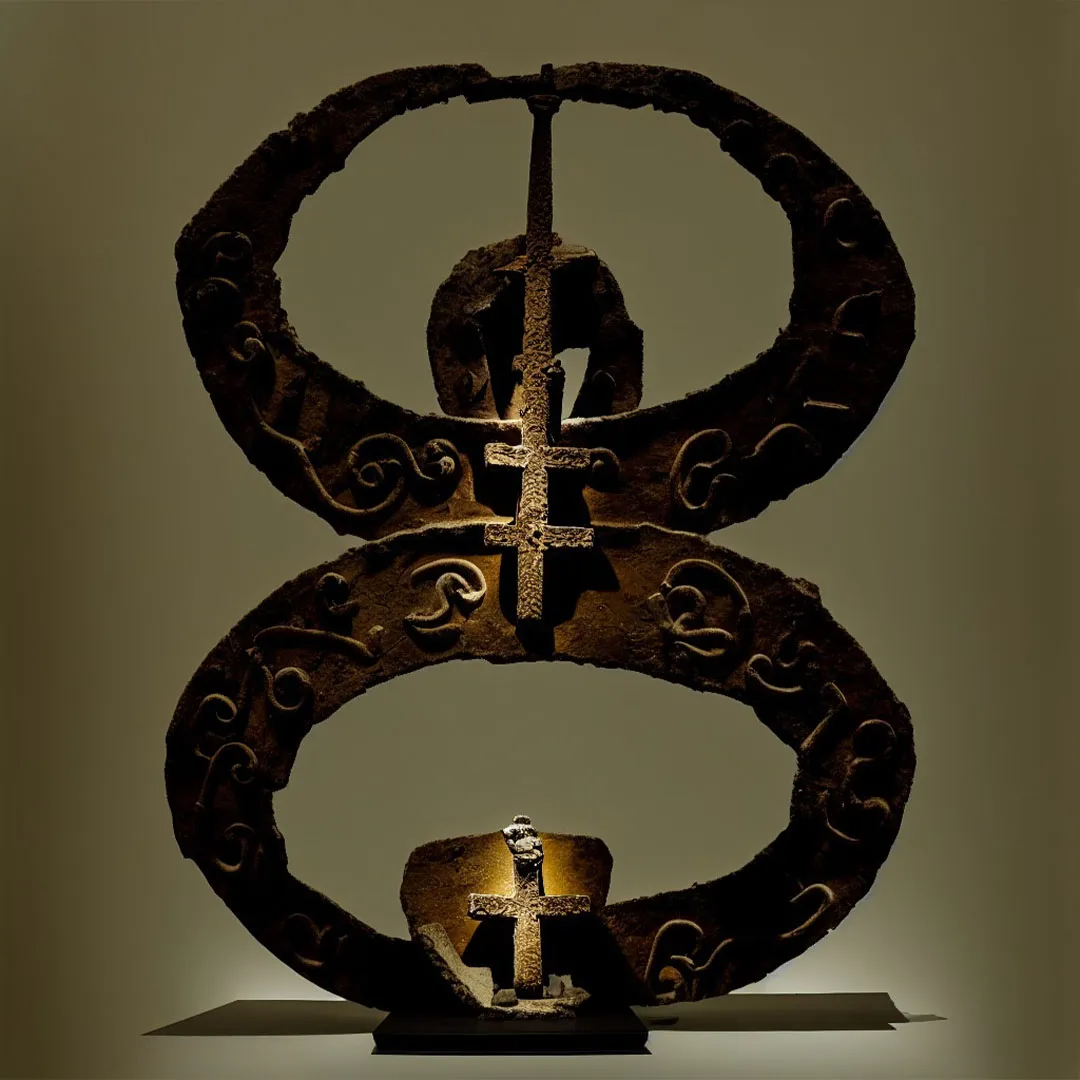
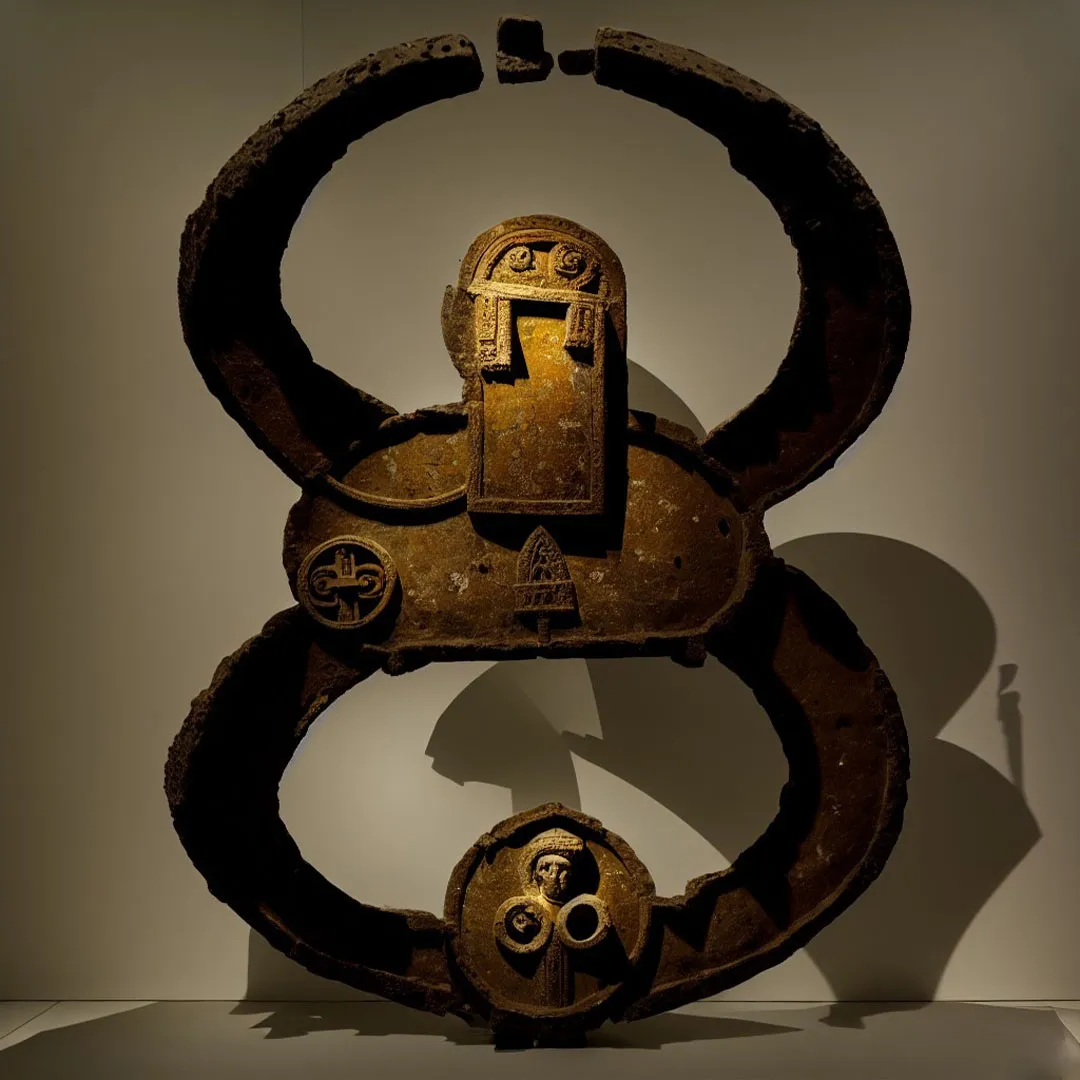
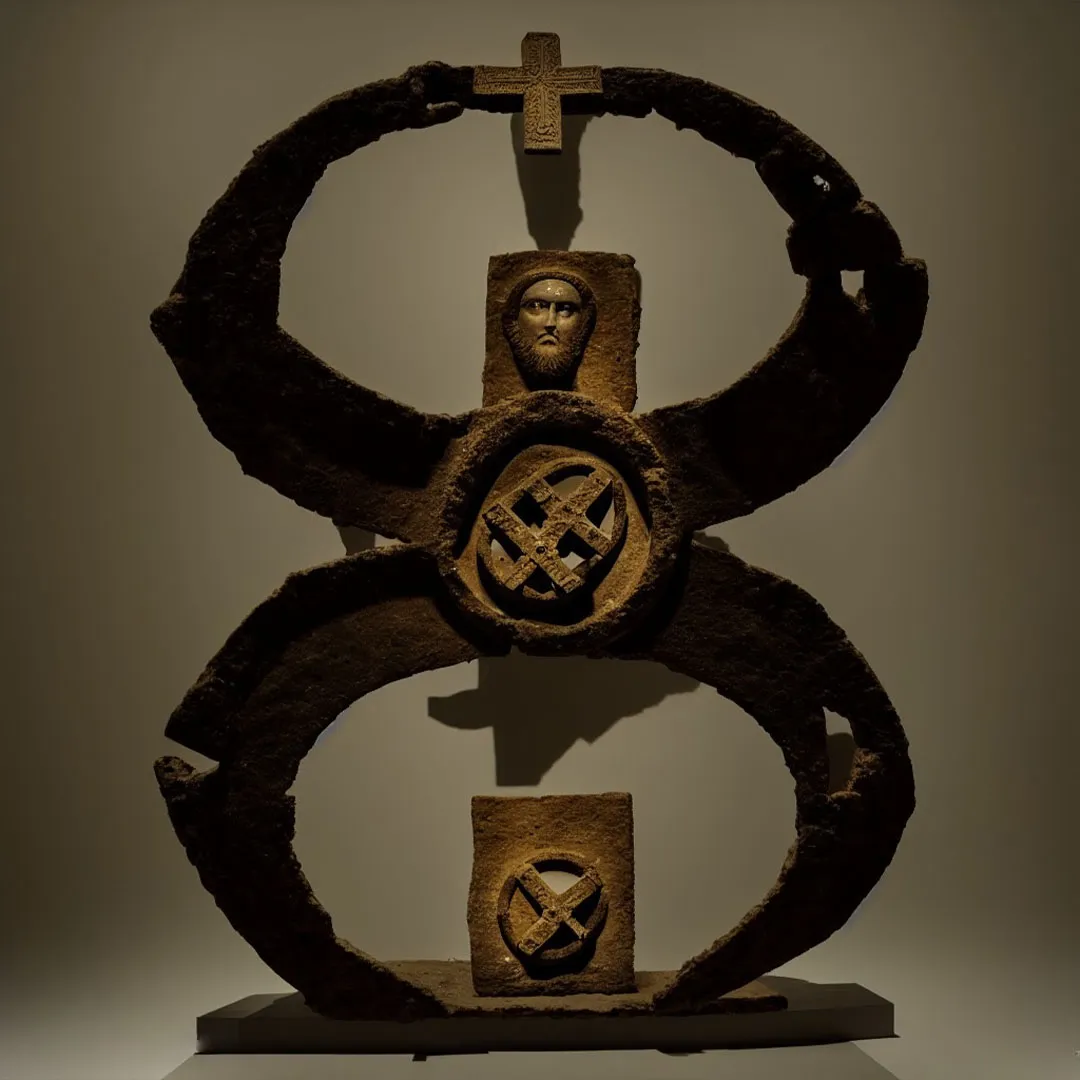
It's this instinctive draw to cultural patterns, visual forms, and archetypes that creates understanding without words. Within this shared understanding, true artistic connections can grow. Back in 2023, Woody met Amsterdam-born and raised visual artist Tharim Cornelisse. Purely based on their individual output, someone felt these two should meet. Without any prior notice – Tharim created a set of 3D artworks for Omen Wapta’s music – fully embodying the medieval timeframe Woody has been fascinated by as a kid. Since then, Tharim became a permanent part of the label, evolving Omen Wapta’s digital visual world in total freedom.
Let that sink in; no visual cues, no references. Just full-on interpretation of one mind to another. What one could hear, the other could see, and vice versa. It’s a form of shared imagination that only comes to life when you open up your subconsciousness and channel it in its most unfiltered way. In this sense, Omen Wapta functions as a symbolic landscape – a space where contributors and listeners are invited to project, sense, and decode their own inner narratives.
Reclaiming subconscious connection
But how does one speak with the subconscious? Jung suggested attentive analysis of dreams, for example by writing them down each morning. Look for recurring shapes, colours, or objects. Today, one could argue that the West has largely lost this skill. Jung wasn’t the first to notice that symbols speak to the unconscious; he offered a framework suited to Western thought in the early 20th century.
Old Mayan tribes made life choices based on archetypes seen in dreams. In old Korean traditions, visions were not puzzles to decode but living messages from ancestors, spirits, or the unseen world. In Korean shamanistic belief, dreams serve as bridges between the dreaming self and the spirit realm: a dragon might signal power, a lotus flower growth. The Korean taemong (태몽), or “conception dreams,” were symbolic visions about an unborn child, believed to foretell gender, talents, or life path. Circles, animals, and geometric forms were not abstract ideas; they were emotional structures guiding life. It’s a form of symbolic literacy that Woody’s art seems to reclaim: listening to the unconscious in a way that feels both ancient and intuitive.
.jpeg)
.jpeg)
.jpeg)
.jpeg)
.jpeg)
.jpeg)


.jpeg)
.jpeg)
.jpeg)

Fostering lifelong imagination
Alas, after five years of contemplating together, we found some sort of answer to his output: it's a symbolism. He cultivated the art of speaking through symbols. ‘Not to fall into clichés, but an image speaks more than a thousand words. What someone makes from it is up to them.’ He also shares his deep connection with dreams: ‘I’m quite the dreamer, and sometimes I experience things in my sleep I cannot put into words. They translate into my music and visual work - a dark mood, a dusky day, perfect for recording a podcast. Sun shining? I can’t do it. It’s so hard that I even do fewer podcasts, though I’d love to do more.’
Being this open to your senses can be both a burden and a gift when honing your craft. Yet one thing is certain: it’s the purest way to pursue a life of creativity. Though sometimes slow, your art becomes an honest translation of your inner world. ‘If you ask why I do what I do, I cannot answer. It’s the biggest question in art school for everyone,’ he explains. ‘Sometimes you just let something exist as it is.’ He concludes: ‘What I can say though, is that it’s often about not doing something rather than doing more. I’ve always believed that patience is rewarded. And in the end, the beauty lies in interpretation - in how someone else’s perception completes what I started.’
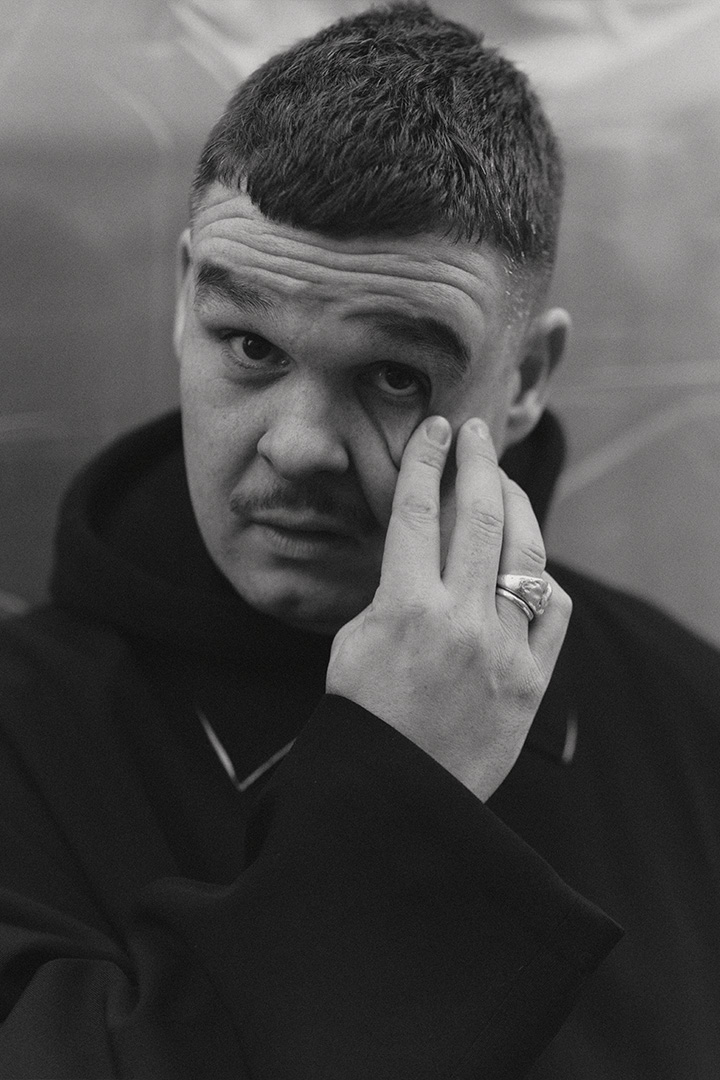
With that note, Woody reminds us that art making isn’t about immediate wins, but about staying attuned to one’s inner world. Over time, he has shaped a language rooted in instinct rather than intention. Omen Wapta continues to exist where words fall short – carried by imagery, intuition, and ambiguity. Perhaps our day-to-day life is more multidimensional than it first appears. The next time we walk outdoors, wake from a dream, or glance at the sky, we might pay closer attention to the patterns and shapes trying to speak to us.


